It Wasn't the 12-Hour Shift. Your Calves Were Locked.
If your calves feel tight and full by mid-shift, if your legs still ache long after you've clocked out, and if the walk to your car feels longer than the shift itself — the problem probably isn't what you've been told. A PTA explains the four-part pattern behind it below.
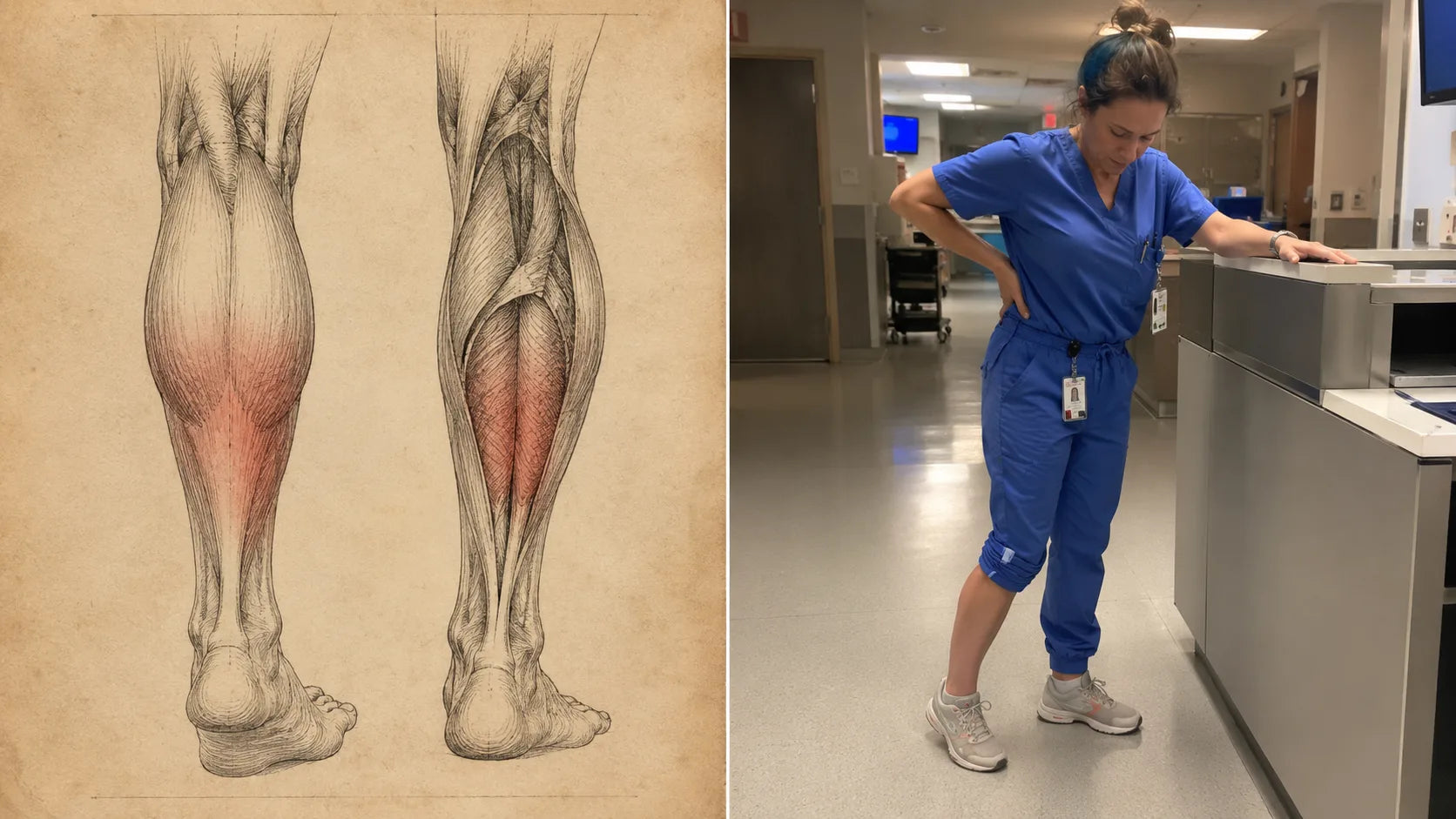
Here's the short version, because you're probably reading this on a break: the reason your calves stay tight after a shift isn't weak muscles, bad shoes, or your age. It's that four separate things get stuck in a loop and hold each other in place. Miss any one of them and the tightness comes right back.
I'm Dana, a physical therapist's aide. For eleven years I watched the same pattern walk into the clinic — on nurses, servers, CNAs, line cooks, retail leads. So let me show you the loop first, then how to break it.
It Was Never One Thing. It's Four — Locked Together.
Once I stopped calling it "tight calves" and actually watched what happens to a leg after twelve hours on hard floors, the pattern was the same every time. Not one problem — four, each one keeping the other three switched on. On the clinic floor we called it the 4-Point Calf Lock.
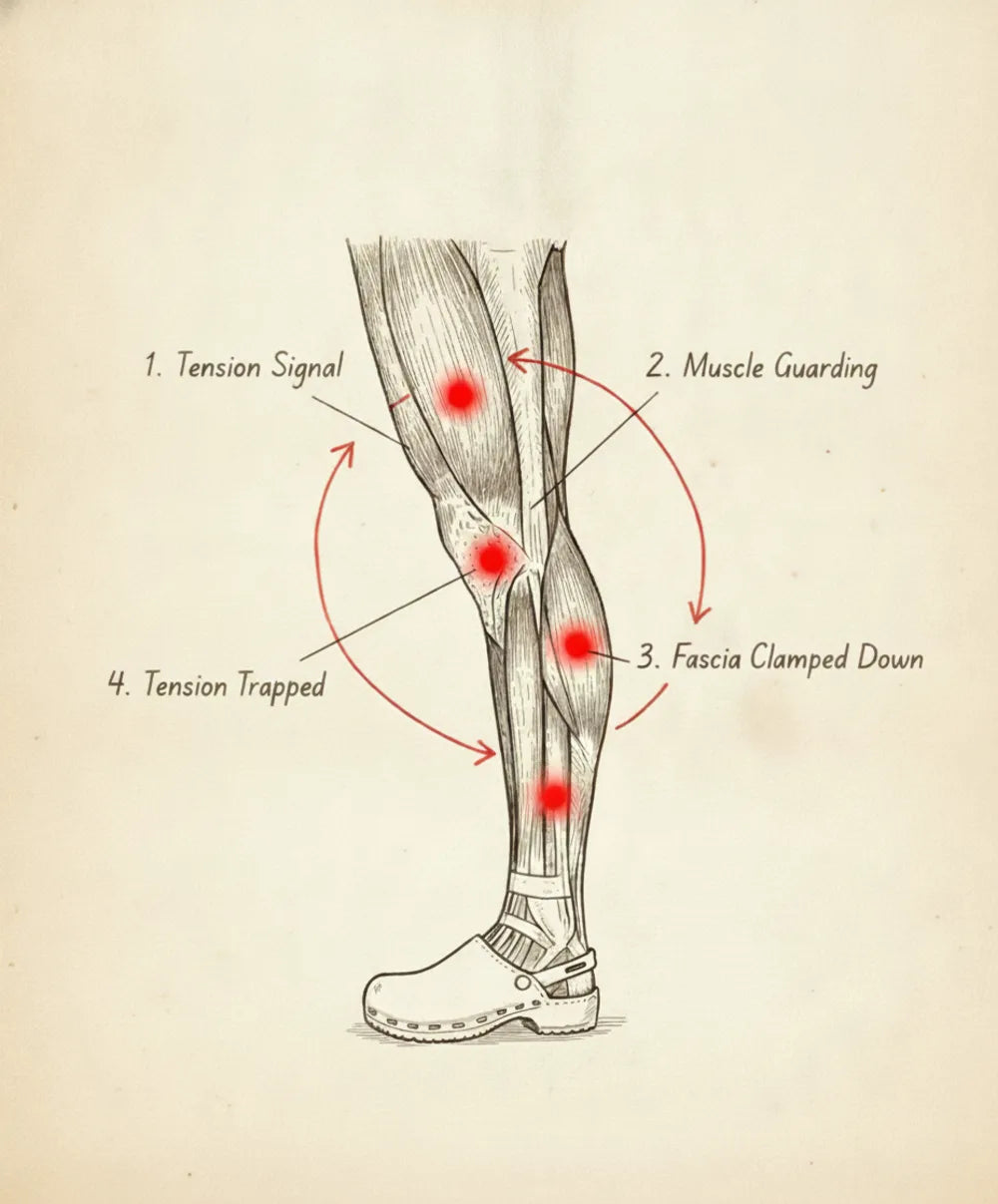
Here's the loop, point by point:
1. Tension Signal. After hours on your feet, the calf keeps firing a low "stay braced" signal that never fully switches off — even after you finally sit down.
2. Muscle Guarding. Answering that signal, the muscle holds itself semi-contracted for the whole shift. It never gets the brief release between steps a resting muscle is supposed to get.
3. Fascia Clamped Down. The sheet of connective tissue wrapped around the muscle stays clamped tight over the top, so the muscle can't expand back to its full, loose length.
4. Tension Trapped. With the signal firing, the muscle guarding, and the fascia clamped, the built-up tension has nowhere to go. It stays locked into the exact spot that aches.
Then point four feeds straight back into point one, and the loop starts over. That's the lock — and it's why every single thing you've tried has only ever half-worked.
Everything You've Tried Only Frees One Pin
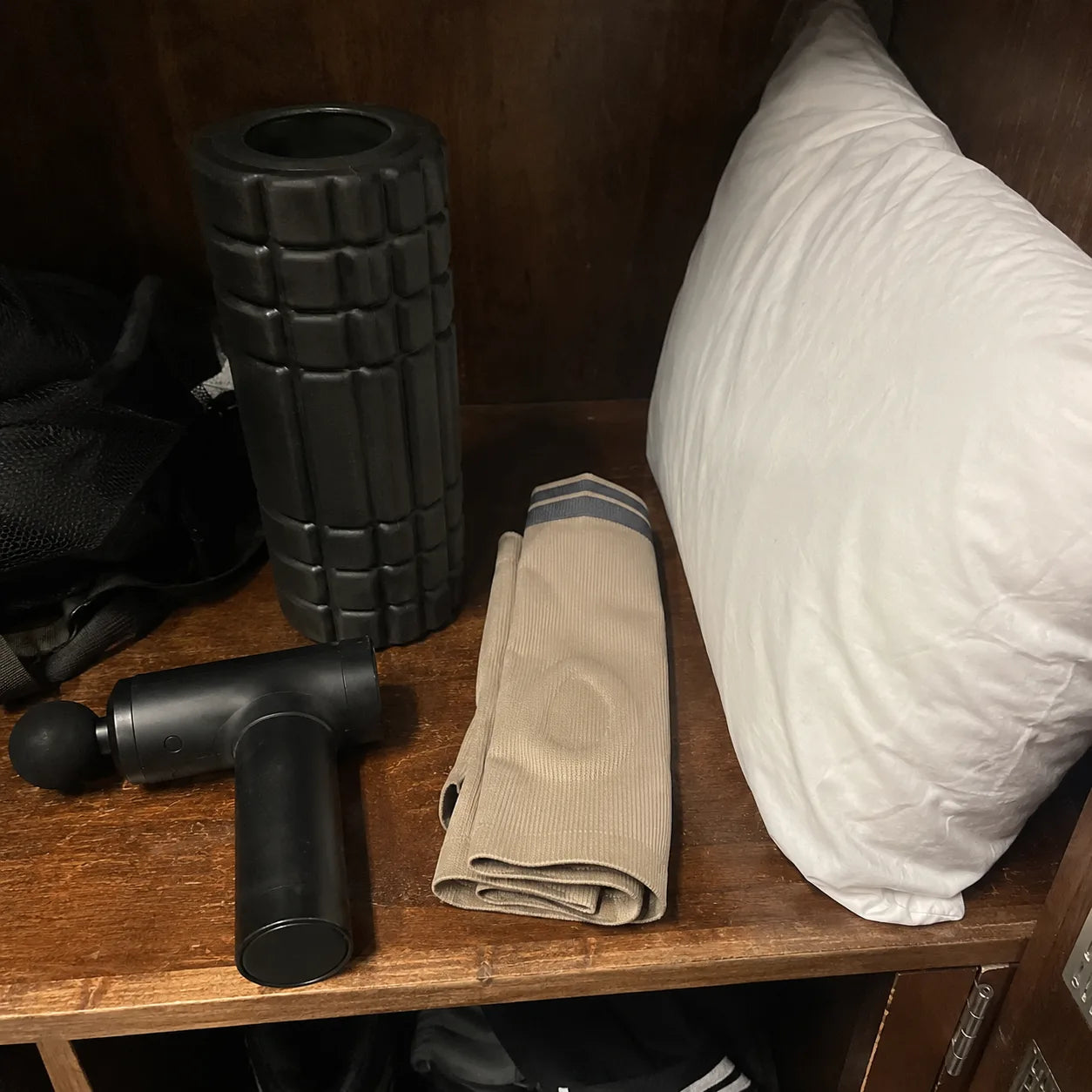
Think about what each of your fixes actually touches:
Compression socks squeeze the outside — but a squeeze presses the fascia in place instead of releasing it, and the calf is tight again the second the sock comes off. Stretching quiets the signal for about ninety seconds. A foam roller pushes down on one spot; you're loose that night and just as tight the next morning. A massage gun pounds the muscle for an hour — relief gone by the next afternoon shift, sometimes before the coffee's finished.
None of them are wrong. Each one reaches a single pin of the lock. But the other three snap it shut again — usually before your next shift even starts. You can't press your way out of a four-part loop by only ever touching one part of it.
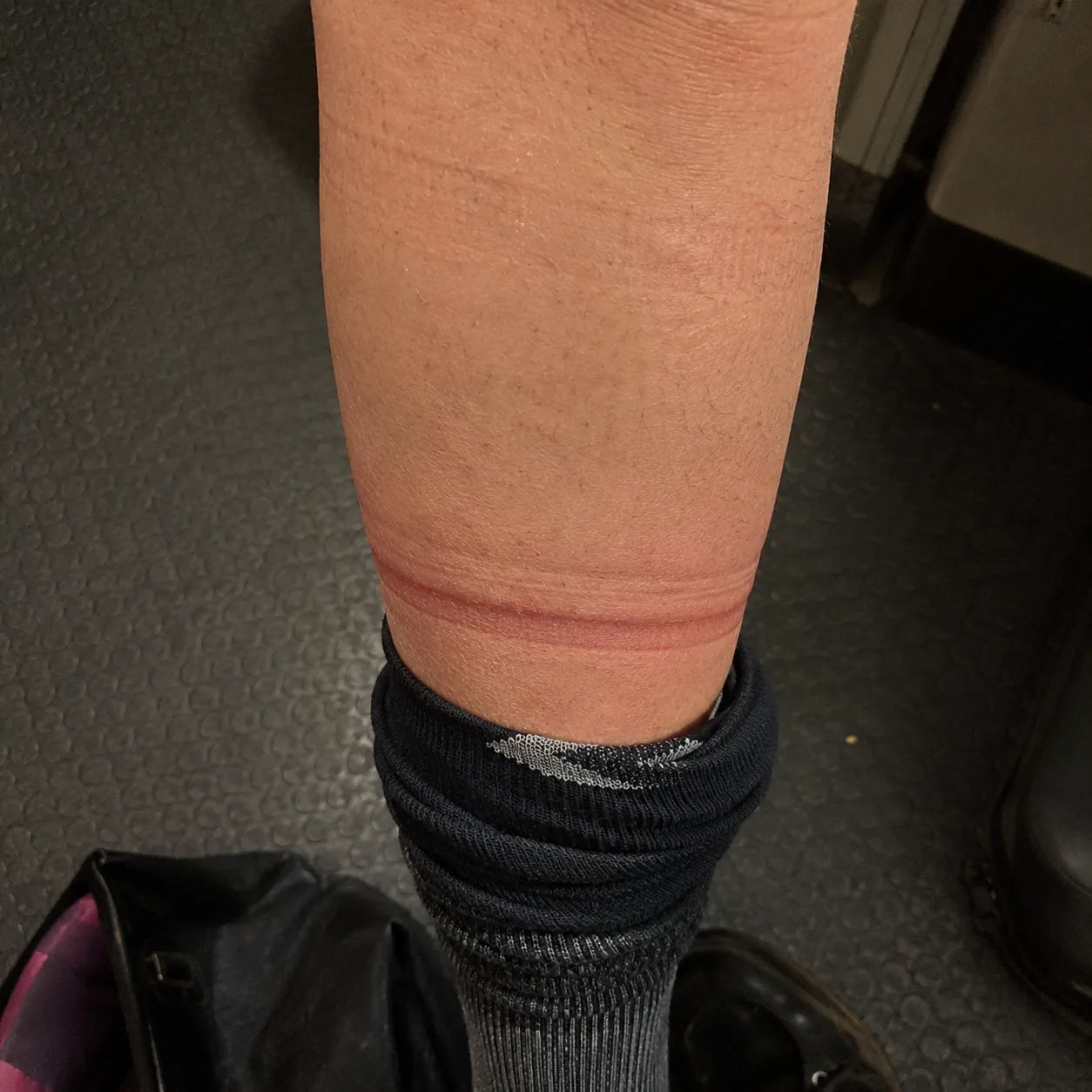
That ring your sock leaves in your calf? Most people read it as proof the sock is working. It's the opposite — it's proof of how much tension the calf is holding, and how a squeeze just presses it in place for a few hours instead of letting any of it out.
The Reset That Releases All Four at Once
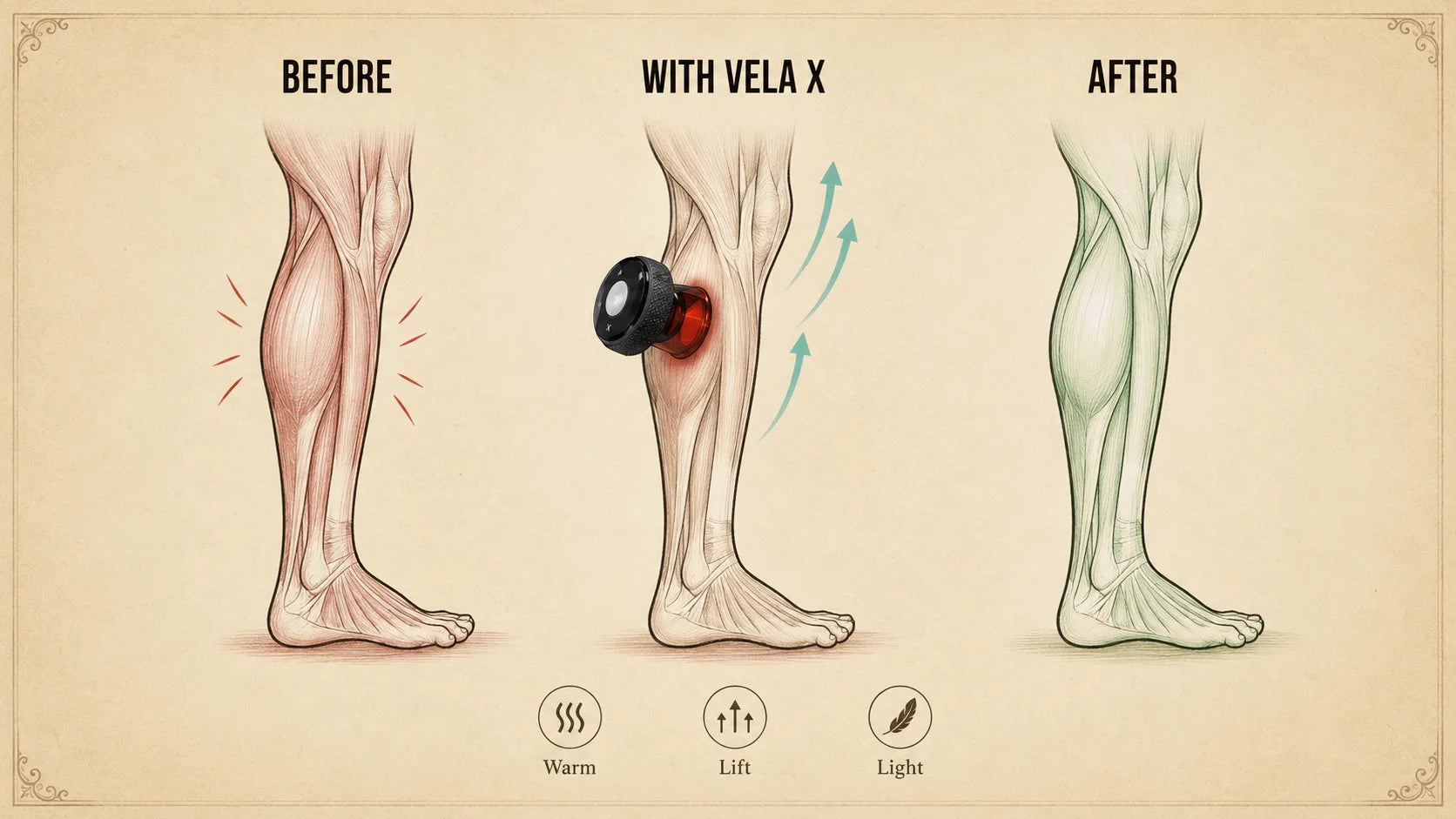
What finally broke the loop for my patients wasn't more pressure. It was the opposite of pressure.
Instead of pressing the muscle in from the outside, it lifts. The tool is a warm-suction device called Vela X, and the ritual is simple — five to ten minutes on the calf at the end of a shift. In one short session it works on all four points at the same time:
A gentle, rhythmic suction lifts the muscle and fascia upward instead of pushing them down — loosening the clamp (point 3) and finally giving the trapped tension somewhere to go (point 4). Flameless warmth up to 107°F softens the guarding muscle so it can stop holding on (point 2). And the lift-and-release rhythm lets that "stay braced" signal quiet down (point 1). A soft 660nm red-light glow rounds out the ritual.
It isn't a stronger squeeze or a harder pound. It's the release your calf never got during the shift — all four pins at once, before they can lock each other back up.
Eleven Years Watching the Same Pattern

I'm not anti-compression. Wear the socks through your shift — they help you get through it. But getting through it and releasing it are two different jobs. The socks, the shoes, the rollers are for during. The 4-Point Reset is for after — the part almost nobody was doing, which is exactly why the lock kept resetting night after night.
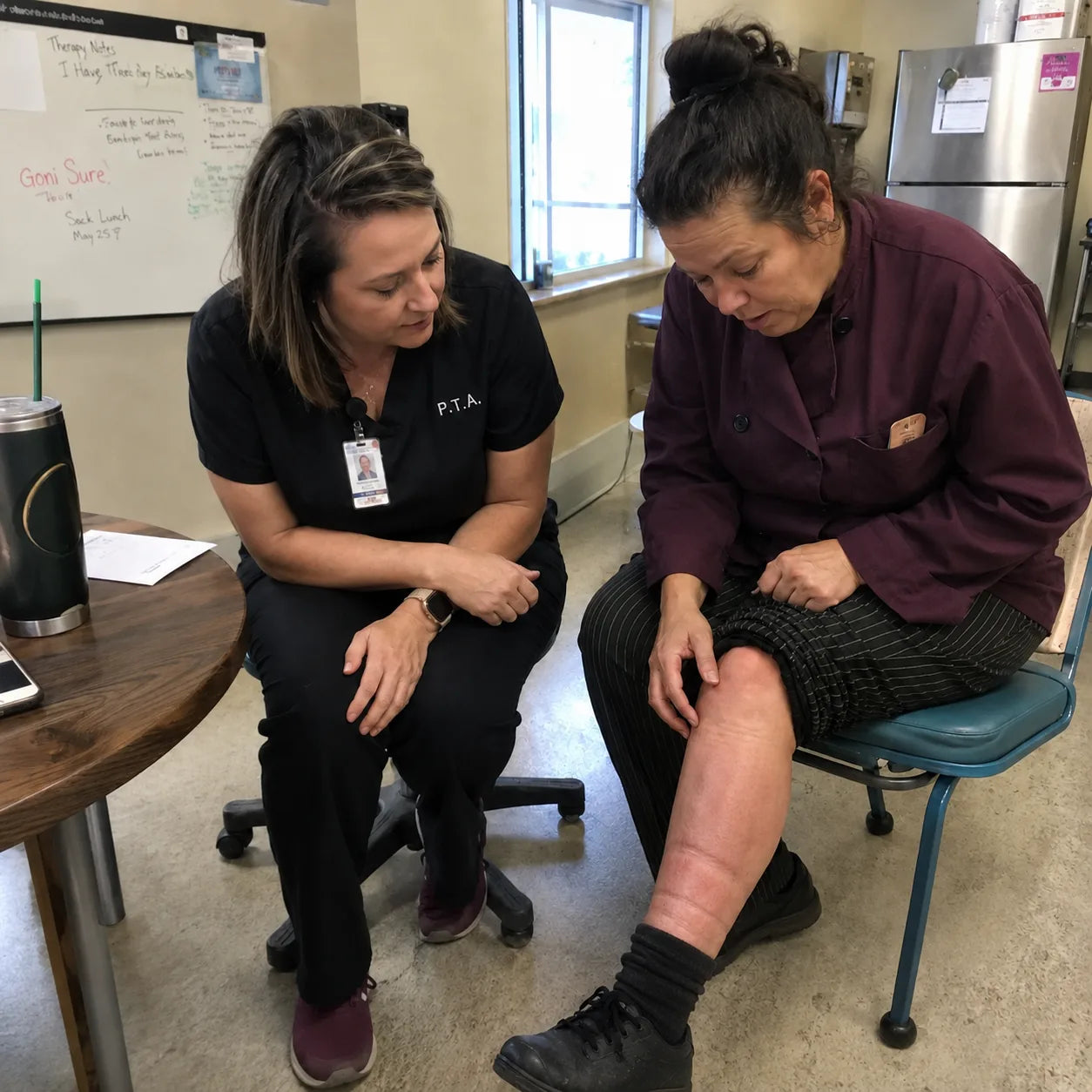
4,210+ Reviews. 4.8 Stars. Same Lock, Different Job.
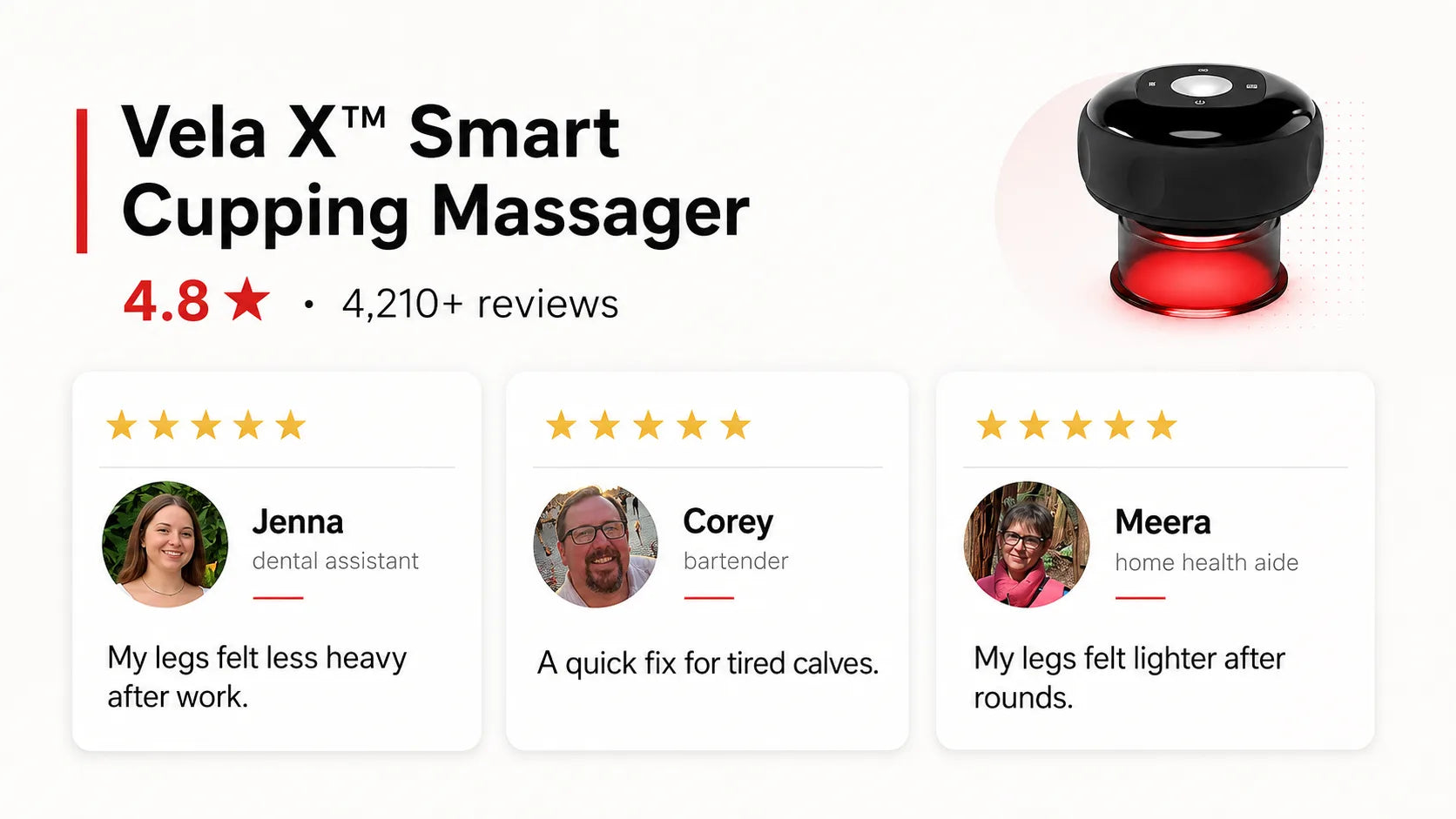
You don't have to take just my word for the pattern. The reviews read like the same shift written by people who've never met — a night-shift nurse, a bartender, a warehouse lead, a hairstylist — all describing the same calves, and the same quiet relief of finally doing something after instead of just bracing for the next one.
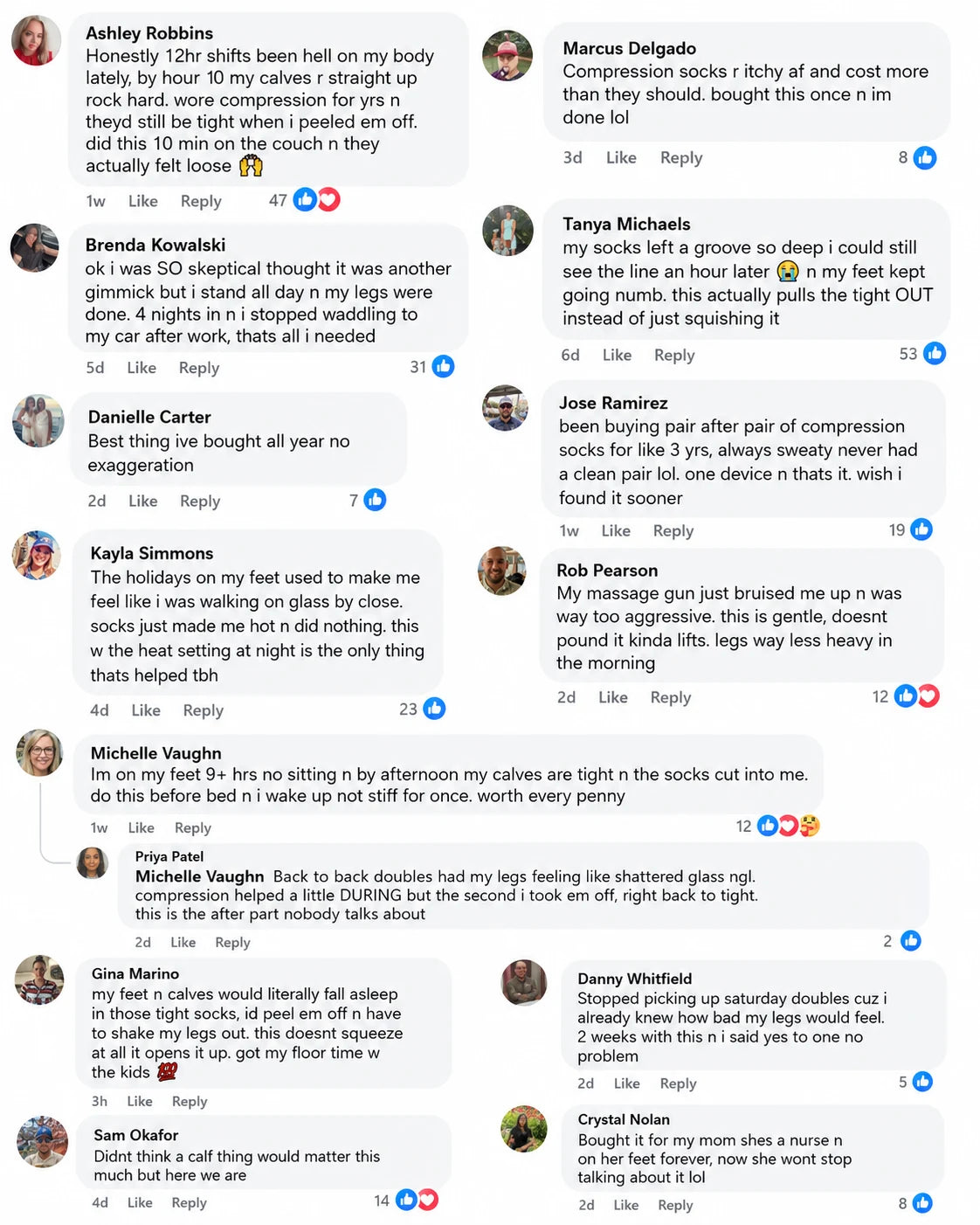
From Dreading the Walk to the Car to Just… Getting Through It

The change people describe isn't fireworks. It's smaller and better than that. The walk to the car stops feeling like a punishment. The legs don't feel "full" by hour ten. Bedtime stops being the moment you finally notice how much your calves hurt. And the next morning, last night's shift isn't still sitting in them, waiting.
Everything Included, Before the Price
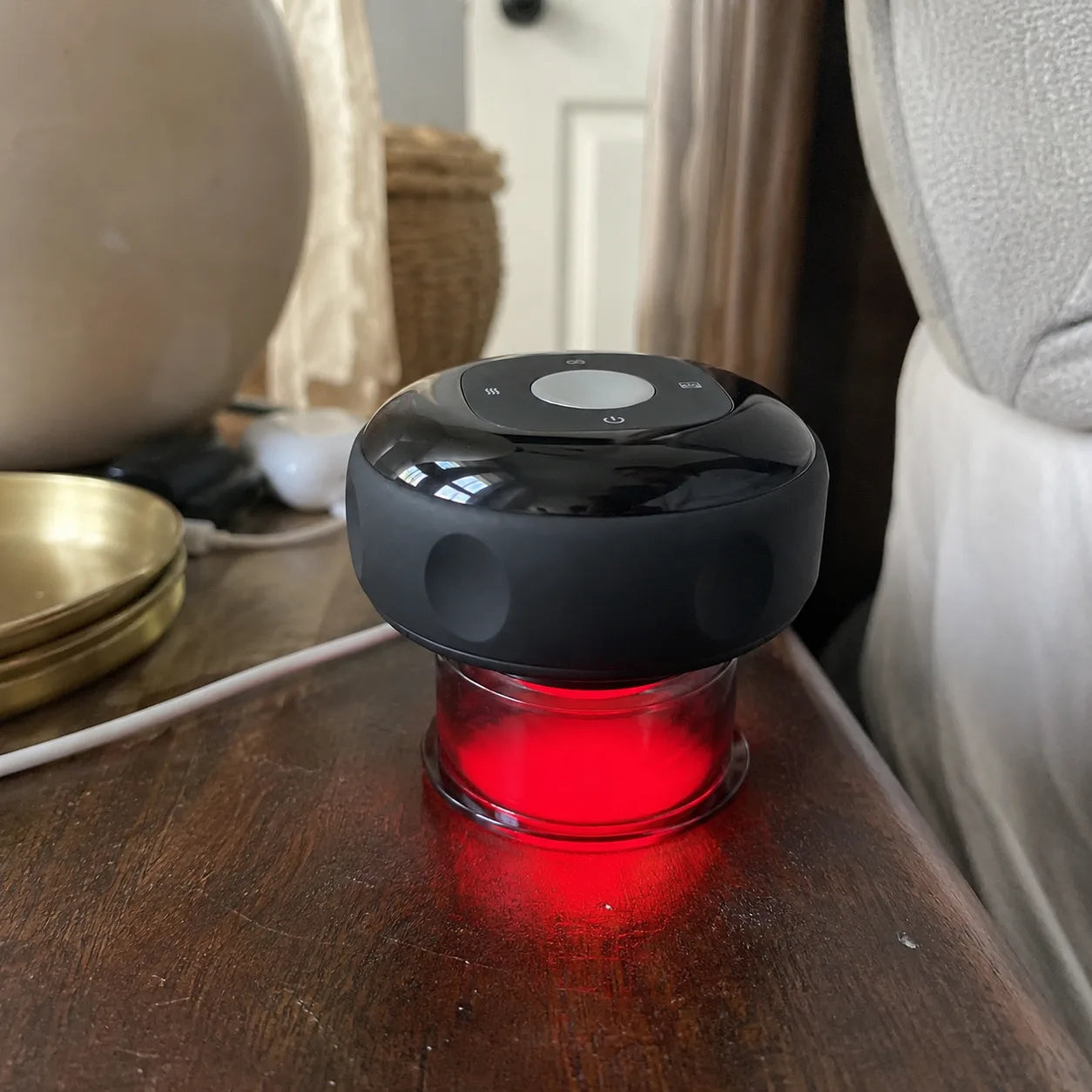
Before we get to the number, here's the full picture of what you're actually getting:
The Vela X device itself — dynamic suction, flameless heat up to 107°F, 660nm red light, all in one cordless unit small enough to keep in a locker or gym bag.
Twelve customizable settings, so you can start low on week one and adjust as the ritual becomes familiar. Single-press instant release plus a timed auto-release, so a five-to-ten-minute 4-Point Reset never runs longer than it should, even after a closing shift when you're running on fumes. Free shipping, today, on top of all of that.
- Vela X warm-suction device (suction + heat to 107°F + 660nm red light)
- 12 customizable settings — start low, build up
- Single-press instant + timed auto-release
- Cordless & rechargeable — locker, car, or couch
- Free shipping today
30-day money-back guarantee — use it as your end-of-shift reset for 30 days; if it doesn't earn a place in your routine, send it back for a full refund. No fees, no forms.
40% Off — Limited Time
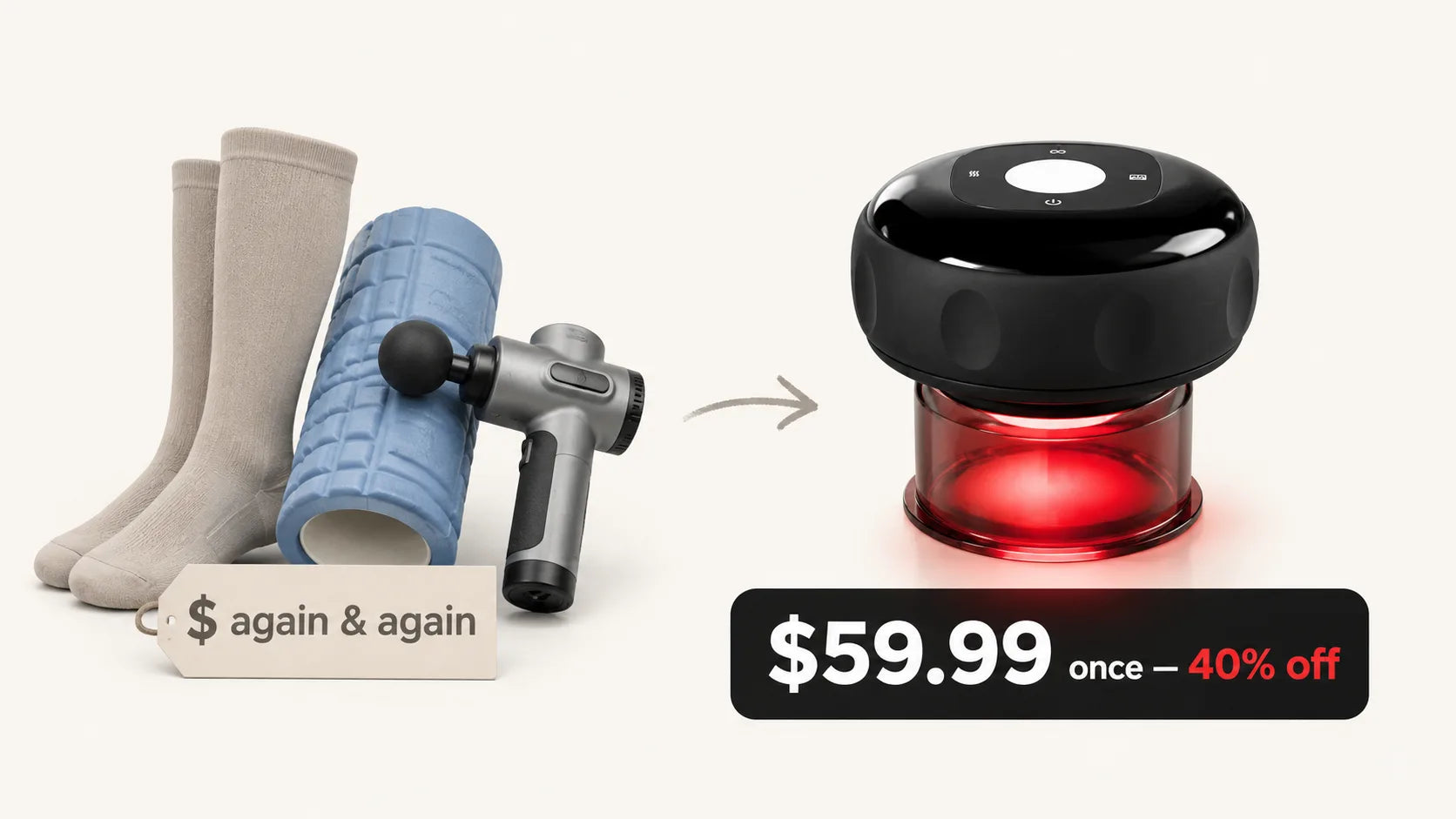
Regular price is $99.00. Right now it's $59.99 — 40% off, with free shipping included. That's less than a single week of the compression socks and foam rollers most stand-all-day workers already cycle through every few months — for a reset built around the whole lock instead of one pin of it.
Try It Risk-Free for 30 Days

If you use it as your end-of-shift reset for 30 days and it doesn't earn a place in your routine, send it back. Full refund, no fees, no forms, no explaining yourself to anyone.
A quick safety note, the same one I give every patient: start on the lowest suction and heat setting for your first few sessions, especially if you're new to warm suction, and use it only on the soft calf muscle belly. Some temporary redness or light marking at the cup site can happen and typically fades on its own. Don't use it directly over varicose veins, or irritated or broken skin. And if you ever notice sudden, severe, or one-sided calf swelling, that's not a reset situation — see a doctor.
What If You Say No

You've got three options here, honestly.
Option one: keep doing what you're doing. The socks, the stretching, the roller, the massage gun before bed. You already know how that story ends — you're living it again tonight, and you'll see the same ring on your calf when you peel that sock off.
Option two: try one more thing off the shelf. Another sock, another roller, another gadget that frees one pin of the lock for an hour without touching the other three.
Option three: give the 4-Point Reset thirty days. If it doesn't change how your legs feel by closeout, it costs you nothing to find out — send it back.
I'm not going to tell you this fixes everything about a job that keeps you on your feet all day. It doesn't. But in eleven years of watching this exact pattern, it's the first thing I've seen that works on all four points of the lock at once — instead of pressing on one of them from a new direction and sending you back out there.
Vela X is a wellness device intended to support a soothing warm-suction reset ritual for tired, tight muscles after a long shift on your feet — not a medical treatment. It is not intended to diagnose, treat, cure, or prevent any disease. Individual results may vary. Statements regarding this product have not been evaluated by the FDA. Do not use over varicose veins or irritated/broken skin; start on the lowest setting. If you experience sudden, severe, or one-sided calf swelling, consult your physician before use and seek medical care. If you are managing a diagnosed medical condition, consult your physician before use.