People With Heavy Legs at Night Are Finally Asking a Different Question: “What If the Problem Starts in the Calves?”
If your legs feel heavy, tight, restless, or strangely “switched off” after long days of sitting or standing, read this special report before buying another sock, pill, or foot-only gadget.
THE NIGHT THE PATTERN BECAME IMPOSSIBLE TO IGNORE
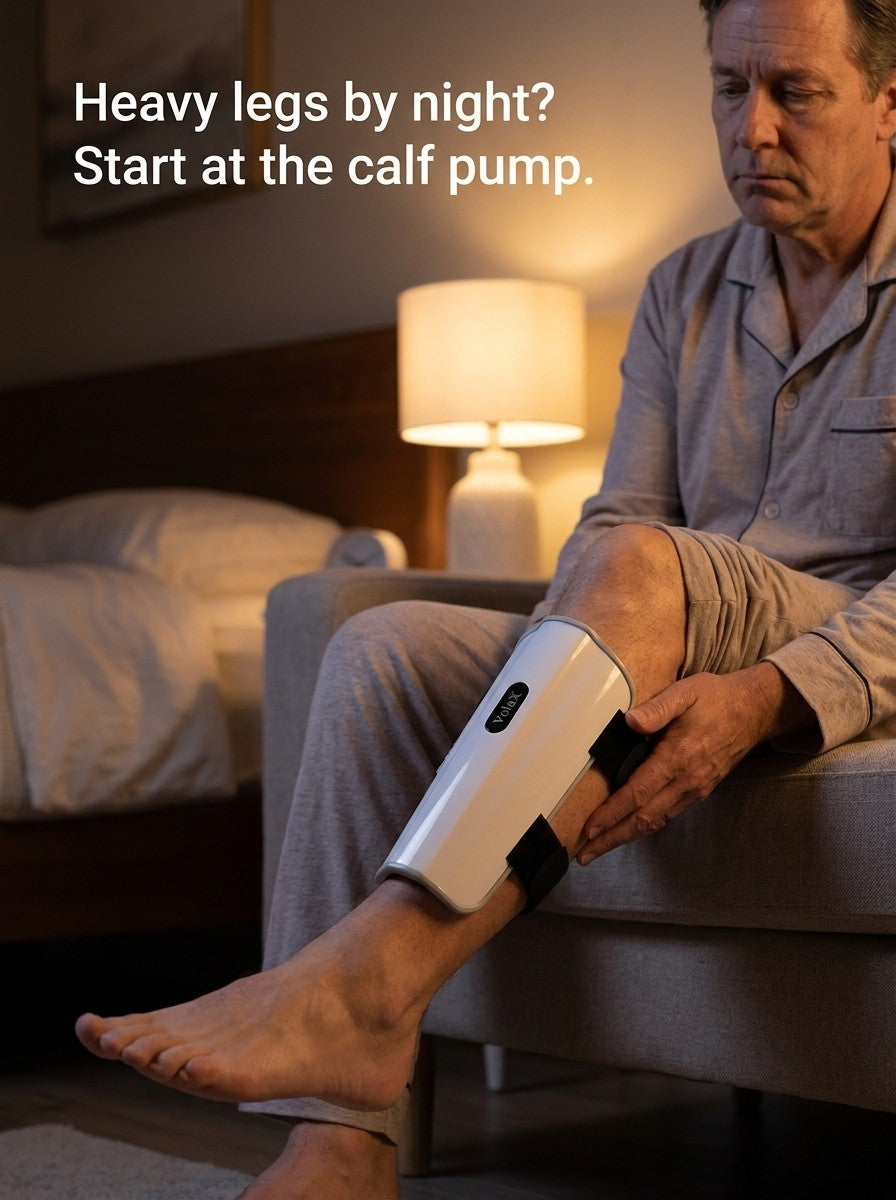
One reader told us the moment it clicked for her was embarrassingly ordinary.
She was not running a marathon. She was not recovering from a dramatic injury. She had simply spent the day moving between a chair, a car, a grocery line, and the couch.
By 10:48 p.m., her calves felt like they belonged to someone else.
Heavy. Tight. Slightly buzzing. Too uncomfortable to ignore, but not serious enough that anyone around her understood why she kept standing up.
She tried stretching against the wall.
She put on compression socks for twenty minutes and took them off because they felt too tight at the wrong time.
She rubbed the back of her legs until her thumbs were tired.
Nothing felt like a real routine.
It felt like chasing symptoms after the day had already ended.
That is the moment this report is about.
Not a miracle cure. Not a disease promise. A different way to think about the calf before sleep.
The same reader said the worst part was how small the problem looked from the outside.
Her legs were not visibly dramatic in the mirror, but they felt like they carried the entire day.
That mismatch is why heavy-leg routines are easy to postpone.
You tell yourself it is just age, just work, just the weather, just a long day.
Then the next night arrives and the same calf tension asks for attention again.
THE FAILED-FIX DRAWER MOST PEOPLE BUILD WITHOUT REALIZING IT
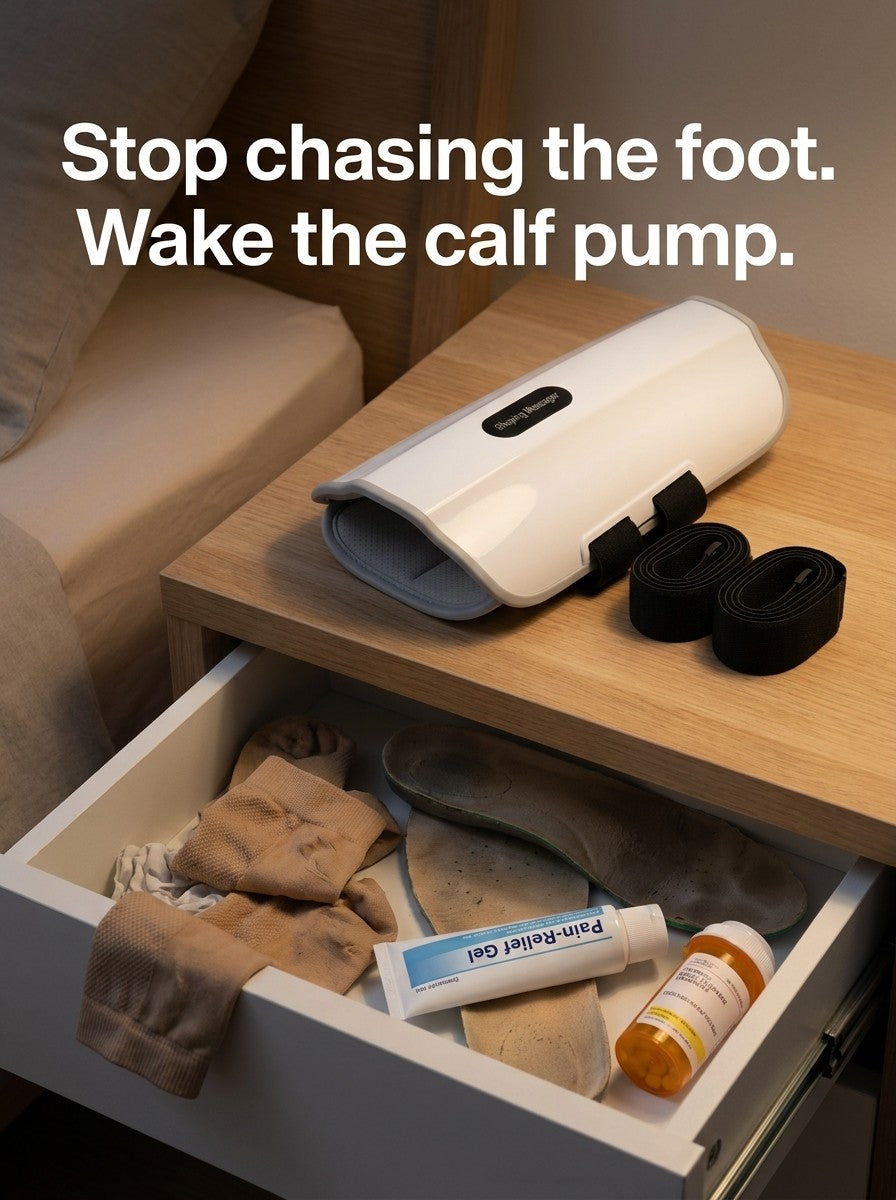
Open the drawer in many homes and the story is easy to read.
Compression socks from one brand.
A half-used magnesium bottle.
A spiky massage ball that felt too aggressive on tired days.
A foot-only gadget that made the soles tingle but left the calves feeling unchanged.
A heat pad that warmed the skin but did not create a routine around movement.
None of these ideas are automatically bad.
The issue is that they often attack one piece of the experience while ignoring the place many people actually point to when they describe heavy legs: the back of the lower leg.
The calf.
That thick muscle area below the knee and above the Achilles that works all day when you walk, stand, climb, or shift your weight.
And that may stay strangely quiet when modern life keeps you sitting or standing in place for too long.
The failed-fix drawer also creates a second problem: confusion.
One product tells you to squeeze the leg. Another tells you to relax. Another tells you to roll harder.
When nothing is organized into a sequence, the user becomes the experiment.
That is why a simple routine beats a pile of disconnected tools.
A routine tells you what to do first, what to do next, and when to stop.
THE MIND-BLOWING DISCOVERY WAS NOT A NEW PILL
The simple discovery was this: the calf is not just decoration on the lower leg.
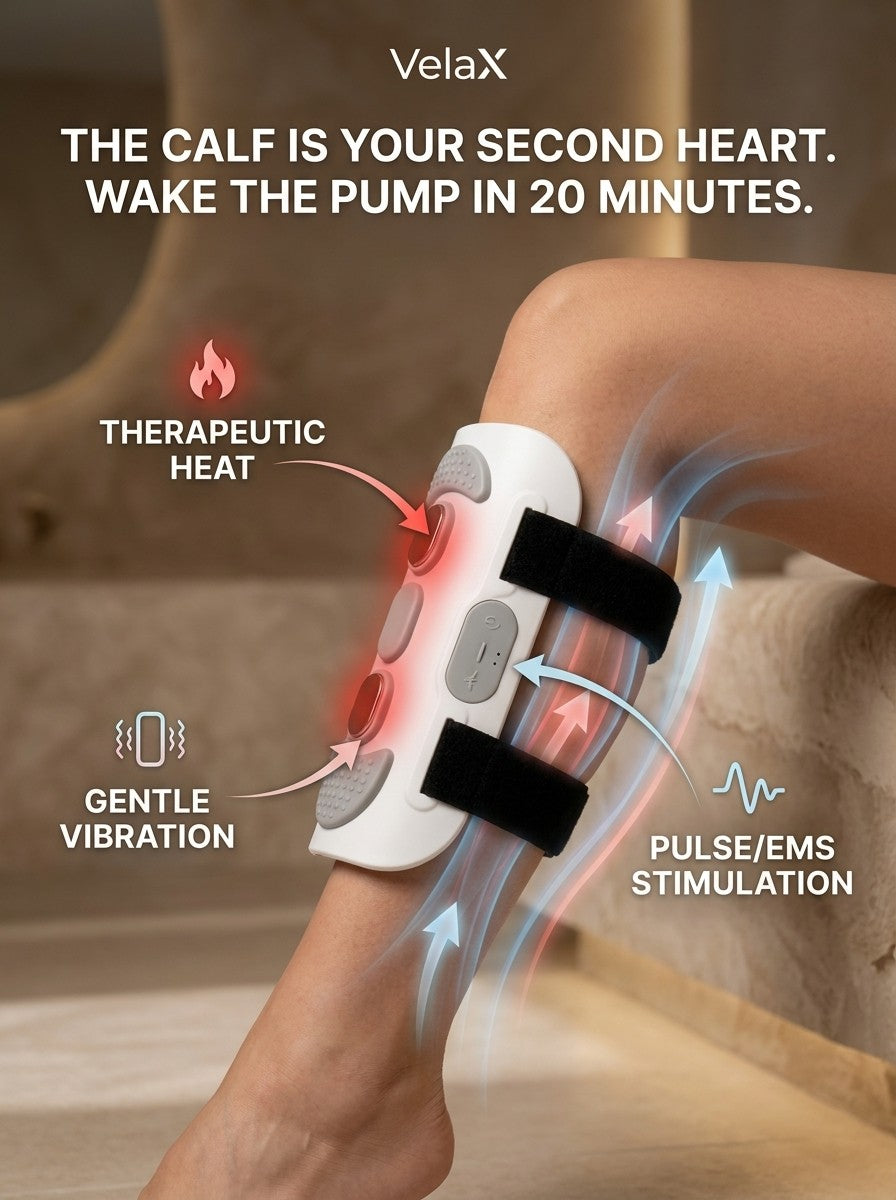
It is often called a “second heart” because normal calf movement helps encourage circulation from the lower body back upward.
That does not mean a consumer device treats a disease.
It means the calf has a job in the daily rhythm of the body.
When the calf has been underused all day, many people notice their legs feel heavier at night.
When the calf has been overworked all day, many people notice a different kind of tightness and fatigue.
The common thread is not panic.
It is routine.
Warm the area. Wake up sensation. Encourage gentle contractions. Then let the body wind down.
That sequence is what most one-off fixes fail to deliver.
Think about how many hours the modern calf spends doing almost nothing dynamic.
At a desk, the calf is bent and quiet. In a car, it is mostly locked in place. In a checkout line, it is loaded but barely moving.
That is not a moral failure. It is just the shape of modern days.
So the nighttime routine should not shame the user for being busy.
It should give the calf a simple signal at the exact time the person finally notices the problem.
THE REAL GAP: PEOPLE TRY TO RELAX THE LEG WITHOUT ACTIVATING THE CALF
A foot bath can feel nice.
A sock can feel supportive.
A supplement can be part of a personal wellness plan if it is appropriate for you.
But none of those automatically create a targeted pre-bed calf routine.
That is why people can spend money and still feel like they are guessing every night.
A better routine has to answer three practical questions.
Can it warm the calf without forcing you to stand over a sink or hold a pad in place?
Can it give the calf a clear sensory signal instead of only rubbing the skin?
Can it encourage visible, gentle muscle activity while you sit or lie down?
Those questions are the bridge between random relief attempts and a repeatable night routine.
This is also why the language on this page stays practical.
A responsible comfort page should not turn every heavy-leg evening into a frightening diagnosis.
It should help the reader decide whether the product matches their ordinary use case.
If a symptom is severe, sudden, unusual, or medically worrying, the right move is professional care.
If the pattern is routine fatigue and heaviness after long days, the right question is whether the calf routine is complete enough.
THE 15-MINUTE ROUTINE HIDING IN PLAIN SIGHT
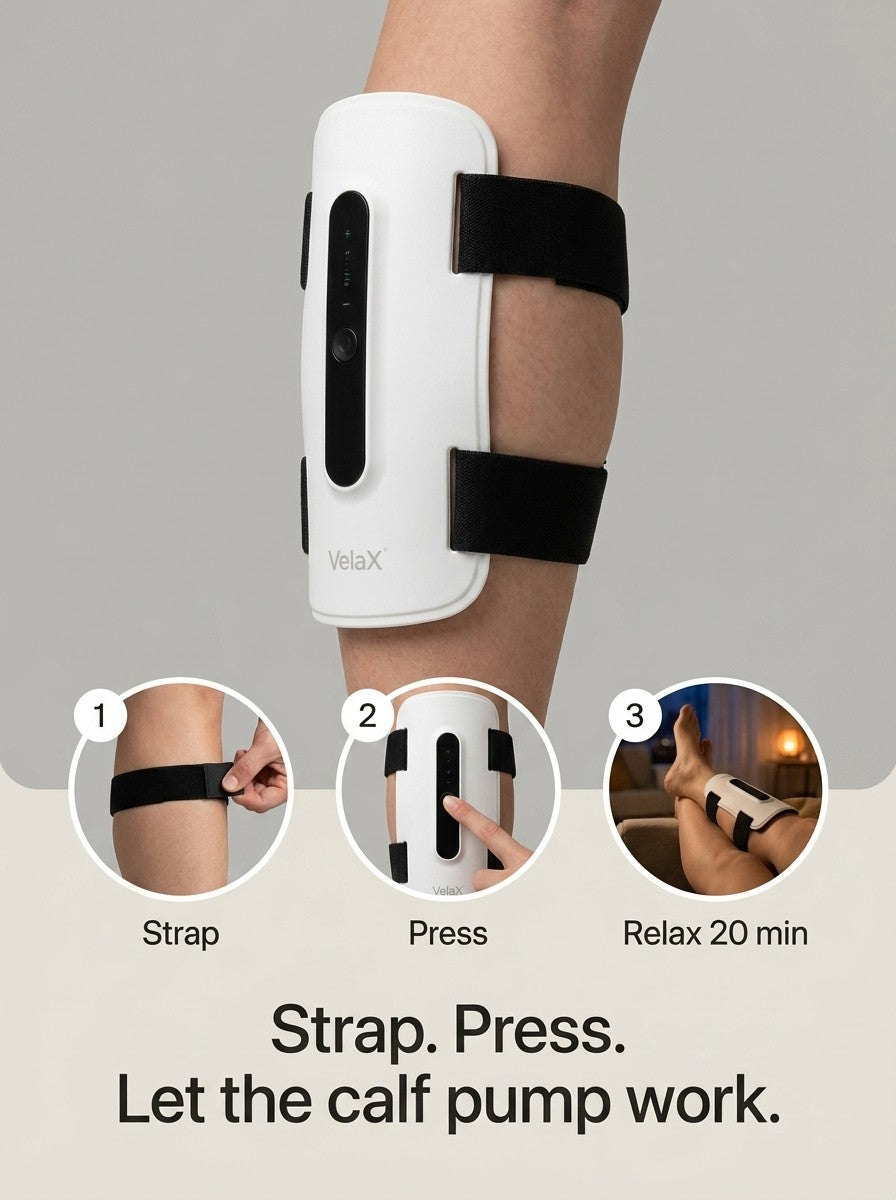
The reason the routine matters is simple: tired people do not need another complicated project at 10 p.m.
They need something they can actually repeat.
A few minutes while reading, watching a show, or sitting on the edge of the bed.
No messy gel routine spread across the floor.
No handheld tool that requires both hands when you are already exhausted.
No “perfect” stretching program that disappears after three nights.
Just a focused calf routine that fits the moment when heavy legs usually become impossible to ignore.
The fifteen-minute idea matters because consistency is usually more important than intensity.
Many people can force themselves through an aggressive routine once.
Far fewer can repeat that routine after a long shift, after cooking dinner, or after taking care of family.
VelaX is designed around the more realistic version of the user.
The tired person who wants to sit down, start a routine, and not negotiate with five separate tools.
WHY THIS BREAKTHROUGH FEELS DIFFERENT FOR REAL PEOPLE

The most useful feedback we see is not dramatic.
It sounds like everyday relief language.
“My legs felt less heavy before bed.”
“I stopped reaching for three different things at night.”
“It became the routine I actually remembered to do.”
That kind of language matters because it does not pretend a comfort device is a medical procedure.
It frames the product where it belongs: inside a repeatable self-care routine for people who feel their calves and lower legs need attention after long days.
The skepticism is also healthy.
People should ask what a device actually does, where it sits, what it feels like, and whether it fits their evening routine.
That is why the product reveal comes after the problem is clear.
A credible advertorial should let skepticism breathe.
The reader should be allowed to think, “I have tried things before.”
That objection is not a problem for the page. It is the exact reason the page explains the mechanism first.
When the calf routine is clear, the product no longer feels like a random gadget.
It feels like a format for doing the routine more consistently.
INTRODUCING VELAX: A CALF ROUTINE BUILT FOR HEAVY, TIRED LEGS
Designed to combine heat, vibration, and EMS-style calf activation in one wearable routine.
Use on the calf area as directed. Not a medical treatment. Comfort results vary.
VelaX was built for the part of the leg people keep rubbing at night: the calf.
The sleeve format matters because it keeps the routine targeted.
Heat is there to help the area feel ready.
Vibration is there to add a clear sensory rhythm.
EMS-style pulses are there to encourage gentle muscle activity while you are seated or winding down.
Instead of buying a different object for every symptom, VelaX puts the routine into one repeatable format.
That is why this page does not open like a product page.
The product only makes sense after the calf-pump routine makes sense.
The sleeve should sit on the calf area, not on the shin and not as a vague leg wrap.
That placement rule matters for both product truth and buyer expectation.
The product story is not “pressure anywhere on the lower leg.”
The product story is a targeted calf routine with heat, vibration, and EMS-style activation in one wearable format.
That is the reason VelaX appears here, after the reader understands why the calf is central.
HERE IS EXACTLY HOW THE ROUTINE SUPPORTS THE CALF
Helps the calf feel more comfortable before stimulation.
Adds a rhythmic sensory cue instead of simple static pressure.
Designed to encourage gentle contraction in the calf area.
The sequence is intentionally simple.
First, the calf should feel comfortable enough that you do not fight the routine.
Second, the lower leg needs a sensory cue that feels active rather than passive.
Third, the calf benefits from a movement-style signal that reminds the area it has a job.
This is not about blasting intensity.
It is about consistency.
The routine should feel like something you can repeat before bed or after long standing shifts without turning your evening into a clinic appointment.
That is where a wearable sleeve becomes practical.
Heat alone can feel pleasant, but a heat-only habit may still leave the user wondering what else to do.
Vibration alone can feel active, but it may not create the deeper sense of a complete routine.
EMS-style pulses alone may feel unfamiliar without warmth and comfort first.
Stacking the three modes in one routine gives the user a clear beginning, middle, and end.
That structure is what makes the experience easier to repeat.
WHO THIS ROUTINE WAS MADE FOR
- Desk workers whose legs feel heavy after long sitting days.
- Shift workers who stand for hours and feel the calves complain later.
- People who try compression but want a more active routine.
- Anyone who wants a calmer pre-bed lower-leg habit without overcomplicated equipment.
VelaX is not for people looking for a magic medical promise.
It is for people who want a practical lower-leg routine they can understand.
If you already know your calves are the area you keep grabbing at night, the sleeve format makes sense.
If your issue is severe, sudden, one-sided, or medically concerning, talk to a qualified professional instead of relying on any consumer wellness product.
But if your pattern is familiar tired-leg discomfort after normal modern days, a focused routine may be exactly the missing piece.
The goal is not fear.
The goal is a repeatable habit.
This is especially relevant for people whose days are repetitive.
A desk worker may not realize how long the calf stayed inactive until the evening.
A retail worker may not realize how much static standing accumulated until the shoes come off.
A parent may only notice the legs after everyone else is asleep.
Different days, same need: a lower-leg routine that is easy to start.
WHAT EARLY USERS SAY THEY NOTICE
Notice the language.
It is not cure language.
It is routine language.
That distinction is important for trust.
The people most likely to understand VelaX are not looking for a miracle headline.
They are looking for a tool that finally matches where they feel the problem.
They want something that fits after dinner, after work, after a shower, before sleep.
That is why the offer comes only after the mechanism and routine are clear.
The best proof language also avoids overpromising.
A comfort product can earn trust by sounding like real life.
People talk about using it while watching television, after a shower, or before reading in bed.
They talk about liking the warmth, the rhythm, and the feeling that the calves finally got attention.
That is more believable than pretending one device changes every health problem overnight.
THE PRICE OF GUESSING ADDS UP FAST
A sock here.
A supplement there.
A massager that only touches the bottom of the foot.
A heat pad that gets buried in a drawer.
The hidden cost is not only money.
It is the nightly feeling that you still do not have a plan.
VelaX is meant to replace that scattered approach with one focused calf routine.
If the current promotion is available, it is shown below.
If stock changes, the product page will show the latest availability and price.
Check Today’s VelaX Availability →There is also a timing reason to avoid early discounts.
If an offer appears before the reader understands the routine, it feels like a coupon page.
If it appears after the reader has named the problem and understood the calf role, it feels like the next logical step.
That is the cadence this page uses.
Education first, routine second, product third, offer last.
TODAY’S VELAX CALF ROUTINE OFFER
Heat + vibration + EMS-style calf activation routine.
Designed for the calf area after long sitting, standing, or heavy-leg evenings.
This is the first point where a product route CTA belongs.
By now, the reader understands the problem, the calf-pump idea, the routine, and where VelaX fits.
If you want to test the routine, use the availability button above.
If you are still comparing options, keep reading the common questions and real-world comments below.
Before ordering, the buyer should check the product page for the current configuration, shipping, and return details.
The advertorial explains the routine; the product page confirms the commercial specifics.
That separation keeps the story clean and the checkout decision clear.
It also prevents this article from making stale price promises if the promotion changes.
The button simply routes the reader to the current VelaX offer.
REAL-WORLD QUESTIONS PEOPLE ASK BEFORE TRYING IT
See Today’s VelaX Offer →A final note for careful buyers: compare routines, not just objects.
Ask whether the tool targets the calf, whether it is simple enough to repeat, and whether the claims stay grounded.
That is the standard this page is built around.
No borrowed product story. No copied disease angle. No hidden source brand language.
Just a VelaX-specific explanation of why a calf routine may be the missing step for heavy, tired legs.
If the story resonates, the next move is simple: look at the product page, confirm the current offer, and decide whether this routine fits your evening.
If it does not resonate, the page has still done its job by giving you a clearer way to evaluate every heavy-leg solution you see next.
The standard is not hype. The standard is whether the product supports the actual calf routine the article explained.
That is why VelaX is presented as a repeatable comfort routine rather than a miracle shortcut.
The buyer can understand the routine before deciding whether to try the sleeve. Clear before click.
Check Availability Now →
I was skeptical because I already had compression socks. The difference for me is this feels like an active routine, not just tight fabric.
Can you use it while sitting on the couch?
VelaX reply: Follow the product directions. Most people use it during a calm seated evening routine.I like that this explains the calf instead of pretending everything is solved by a foot gadget.
Does it cure cramps?
VelaX reply: No cure claim. It is a comfort routine device designed for heat, vibration, and EMS-style calf activation.My favorite part is that it finally gave me one thing to do before bed instead of three random fixes.