The Stiff Lid Most Doctors Never Check — Why Your First Steps Hurt Most After 60
If your first steps out of bed feel like stepping onto a stone, if you've quietly started calling it "just getting older," or if the roller, the ball, and the night splint in your bathroom cabinet have only ever pressed further into the problem — read this short article before you buy anything else for your feet.

"Doctor, I Think I'm Just Getting Old."
I've heard that sentence more times than I can count.
An older patient — usually somewhere in their sixties or seventies — lowers themselves into my exam chair, and before they've said a single word, I already know. It's the way they walked in. Those careful, testing first few steps. The wince they think nobody sees.
Then they say it anyway. "Doctor, I think I'm just getting old."
And every time, I have to gently correct them. What's happening to your feet in those first few steps out of bed is not simply age. And most of what you've already tried to fix it has been pushing the problem in exactly the wrong direction.
After twenty years in this exam room, I stopped recommending what nearly every clinic still hands out — the rollers, the balls, the same tired stretching sheet — because I finally understood why none of it addressed the actual direction of the problem. I'm tired of watching good people accept mornings like this as inevitable. So I sat down to write out, plainly, the one thing that changed how I practice.
It isn't the diagnosis they're afraid of. It's what it's already cost them. The walks they've stopped taking. The grandkids they wave at from a bench instead of chasing across the grass. The quiet math of counting how many steps to the mailbox and back before deciding whether it's worth the trip.
That's the real stakes. Not a pain scale. A shrinking life.

The Most Overlooked Reason Feet Feel "Set" in the Morning
Here's the part that almost none of my patients ever hear — not from me, not from anyone, until now.
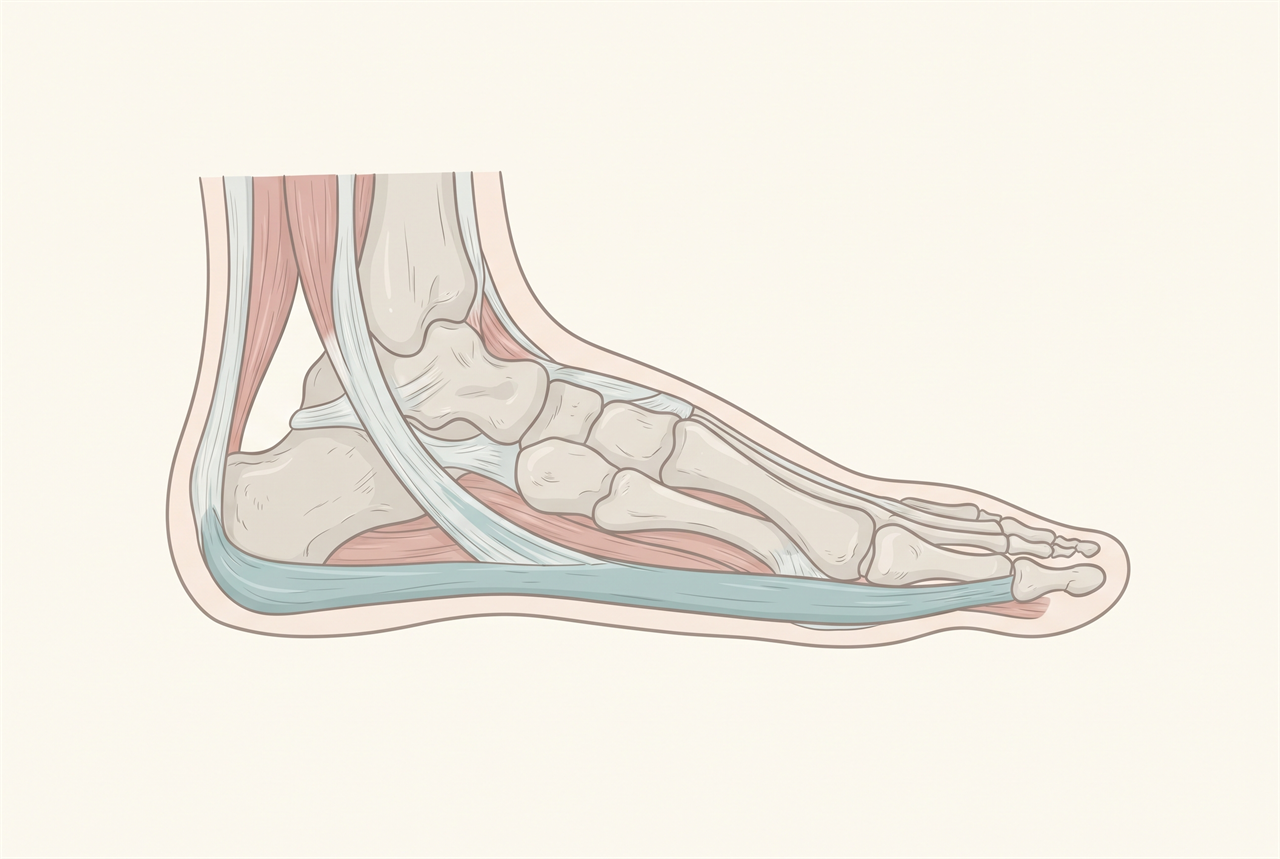
Across the bottom of your foot runs a thick, tough sheet of tissue. Think of it less like a muscle and more like a lid. It lays over everything underneath, and it's built to flex and move with every step you take.
When you're young, that lid stays loose and springy. But after decades of standing, walking, working, raising a family — years of your full body weight pressing down onto it, day after day — that lid slowly stiffens.
And here's the part that matters. Overnight, while you're lying still, it clamps down and sets. Like a door that's been painted shut.
That is exactly what those first steps out of bed are. That stone-bruise feeling. That "walking on a pebble" sensation. The reason you grab the nightstand before you trust your weight to your own feet.
It isn't damage. In most cases, it isn't swelling. It's a stiff lid that has stopped moving the way it's supposed to — and every morning, you have to painfully break it back open before it loosens up.
The Three-Stage Cycle That Resets Every Single Night
Once you see it, you can't unsee it. And once my patients understood the cycle, they stopped blaming their birthday candles.
Stage one: the pressing begins the moment you stand up — the ground presses up into the sole, and that lid takes the load all day.
Stage two: at night, while the foot finally stops moving, the lid clamps down into whatever position the day left it in. That's the "set" feeling you notice the second you swing your legs out of bed.
Stage three: everything you reach for the next morning — the roller, the ball, the thumbs digging into the arch — presses it right back in. Then you stand up, and the whole cycle resets by bedtime.
That's the trap. Not age. A daily cycle of pressing, stillness, and pressing again — with no step in between that ever works in the opposite direction.
Why Everything In Your Cabinet Has Been Working Against You
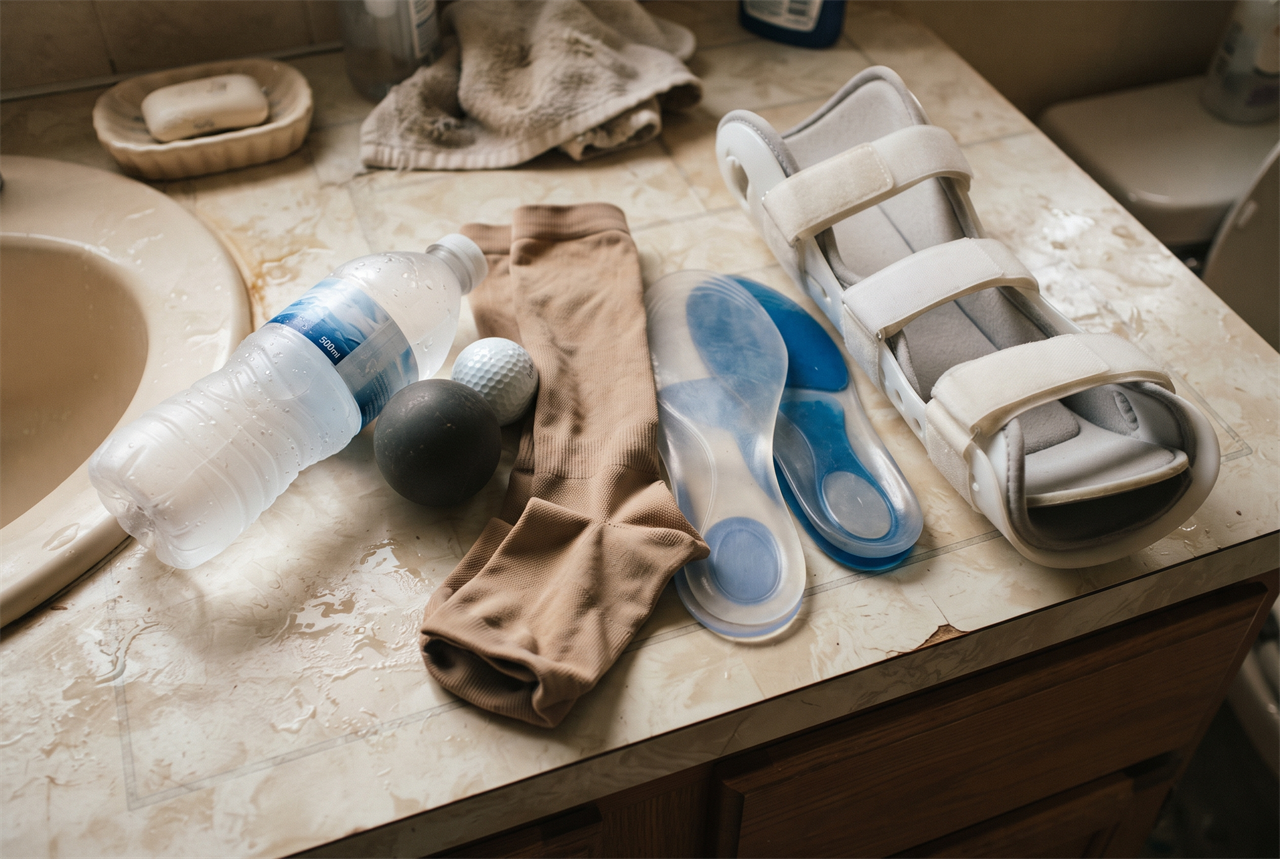
I ask my patients to bring in — or just describe — everything they've already tried. The list is almost always the same, no matter their zip code or their income.
The frozen water bottle. Rolled under the arch on the kitchen tile. Feels wonderful for about five minutes — because for those five minutes, you're pressing down on it the entire time. The second you stand up, the relief is gone.
The hard rubber ball, or worse, a golf ball. Same idea, more pressure. More than one patient has told me the next morning was tighter, not looser.
Compression socks. Hot. A genuine wrestling match to pull on some mornings. They leave their own marks by evening.
Custom orthotics or a drawer of inserts. Expensive, and they cushion from underneath — but they've never once changed how the sole feels the moment you first put weight on it.
A night splint, if a doctor's office ever handed you one. Holds the foot flexed all night. Effective for some. For most of my patients, it costs them their sleep.
Every single item on that list, no matter how different they look on a shelf, is built on the same idea: press on it. Push into it. Squeeze it until something gives. Not one of them ever asked whether pressing in was even the right direction to begin with.
What Actually Loosens A Lid That's Clamped Shut
You can't loosen something that's clamped shut by pressing harder on it. If anything, you set it tighter. So I started asking a different question — not "what's the strongest tool," but "what's the only direction that could possibly work." A genuine fix has to do four things none of the tools in that cabinet were ever built to do:
For most of my career, nothing on the market did all four. Physical therapists have used a version of the first point by hand for years — a gentle negative-pressure lift instead of a push. The problem was always that you couldn't easily do it to yourself, at home, on the one part of your body you can barely reach.
The Mistake: Thinking You Needed Four Different Gadgets
That's the real mistake sitting in most bathroom cabinets — not any single product, but the assumption that loosening a stiff lid required four separate gadgets.
I call the direction itself the pressure release — not a brand name, a description. Instead of pressing tissue in, you release it, lifting it up and away with gentle negative pressure. It's the same physics as suction. What changed recently is that it's now built into a single device simple enough to use on yourself, at home, in about ten minutes.
It's called FlowLift™ — a small, cordless, one-handed cupping device. It does three things at once: a gentle negative-pressure lift (the pressure release itself), therapeutic warmth up to 107°F, and a soft red light layered underneath. Twelve settings, so you can start as low and gentle as you like and never guess.
You use it with a little massage oil, which is what lets the cup seal cleanly to the skin instead of catching and tugging as you lift.
See the 10-Minute Reset I recommend →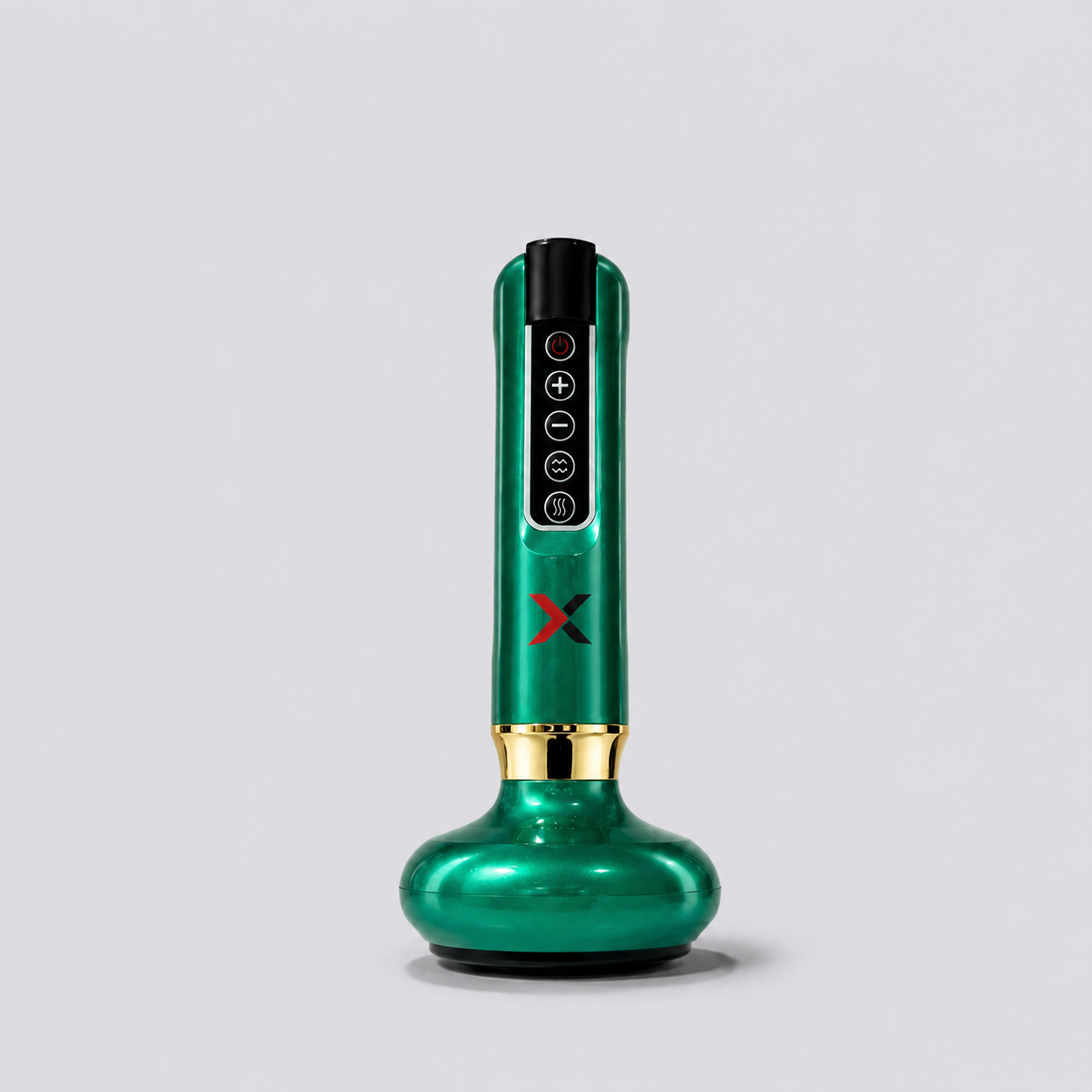
What I Tell Eleanor — And What I Tell You
Eleanor was 68 when she first sat in my chair. A retired schoolteacher, two grandkids she adored and, in her words, "could no longer keep up with." A bathroom cabinet full of inserts, a night splint she couldn't sleep in, three different massage gadgets.
She asked me one simple question first: had anything she'd ever tried gone the opposite direction — instead of pressing down into her foot, had anything ever gently lifted it? She looked at me like I'd spoken another language. Of course not. Nothing had.
Three weeks after she started her ten minutes a night, she walked into my office differently. No testing steps. No wince. She told me she'd gone around the whole park behind her grandson that Sunday, and never once looked for a bench.
That's the whole story. Not younger feet. Not perfect feet. Just feet that felt like her own again.
What People Typically Notice — Week By Week
I want to be careful here, because I've watched too many patients get burned by promises that skip this part: every foot, and every timeline, is different. This is what a number of my patients and FlowLift users have described, self-reported, not a guarantee.
| Week | What People Often Notice |
|---|---|
| Week 1 | The first few steps stop feeling like "breaking the ice" every single morning — enough that some mornings, the nightstand stays untouched. |
| Week 2 | Standing up after sitting — at church, in the car, at the grocery store — starts to feel ordinary again, not like a second wince. |
| Week 3 | The walk to the mailbox, or around the block with the dog, stops requiring a mental pep talk beforehand. |
| Week 4 | Full mornings without bracing. Keeping pace on the walk behind the grandkids instead of watching from the bench. |

What The Numbers — And The Reviews — Say
I'm not going to pretend Eleanor's story alone proves anything. So here's what a much larger group of FlowLift users reported, self-reported and individual results vary:
within ~20 min
with regular use
after activity

"The first step out of bed used to make me wince. A few minutes under my arch each night, and now I just get up and walk."Carla S., 63 — ✓ Verified Buyer
"I babysit my grandkids twice a week and by the afternoon my feet were done. This was the first thing that ever explained why it worked, instead of just asking me to believe it."Robert D., 71 — ✓ Verified Buyer
"My husband noticed before I said a word. He asked why I'd stopped holding onto the dresser every morning."Marisol T., 66 — ✓ Verified Buyer
The Question My Patients Almost Never Ask
I almost didn't recommend anything like this at all, because the last thing an older patient needs is another gadget that makes things worse before it makes them better. That fear — of pressing on feet that already feel stiff and somehow making them angrier — is exactly why the gentleness matters.
Twelve settings means you start at the lowest and stay there as long as you like. Nothing about it requires you to push through discomfort. If it ever feels like too much, you turn it down or you stop.
One honest note: FlowLift is a wellness routine, not a medical device, and it's not a substitute for your own doctor. If you're managing diabetes, diabetic nerve changes, or you have any open sores or wounds on your feet, check with your doctor before adding suction, warmth, or light therapy. And if swelling ever shows up suddenly, on one side only, or simply won't go away — see a doctor. That's not something any ten-minute routine should stand in for.
The 10-Minute Reset Kit — Today's Price
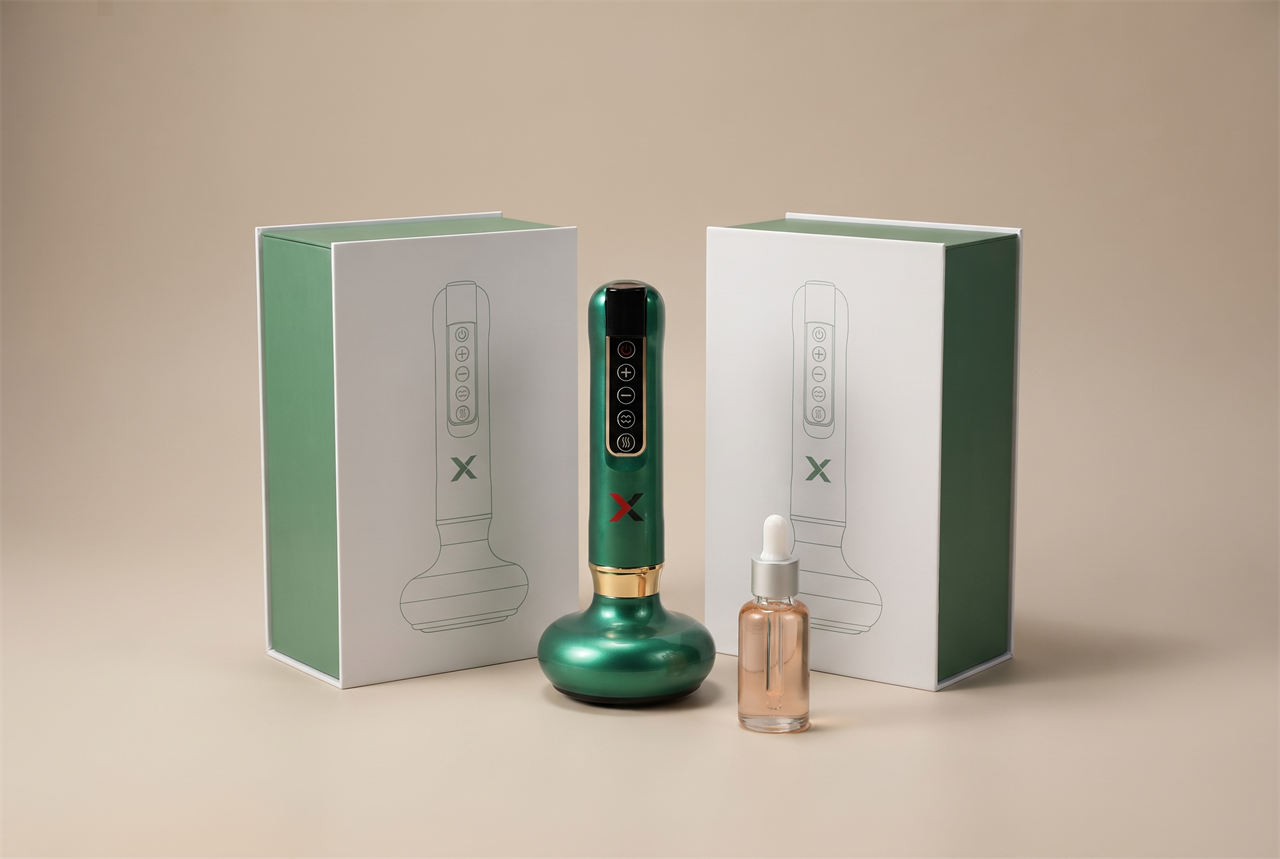
Here's what you actually get: the FlowLift™ device — the lift, the warmth, the red light, twelve settings, cordless. The massage oil, because without it the cup can't seal the way it's meant to. And the same ten-minute routine I've walked Eleanor and dozens of other patients through.
Single Pack — one FlowLift™, plus a free 100ml bottle of massage oil (a $19.99 value) — $59.99, down from $99.99.
Duo Pack — two FlowLift™ devices, plus a free 240ml bottle of massage oil — $99.99, down from $199.98. Many patients order the second for a spouse, or a sibling on their feet just as much.
Every order is backed by a 30-day money-back guarantee — if it doesn't help, you get your money back, no runaround. FlowLift is also HSA/FSA eligible.
Back To The First Step
I still tell my patients the same thing I told Eleanor. I can't promise this works exactly the same way for you — no two feet are identical, and results vary.
What I can tell you is that it's the first thing most of them ever tried that explained why it was supposed to work, instead of just asking them to believe it.
You have three options, honestly. Keep doing what you've been doing, and keep waking up to the same stiff first steps. Buy another insert or another ball, and press into the same lid the same wrong direction. Or spend ten minutes tonight trying the one direction nothing in your cabinet has ever gone.

FlowLift™ is a wellness device intended to support relaxation, comfort, and everyday recovery routines for the feet, not a medical treatment. It is not intended to diagnose, treat, cure, or prevent any disease. Individual results may vary. Statements regarding this product have not been evaluated by the FDA. If you're managing diabetes, neuropathy, or any other diagnosed medical condition, or if you notice sudden, one-sided, painful, or persistent swelling, consult your physician before use.