The "Second Heart" Most Doctors Never Check — And Why Your Legs Keep Swelling By Evening
A board-certified vascular physician explains the hidden reason swelling gets worse with age — and the 10-minute evening routine he now recommends to his own patients.

20+ years in vascular & lymphatic health | Reviewed July 2026

If you've been dealing with swollen legs and ankles that never seem to go down — no matter how much you rest, elevate, or cut back on salt — the problem may not be where you think it is.
And most doctors will do nothing about it until the damage becomes permanent.
My name is Dr. Robert Hayes. I'm a Board-Certified Vascular Medicine Physician, and I've spent more than 20 years treating patients struggling with poor circulation, chronic fluid retention, venous insufficiency, and early-stage lymphedema.
I'm writing this because I'm tired of watching women in their 50s and 60s get brushed off with the same three words: "It's just aging."
It is not just aging.
Because there's a specific, physical reason your legs feel heavier, tighter, and more swollen as the day goes on… and it has almost nothing to do with how much water you drink or how much salt you eat.
You have a "second heart" — and after 50, it starts falling asleep
Most people don't realize this, but your heart does not push blood and lymph fluid back up from your legs on its own. Fighting gravity all day is too big a job for one pump.
So your body has a second one.
It's called the calf muscle pump — sometimes called your "second heart." Every time your calf muscles contract as you walk or move, they squeeze the deep veins and lymph channels in your legs and push fluid upward, back toward your heart. That's the system that keeps your legs feeling light.

But here's the problem. That second heart only works when your muscles are actively moving. And after a certain age — especially for women dealing with hormonal changes, long hours on your feet, long hours sitting, or long flights — that pump fires less and less.
When your second heart slows down, fluid stops draining properly. And once fluid starts sitting in your tissues instead of moving, three things begin happening inside your legs that make the swelling progressively worse.
The 3-stage cycle that makes swelling worse every year
1. Fluid stagnation
When the pump slows, lymph and venous fluid pool in the lower legs instead of draining away. That trapped fluid creates pressure under the skin. This is exactly why your legs feel heavy, tight, and achy by the end of the day. Why your socks leave deep rings around your ankles. Why your shoes feel tighter at 6 p.m. than they did at 8 a.m. It's like a drain with the pump switched off — the water just keeps building.

2. Inflammation and hardening
Stagnant fluid doesn't just sit there quietly. Over time it triggers low-grade inflammation in the tissue — and that inflammation slowly makes the tissue firmer, thicker, and more fibrotic. This is why so many women notice their lower legs starting to feel hard, tight, or difficult to press. The swelling actually begins changing the structure of the tissue. And once that starts, drainage gets even harder, which traps even more fluid. This is the road that leads toward chronic venous insufficiency and lymphedema.
3. Reduced movement
As the heaviness gets worse, moving becomes uncomfortable — so naturally, you move less. But movement is the one thing that powers your second heart. So the less you move… the slower your pump gets… the more fluid pools… the heavier your legs feel… and the less you want to move.
↺ and back to even more swelling — the cycle repeats.

Why compression socks and water pills never fixed it
Here's what almost nobody tells you: compression socks, water pills, wraps, elevating your legs — every one of those only fights the symptom. They try to squeeze fluid down or push it out.
But none of them actually restart the pump.
Compression squeezes. It doesn't move. And the moment you take the sock off, the fluid comes right back — because the pump is still asleep. So the real question isn't "how do I hide the swelling." It's "how do I wake the second heart back up?"
And after 20 years, I can tell you it takes more than one thing. To actually support healthy drainage, you need four things working together:
- Stimulation — to activate the calf pump the way movement would, even after you've been sitting or standing all day.
- Lift, not squeeze — gentle suction that lifts the tissue up and helps open the drainage channels, instead of pressing them flat.
- Warmth — to relax tight tissue and keep fluid moving instead of settling.
- Circulation support — to encourage healthy blood flow through the vessels.
Miss one, and the chain breaks.
See the 10-Minute Routine I Recommend →Check today's availability & discountThe mistake: thinking you need four different gadgets
Now, I know what you're thinking. "So now I need to buy four different devices and spend an hour a day on this? No thank you."
I felt exactly the same. Which is why I started recommending a single device to my own patients that does all four in one short daily routine.
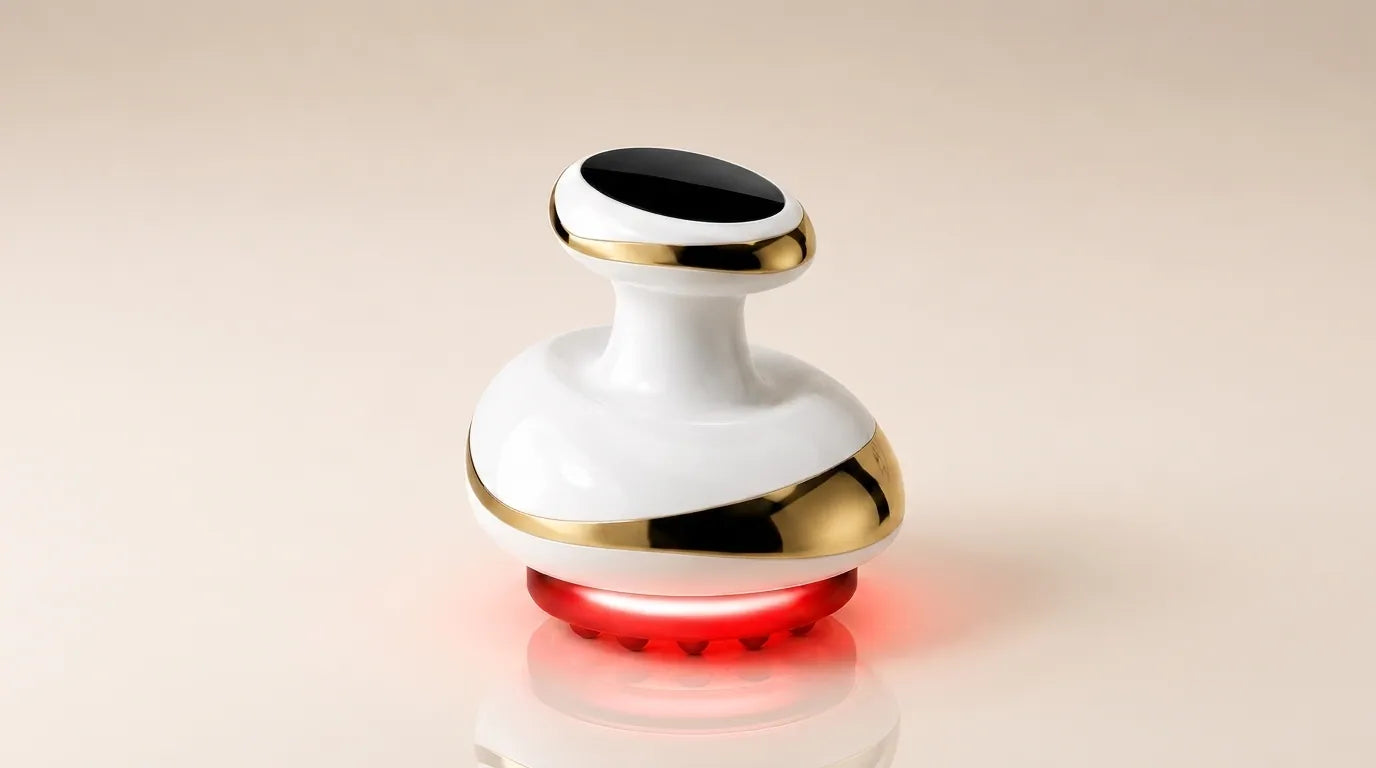
It's a small, cordless device you use on your calves, ankles, and feet for about 10 minutes a day. It combines three things in one:
- Gentle cupping suction — lifts the tissue upward and helps open the drainage channels (the opposite of a compression sock, which presses them flat).
- Soothing warmth — relaxes tight tissue so fluid keeps moving instead of settling.
- Red-light therapy — to support healthy circulation through the vessels.

Instead of squeezing your legs down, it works with your body's second heart to help fluid move the way it's supposed to.

I have to be honest with you — I'm not going to promise it works for everyone, and it is not a cure for any medical condition. If your swelling is sudden, painful, or only on one side, you need to see your doctor, not buy a device. But for the everyday heaviness, puffiness, and tired-leg feeling so many of my patients live with? Most of them tell me the same thing.
What people typically notice in the first month

What patients and customers are saying
"By 4 o'clock my ankles used to disappear into my socks. Ten minutes with this in the evening and my legs actually feel like mine again. I've stopped dreading the end of the day." ✓ Verified Buyer
"I've tried compression stockings for years. They help while they're on, but this is the first thing that makes my legs feel lighter after I take everything off. The warmth alone is worth it." ✓ Verified Buyer
"My husband uses it too now — he sits all day for work and his ankles would puff up every night. We each do 10 minutes while we watch TV. Best little routine we've added in years." ✓ Verified Buyer
Where to get it (and today's household offer)
It's not sold in stores — you can only get it online. Before I posted this, I reached out to the company directly, because I wanted more women dealing with this to have access. They agreed to open a special link with their current discount.
Even better — because so many women with heavy legs have a sister, mother, or partner dealing with the exact same thing, they're also offering a duo bundle for households, so you can get one for yourself and one for someone you love.
Choose Your Relief
It comes with a 60-day guarantee — love it or send it back. So try it. See if your legs feel lighter. See if the heaviness eases. And if it doesn't help you, send it back.
Don't wait until the swelling gets harder to manage. Take care of your second heart before the problem progresses.
Frequently asked questions
How long until I feel a difference?
Most people describe a lighter, less-tight feeling in the first week, with steadier day-to-day comfort building over about a month. Everyone is different — consistency (10 minutes daily) matters more than intensity.
How is this different from compression socks?
Compression squeezes fluid downward and only works while it's on. SculptFlow™ uses gentle suction to lift the tissue and support your calf pump — the goal is to help fluid keep moving, including after you're done.
Is it hard to use?
No. It's cordless and handheld. You glide it over your calves, ankles and feet for about 10 minutes while you relax in the evening.
Is it safe for me?
It's a wellness comfort device, not a medical treatment. If your swelling is sudden, painful, one-sided, or you have a diagnosed circulatory or heart/kidney condition, talk to your doctor before use.
What if it doesn't work for me?
You're covered by a 60-day guarantee. If you don't feel the difference, return it.
Advertorial disclosure. This is a sponsored article. The author is presented as a subject-matter educator; individual results vary. Vela X SculptFlow™ is a personal wellness comfort device. It is not a medical device and is not intended to diagnose, treat, cure, or prevent any disease, including lymphedema, venous insufficiency, or edema. Statements have not been evaluated by the FDA. References to conditions are for general educational context only and are not claims about the product. Always consult a qualified healthcare professional about swelling that is sudden, painful, persistent, one-sided, or accompanied by shortness of breath or rapid weight gain — these can signal a serious condition requiring medical care.