The Real Reason Your Legs Feel Heavy & Swollen by Evening
Why COMPRESSION SOCKS never fixed it — and the 10-minute method a vascular specialist says finally made even his own legs feel light again.
After more than 20 years treating circulation and lymphatic problems, I kept watching patients make the same mistake: trying to squeeze the swelling away. The hidden cause isn't how much water you drink or what you weigh — it's a "second pump" in your lower legs that goes quiet the moment you sit or stand all day. Here's what actually gets it moving again — and the three things you can stop wasting money on tonight.

Published July 2026 · Medically reviewed · ~8 min read

The part nobody says out loud
Let me say something that is going to irritate a few of my colleagues — and almost certainly the companies that have been selling you compression socks for the last decade.
If your legs feel heavy, tight and swollen by the end of the day, the problem was probably never your water intake, your weight, or "just getting older." And most of the advice you've been given hasn't failed you by accident. It's failed you because it's aimed at the wrong thing entirely.
I didn't fully understand this until it happened to my own legs. Read on — because once you see it, you can't un-see it.
Who I am
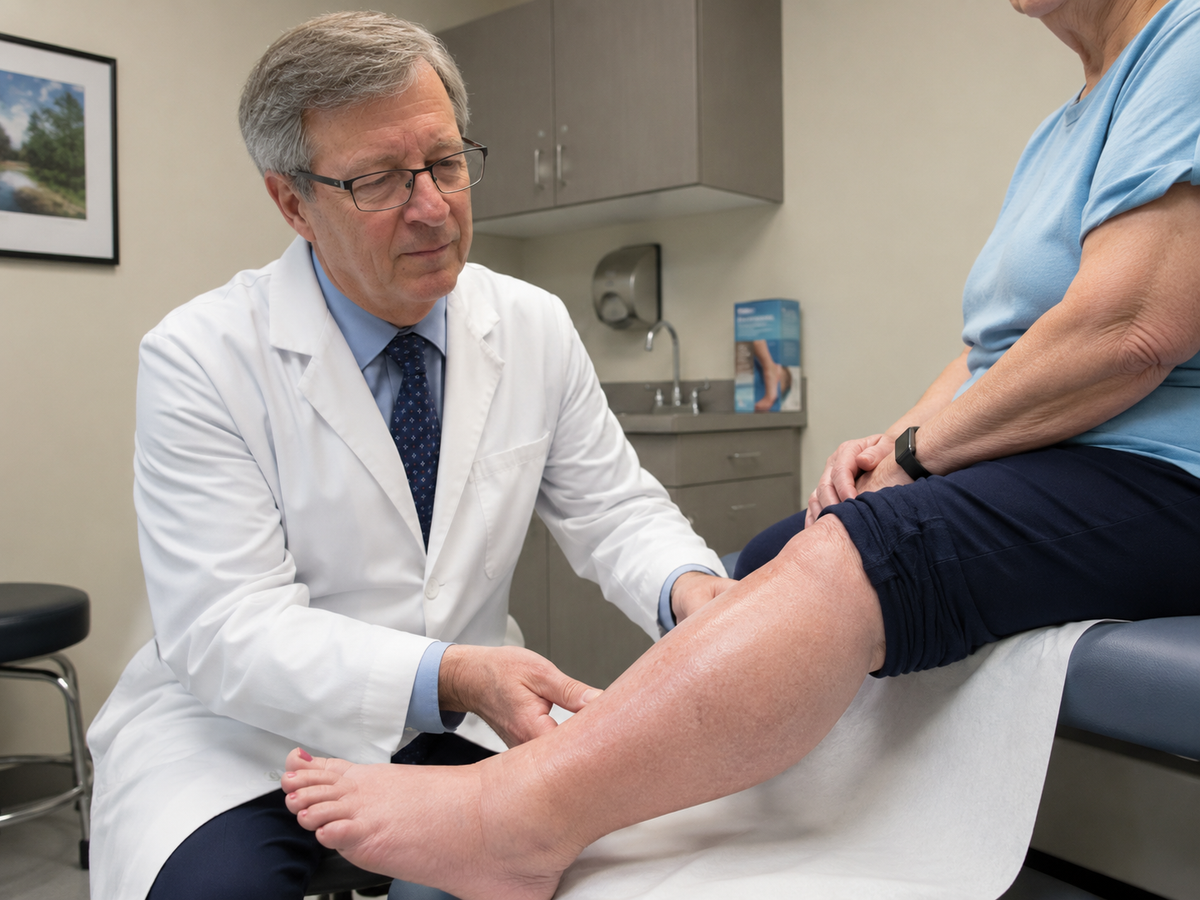
My name is Dr. Robert Hayes. I'm a board-certified vascular medicine physician with more than 20 years in vascular and lymphatic health, now working as an independent clinical advisor on lower-limb circulation and lymphedema care. My whole field is the plumbing of your circulatory system: the veins that carry blood back up out of your legs, and the lymphatic vessels that clear the fluid that builds up in your tissue.
For more than 20 years and thousands of patients — nurses, teachers, servers, retirees, long-haul travelers — I've heard the same sentence in slightly different words: "Doctor, by the end of the day my legs feel like they weigh twice as much, and nothing I try seems to hold."
I gave them the standard playbook. Compression. Elevation. Walk more, salt less, drink water. And for years I assumed that when it didn't work, the patient simply wasn't sticking with it. Then it happened to me.
The patient who changed my mind
I'll tell you about a patient first — I'll call her Linda (an illustrative case; details changed for privacy). Fifty-two, a floor nurse, three twelve-hour shifts a week.
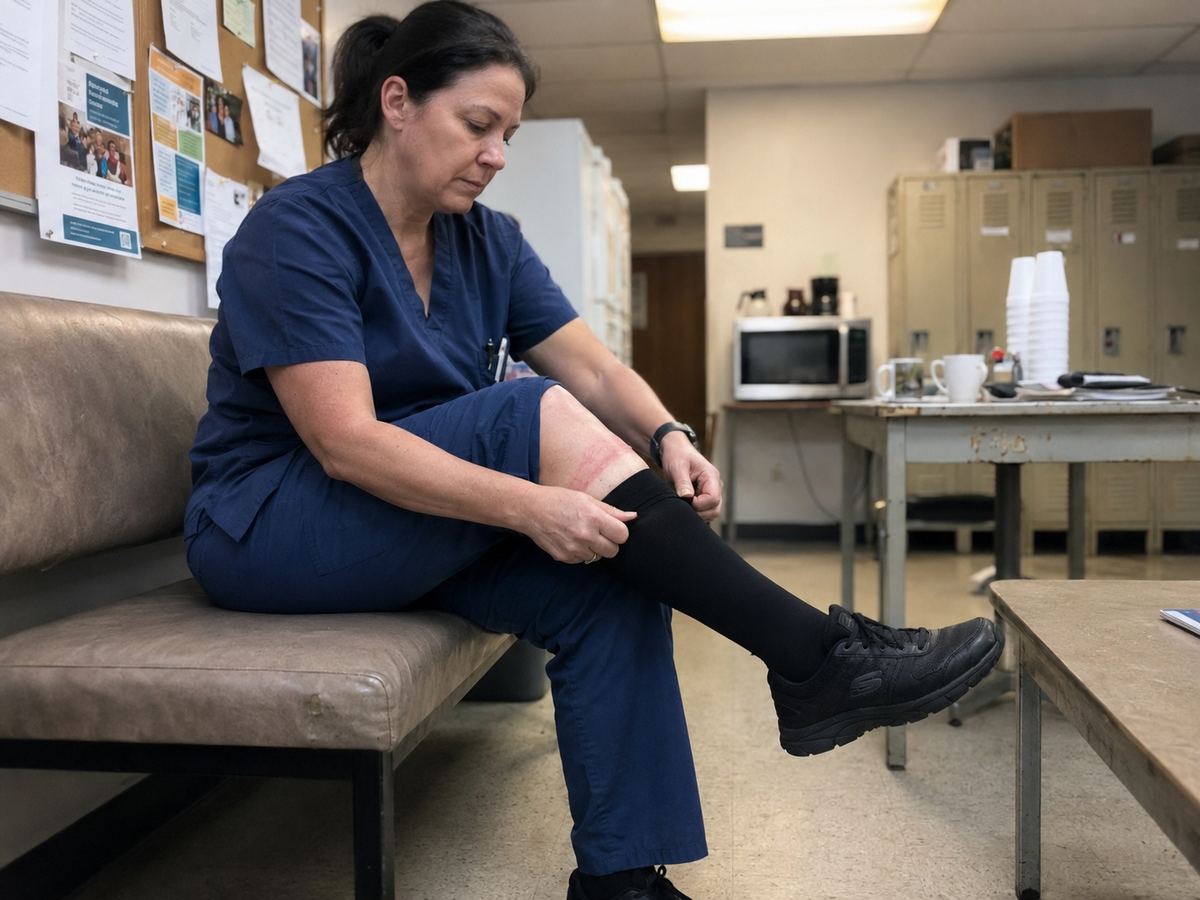
Linda did everything right. The good compression stockings — the tall kind from the foot all the way up the shin. Her water. Feet up when she could. She'd even lost weight because a previous doctor said that was the answer.
And every evening she peeled those stockings off to find the same thing: a deep red band pressed high into her calf that was still there at bedtime — and legs that felt just as heavy as before she put them on. "The socks help while they're on. The second they come off, it all comes back. What's the point?"
I didn't have a good answer for her. Not yet.
The realization
If compression handled the part you can see — the swelling — but the heaviness comes right back the moment you take it off… then compression was never touching the cause. It was only holding the symptom in place.
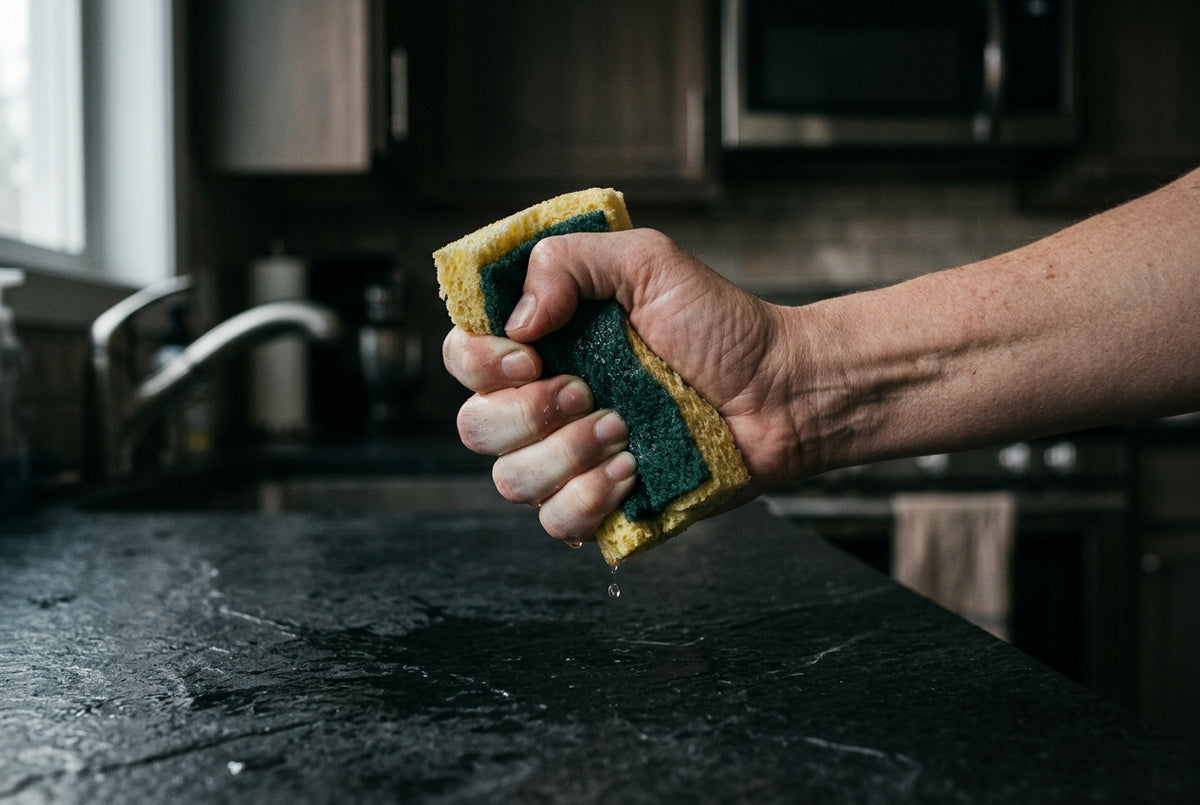
A sock that squeezes a swollen leg is like squeezing a wet sponge and then clamping it shut. It looks smaller — but you haven't moved a single drop out. Let go, and it fills right back up. So the real question isn't "how do I press the fluid flatter?" It's "why isn't my body moving that fluid out on its own — and how do I get it moving again?"
The root cause
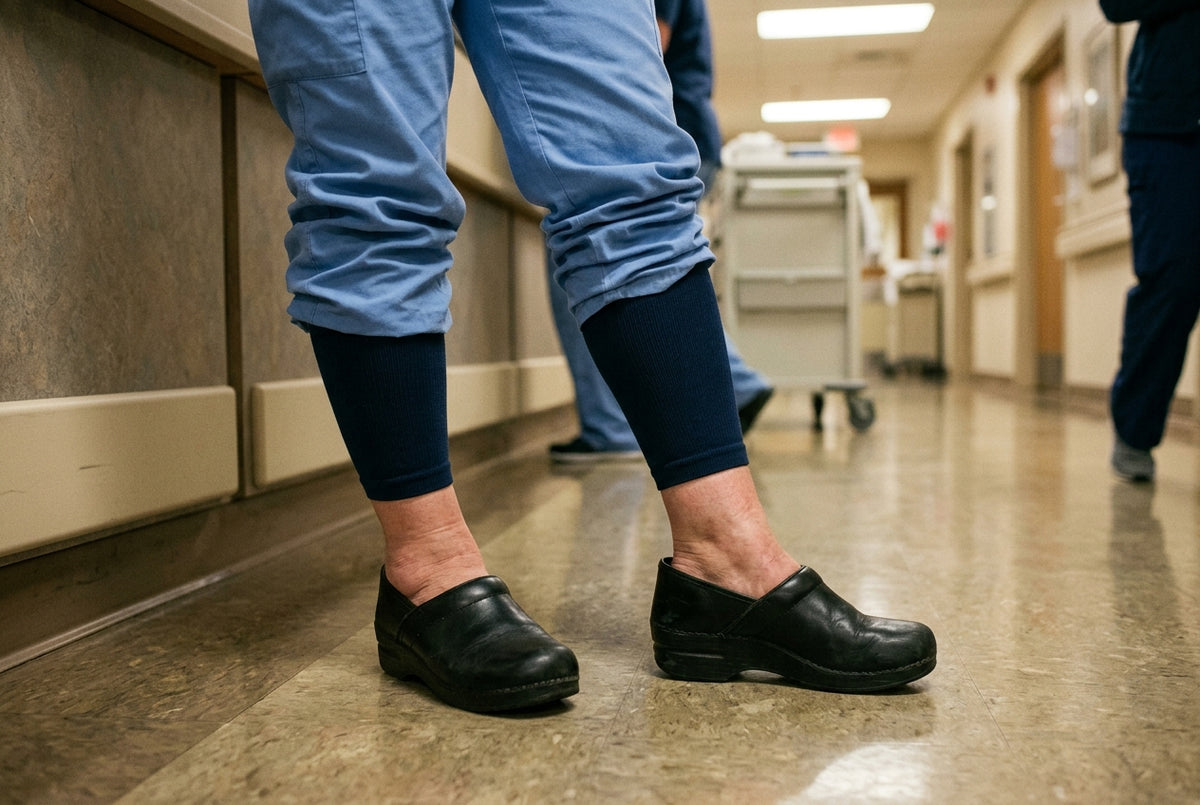
Here it is. Your legs have a second heart.
Your actual heart pushes blood down into your legs easily — gravity helps. But getting blood and fluid back up and out, against gravity, is a different job your heart can't do alone.
The muscle that does it is your calf muscle. Every real step, it squeezes the deep veins like a fist around a tube and pushes fluid upward. Physiologists literally call it "the second heart."
But that pump only runs when your calf actually contracts. Stand still at a nursing station for nine hours, or sit at a desk or on a plane for six, and it barely fires. The fluid it should send upward just settles. Pools. Hour after hour. That pooling is the heaviness. It was never mainly about water or weight — it's a pump that fell asleep.
It all comes down to one word: direction
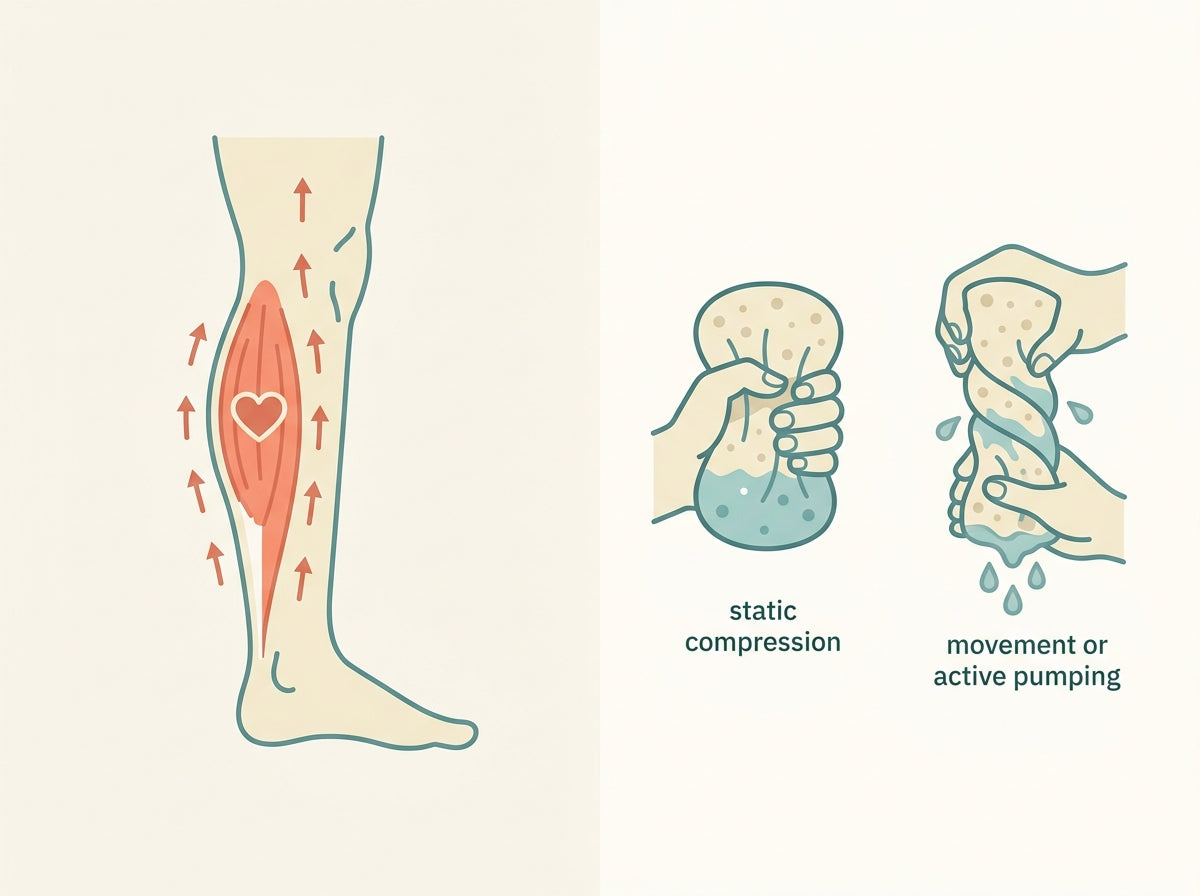
Once you can see that second heart, every fix that ever let you down snaps into focus — and it all comes down to one word: direction.
Here's the part almost no one is told. The tiny lymphatic vessels that carry that fluid away have one-way "gates" spaced along them. Those gates open when the skin is gently lifted up — and they seal shut when it's pressed down. So the harder anything squeezes your leg, the tighter it closes the very drains that are meant to empty it.
That one fact splits every leg "solution" into two opposite camps:
Compression socks, massage guns, hard foam rollers, hours of standing — all push the tissue flatter. They seal the gates and trap the fluid inside. Any relief lasts only while the pressure is on; the moment it's off, the heaviness floods back.
A gentle, gliding lift of the skin opens those one-way gates and carries the pooled fluid upward — the one direction your body is built to drain it. The fluid actually leaves, so the lightness stays. The trouble is how few things do this.
Almost every fix you've tried presses the wrong way. Only lifting moves the fluid the right way. That one difference is the whole reason your legs never stayed light — and once I saw it, I couldn't un-see it.
What a real fix has to do — and why I built one
So a real fix has to do three things at once: lift the fluid upward (never press it down), gently warm the tissue so it can move, and be quick enough to do every night. Miss one and you're just holding the sponge shut again. I couldn't find a single tool that did all three — so I helped design one.
Meet Vela X SculptFlow™

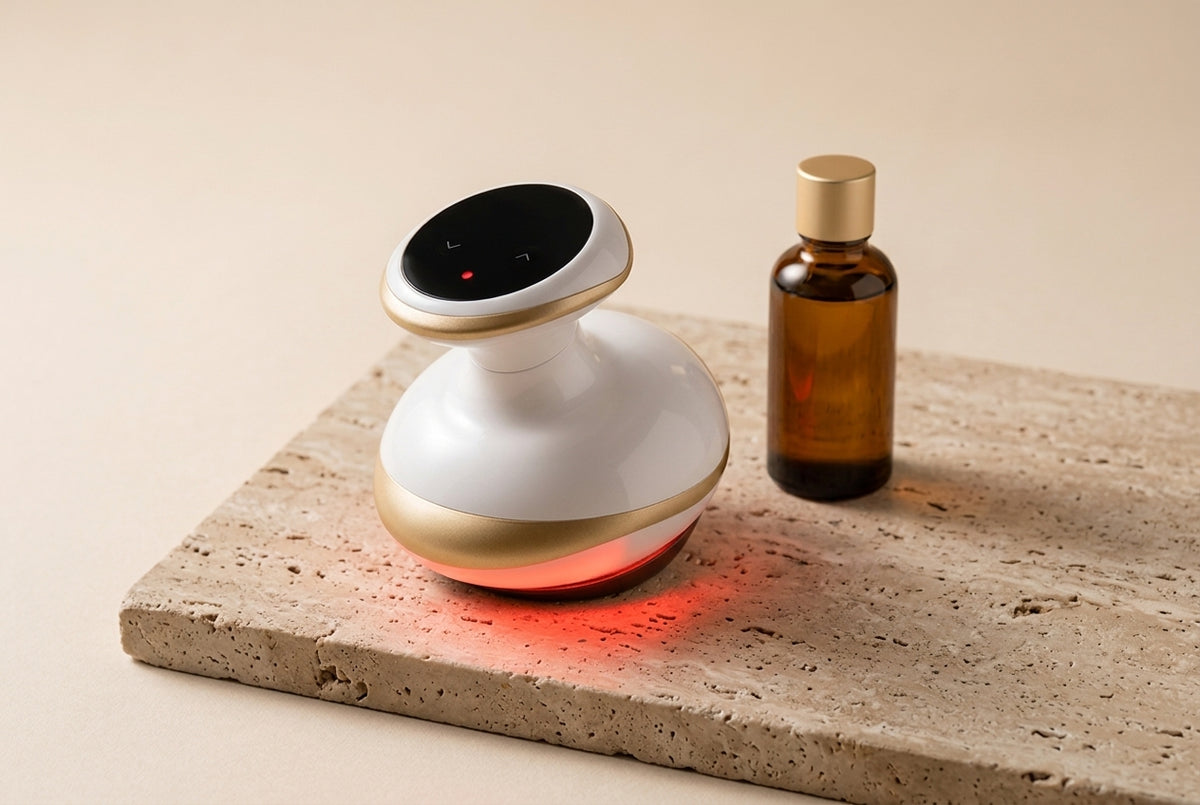
That's why I put my name behind Vela X SculptFlow™ — the 3-in-1 Sculpting & Cupping Therapy. A cordless, handheld device that does all three things in one ten-minute routine. Not a sock, not a pill, not a pounding massage gun — built around lifting vacuum suction instead of downward squeezing, with soothing warmth and red light layered in.
Here's what it actually does: its gliding vacuum suction supports healthy circulation and encourages your body's own lymphatic flow, its soothing warmth loosens the tissue, and its red light rounds out the ritual — together helping your legs clear the fluid that pools by evening and easing that heavy, swollen feeling. Most people feel it working from the very first session.
The first patient I gave it to was Linda — the nurse from the start of this story. She called me almost suspicious: "My legs felt lighter before I even finished the second one — and I had to run to the bathroom right after." That bathroom trip is exactly what you'd expect when parked fluid finally starts moving. Her words: "They feel like mine again."
(It's a wellness therapy device, not a substitute for medical care — if your swelling is sudden, one-sided, or painful, see your doctor. Full details at the bottom.)
Three modes → the three jobs
It's a 3-in-1 for a reason — each mode does one of the three jobs:
| The mode | Meets |
|---|---|
| Vacuum cupping suction — glided slowly up the leg, it lifts the skin (opening the one-way "gates") and carries the pooled fluid upward | ✅ Right direction: lift & move |
| Soothing warmth — adjustable, gentle; loosens cold, tight tissue so fluid flows more easily | ✅ Warm it so it can move |
| Red-light comfort — plus 6 intensity levels, cordless & rechargeable, ~10 min | ✅ Fits a real life |
One device, three modes, working together. A sock does one thing. A massage gun does one thing in the wrong direction. This does all three, in the right one.
Your 10-minute ritual
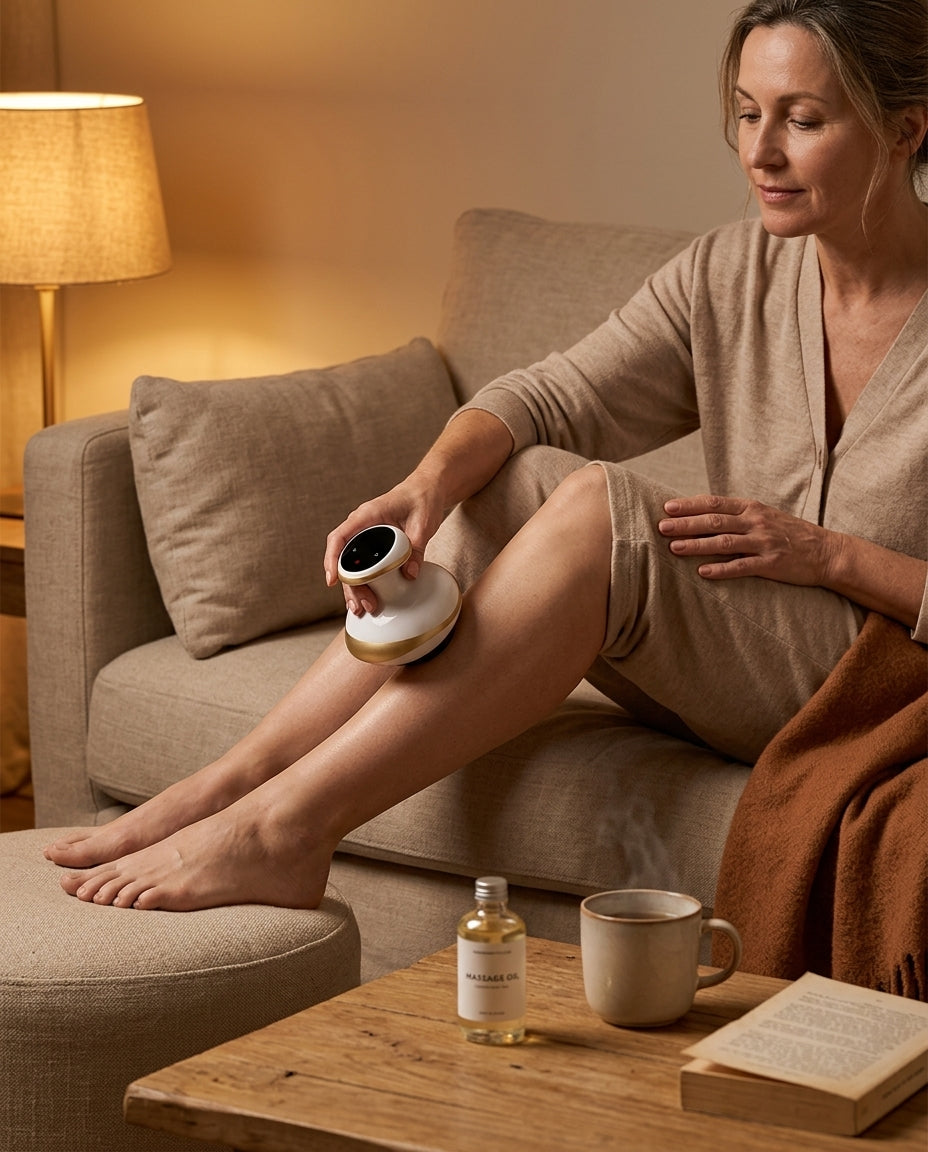
Step 1 — Cleanse & apply (~1 min). Smooth a little body oil over the area so the device glides easily.
Step 2 — Start the session. Power on; the gentle warmth and red light come up. Choose your suction level (there are 6).
Step 3 — Sculpt in motion (~5–10 min). From the ankle, glide slowly upward toward the knee — the direction fluid needs to travel. The suction lifts and carries; the warmth keeps it loose. Switch legs.
Most people feel the heaviness lift before they finish — and many make a bathroom trip shortly after, the sign parked fluid is on the move again.
👉 Get My Vela X SculptFlow™ & Feel My Legs Get Lighter Tonightfrom $59.99 · 60-day guaranteeReal results, real reviews

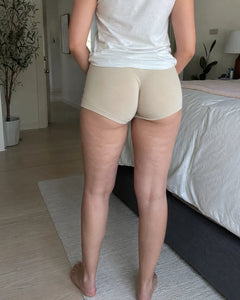
"my ankles usually feel so puffy after work. this fits right into my night routine and my legs feel so much more relaxed."
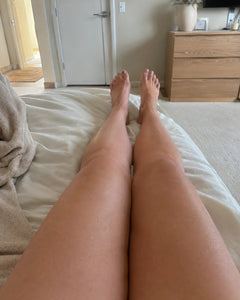
"standing all day is rough. i like using this with body oil before bed. feels sooo good. worth every penny imo."
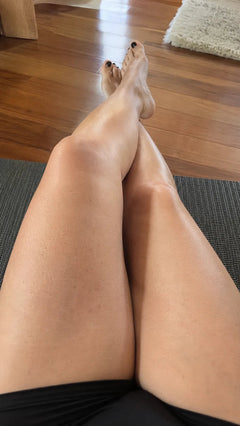
"after long flights my calves always feel heavy. this is the first thing i reach for when i get home."
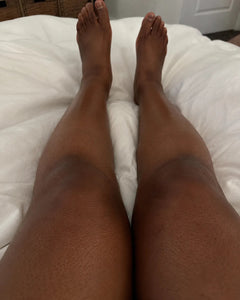
"i sit at a desk all day and my legs get stiff. a quick session and they feel so much more alive again."
"my ankles puff up in summer and this really helps bring it down. feels amazing gliding it up my legs."
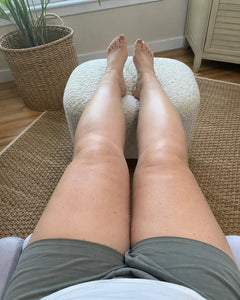
"been consistent for a few weeks and i genuinely enjoy the routine. would buy again."
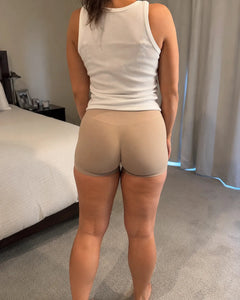
"i mainly wanted something for daily self care. the suction feels much deeper than a normal massager. battery could last a bit longer but overall i'm happy."
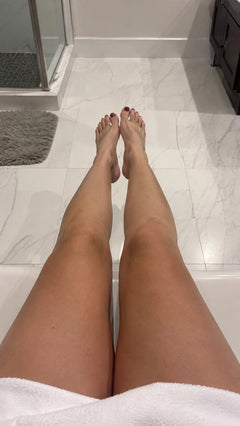
"ngl i was skeptical lol. but the suction is actually really satisfying. 100% keeping this in my routine."
What it really costs
| Approach | Real-world cost |
|---|---|
| In-clinic lymphatic drainage sessions | ~$70–$150 per visit, often weekly = $2,000–$4,000+/yr |
| A drawer of compression socks | $20–$40 a pair, again and again |
| Gadgets that ended up unused | Whatever you've already spent |
| Vela X SculptFlow™ | One time, from $59.99 |
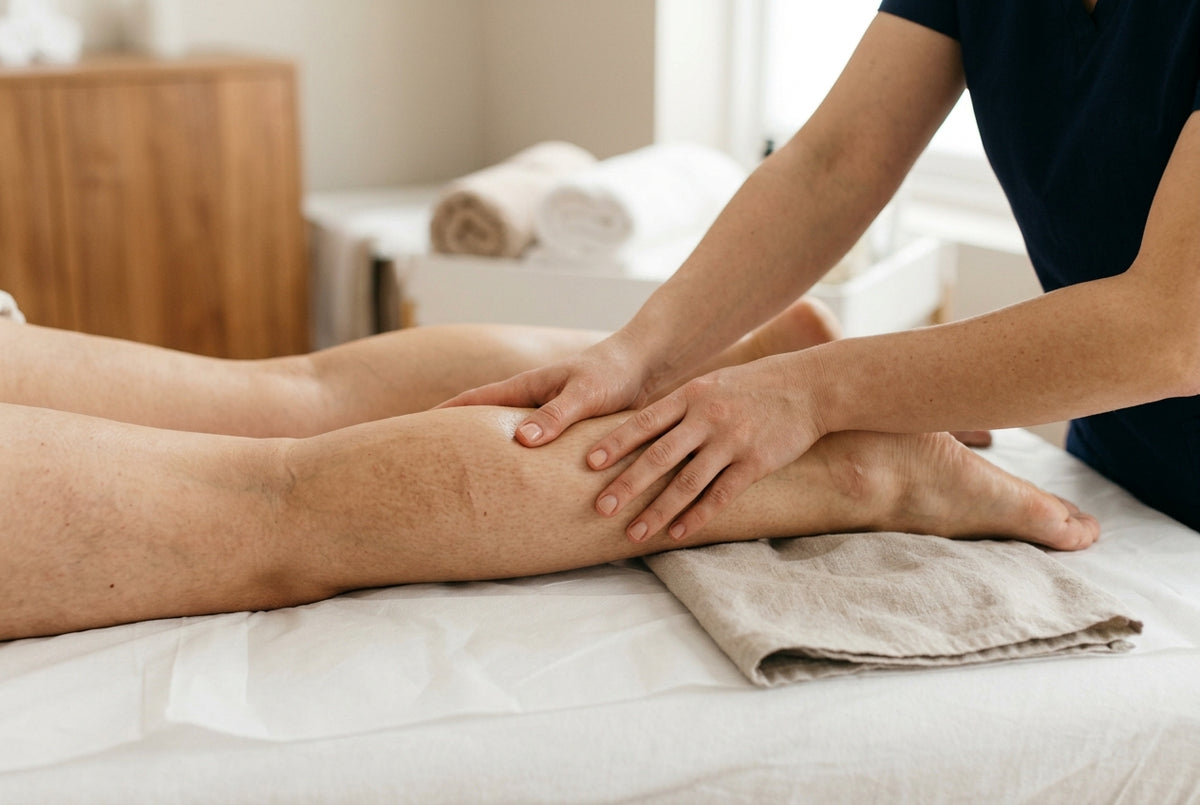
What it costs
For what it does, I expected clinic-device pricing. A single SculptFlow™ starts at $59.99 — a fraction of what a course of clinic sessions runs — and every pack comes with a free bottle of body oil. There are two ways to get it:
Worldwide shipping · secure checkout · 60-day money-back guarantee
My guarantee
Two futures
The difference is one small decision tonight.
How to start tonight
P.S. — Heavy evening legs usually aren't a water or weight problem. They're a sleeping-pump problem. Compression holds the sponge shut; SculptFlow™ helps wring it out — lift it, warm it, move it. That's the whole difference. — Dr. Robert Hayes
P.P.S. — With the 60-day guarantee, the only way to know if your legs are in the group this helps is to feel it yourself. If they don't feel lighter, you pay nothing.
Comments
Does this actually work if you're on your feet 12 hours? My ankles are gone by lunch.
That's the exact group it's designed for — a stalled calf pump from long standing. Ten minutes of upward gliding in the evening is the routine to try. (It's not a medical treatment — if swelling is sudden, one-sided, or painful, please get it checked first.)
I have a few varicose veins. Is this okay for me to use?
Many people with mild visible veins use it comfortably on the lowest setting — it's gentle, gliding suction, not deep pounding. But if you have diagnosed vein disease, clear it with your own doctor first. Never use it over a painful, hot, or suddenly swollen vein.
Am I too old for this? I'm 71.
Not at all — some of the most consistent users are older. It's light to hold and you're sitting down for it. Start on a low level and work up to what feels good.
How long before I actually notice a difference?
Most people feel the lightness the very first session — that part is immediate. Feeling it hold from day to day is what the nightly ten minutes is for. Give it two weeks of consistency before you judge.
How is this different from the massage gun I already have and never use?
A massage gun presses down. This uses vacuum suction that lifts and glides upward — the opposite direction. That's the whole point.
Ordered the Duo Pack. How long is shipping?
It ships worldwide with tracking — you'll get a tracking link by email once it's on the way. The team can help with any order question through support.
bought one for me and one for my mom. best thing i've done for my ankles after retail shifts 🙌
3 weeks in and my shoes actually fit at the end of the day again. wish i'd found it sooner.