A Squeeze Isn't a Release — And Your Calves Already Know It
If you already wear compression socks through every shift and still peel them off to find your calves rock-hard, still aching, still ringed with deep red dents — this isn't a compression sock problem. It's a squeeze-versus-release problem, and nobody's told you the difference yet.
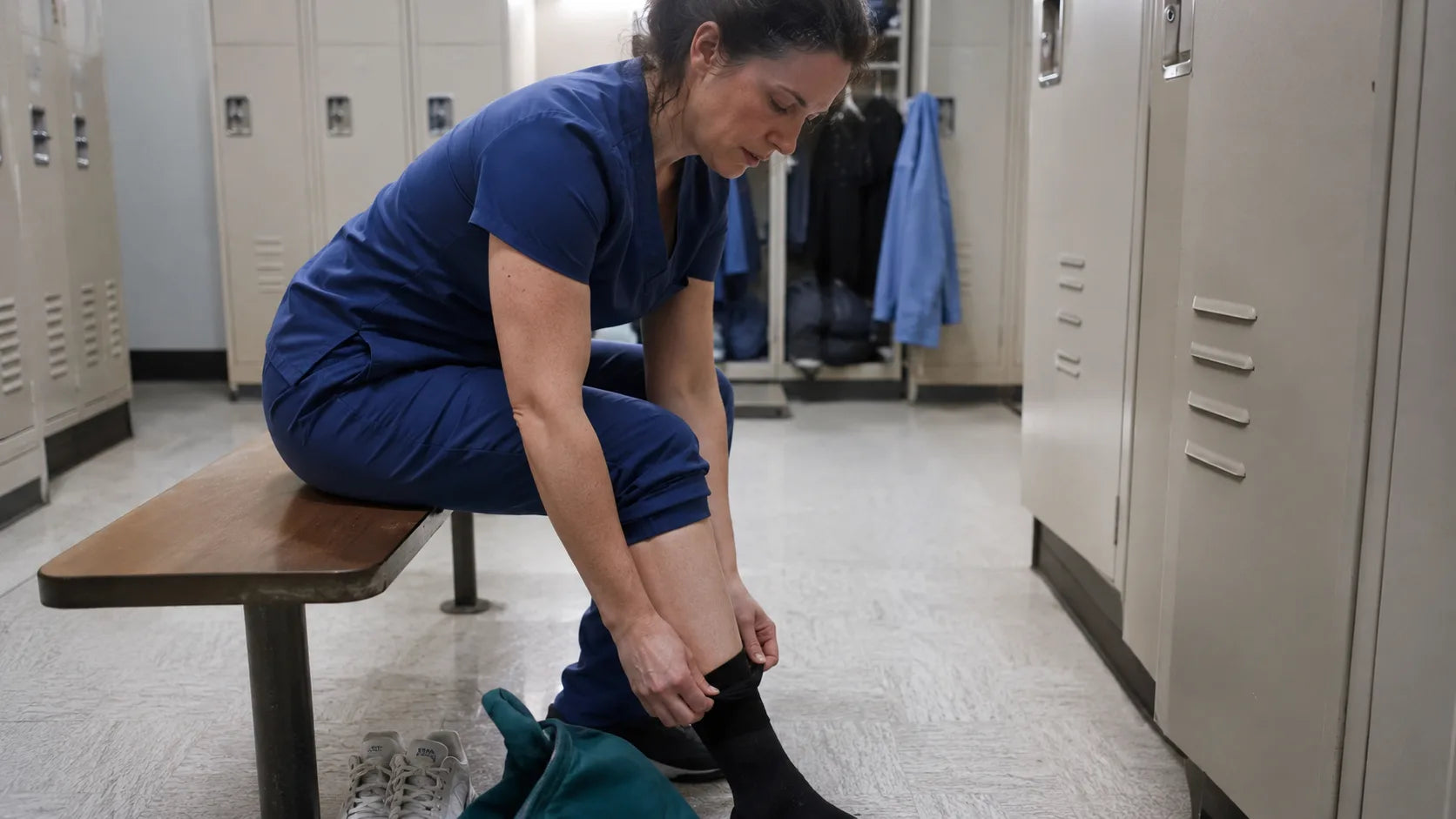
You already do the responsible thing. You bought the socks — good ones, not the $9 drugstore pair. Three, four pairs, the kind the other nurses on your floor swear by.
You wear them every shift. Twelve hours. Sometimes back-to-back.
And at the end of it, you sit down, unlace your shoes, and peel that sock off. Your calf is still rock-hard. Still aching. Still exactly the way it felt at hour ten.
I'm a nurse. I did this exact thing to my own legs for twelve years before I understood what that ring was actually telling me.
Here's what nobody explained back when they handed you that first pair and said "wear these."
What's Actually Happening Inside That Calf by Hour Ten — And What the Squeeze Is Covering Up
It's not really about your feet. It's about what happens to a calf that's loaded and standing for ten, twelve, sixteen hours and never allowed to sit.
Gravity pulls blood and fluid downward all day. Normally, walking and sitting help pump it back up. But on hard tile, concrete, back-to-back call lights, "we're not allowed to sit down" — that pump barely runs. So the fluid just pools. By hour ten, your calves feel absolutely dead — heavy, full, swollen — because in a real sense, they are.
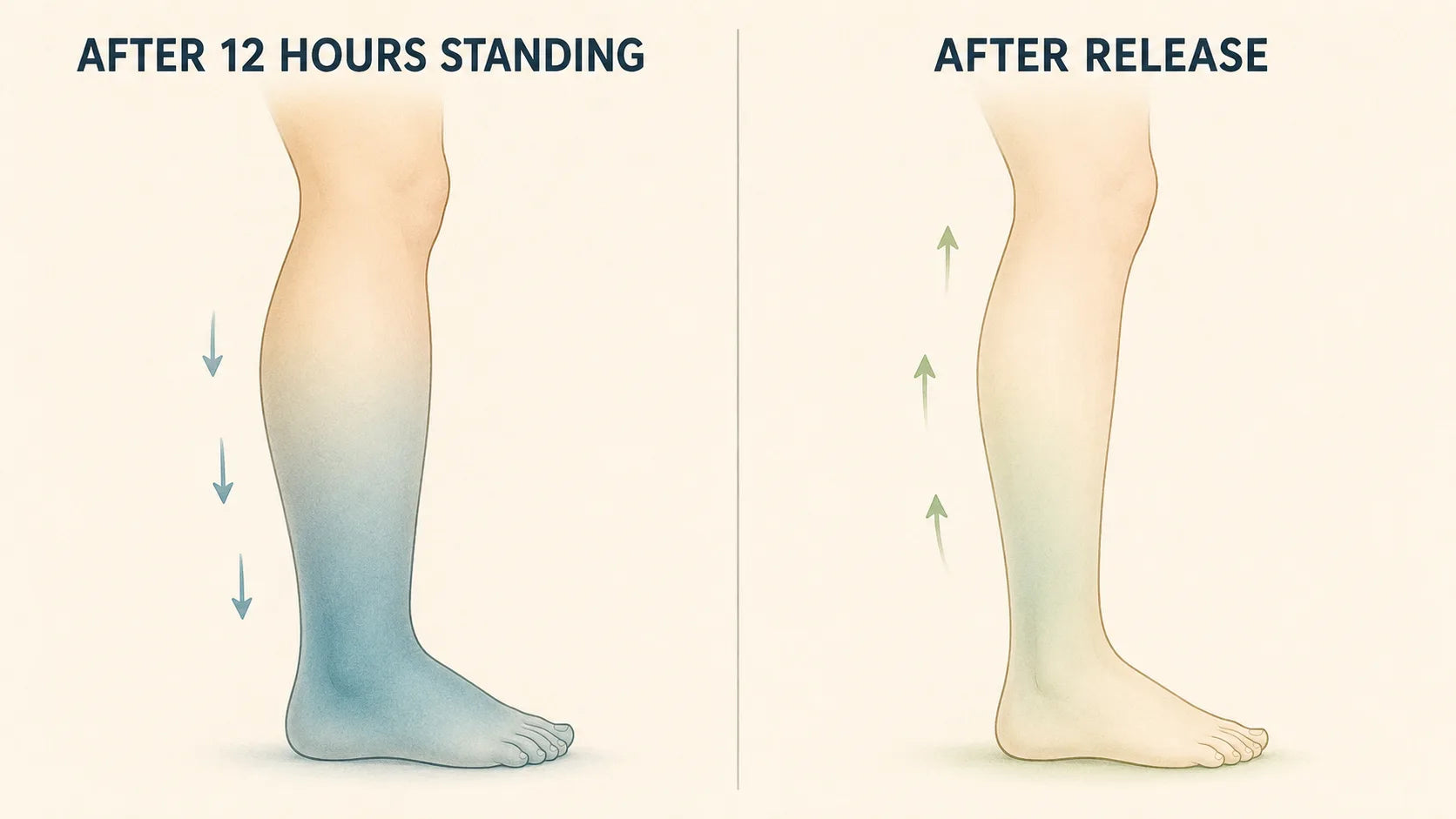
The second thing is separate, and it's what actually makes the muscle feel rock-hard. A calf held semi-contracted for twelve straight hours — bracing, rocking heel to toe just to survive the shift — never gets the release it needs to relax. It stays switched on. That's why it goes rock-hard, almost concrete. It's not soreness like a workout. It's a muscle that forgot how to let go.
Now add the sock. Somewhere around hour four or five, that squeeze can genuinely feel like relief — a little lift, a little less heavy. That's real, and it's exactly why you keep buying pairs. But squeezing isn't releasing. Under the fabric, the tension is still trapped and the fluid is still pooled; the sock is only pressing a lid down on both, holding the ache quiet instead of moving it anywhere.
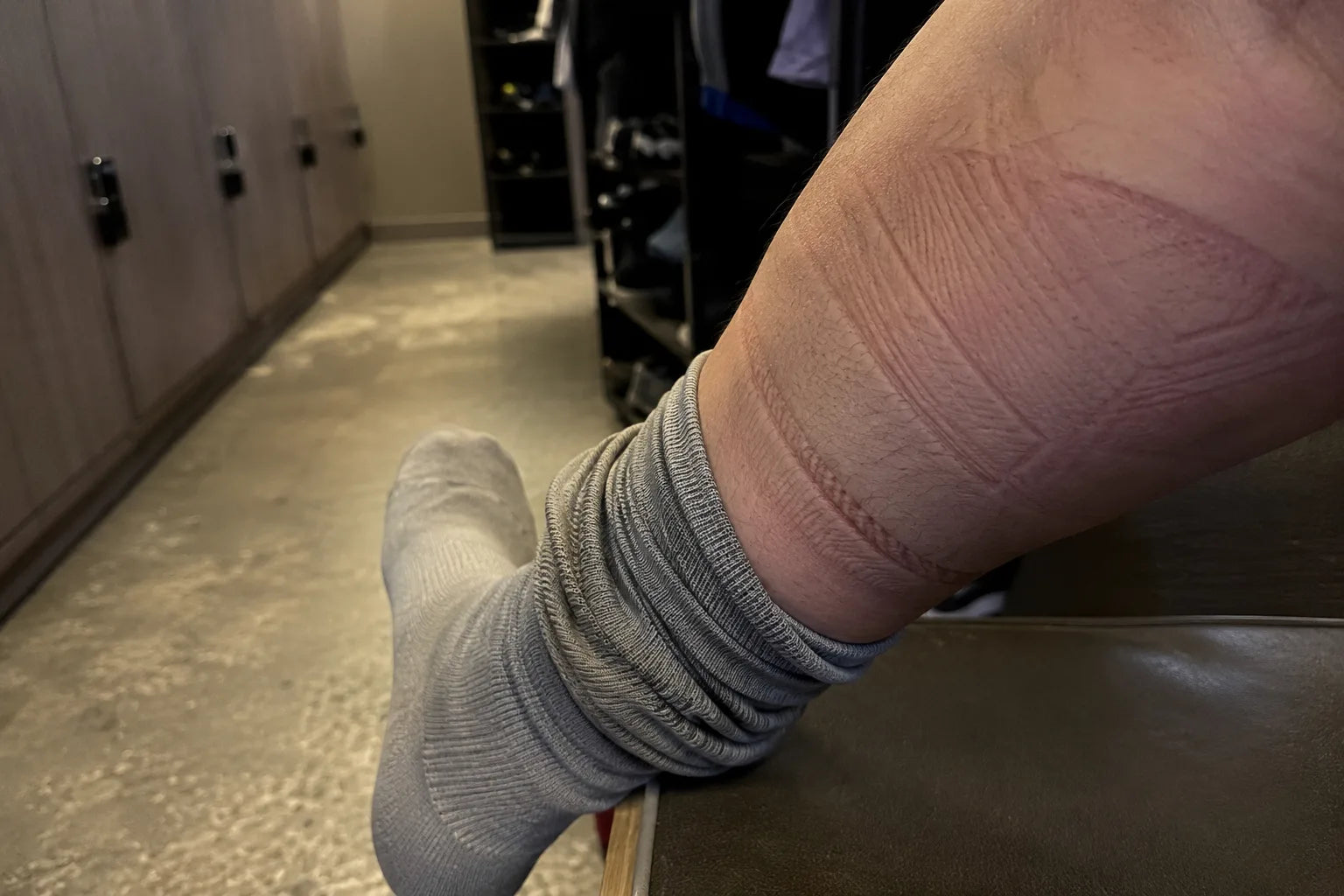
And worn tight, all shift, on a calf that's already swollen, that lid can work against you. That's the deep groove you find pressed into your skin by the time you sit down — and for plenty of us, the calf and foot underneath it go numb, tingly, "falls asleep", heavy and cold and prickly before we finally peel it off. Not because the sock failed you. Because a squeeze tight enough to feel like something is also tight enough to cut into a calf that's already this congested.
Squeezing was never releasing. And binding it tighter was never draining. That red ring you look at every single night is the sock quietly telling you both of those things at once.
Squeeze In vs. Lift Out
That red ring on your calf isn't just elastic. It's the shape of the actual problem.
The sock squeezes that already-pooled, already-congested tissue from the outside in — which is exactly why it can feel like relief mid-shift. But squeezing isn't draining. The sock never pulls any of that fluid back up and out, and it never touches the locked muscle underneath. It just presses a lid down on a problem that's still fully there when you peel it off.
Look at every fix on your locker shelf with that in mind. Compression squeezes in. The massage gun pounds in, even harder. Stretching pulls the muscle long for a few seconds — then the same standing load presses it right back down flat the moment you're back on the floor.
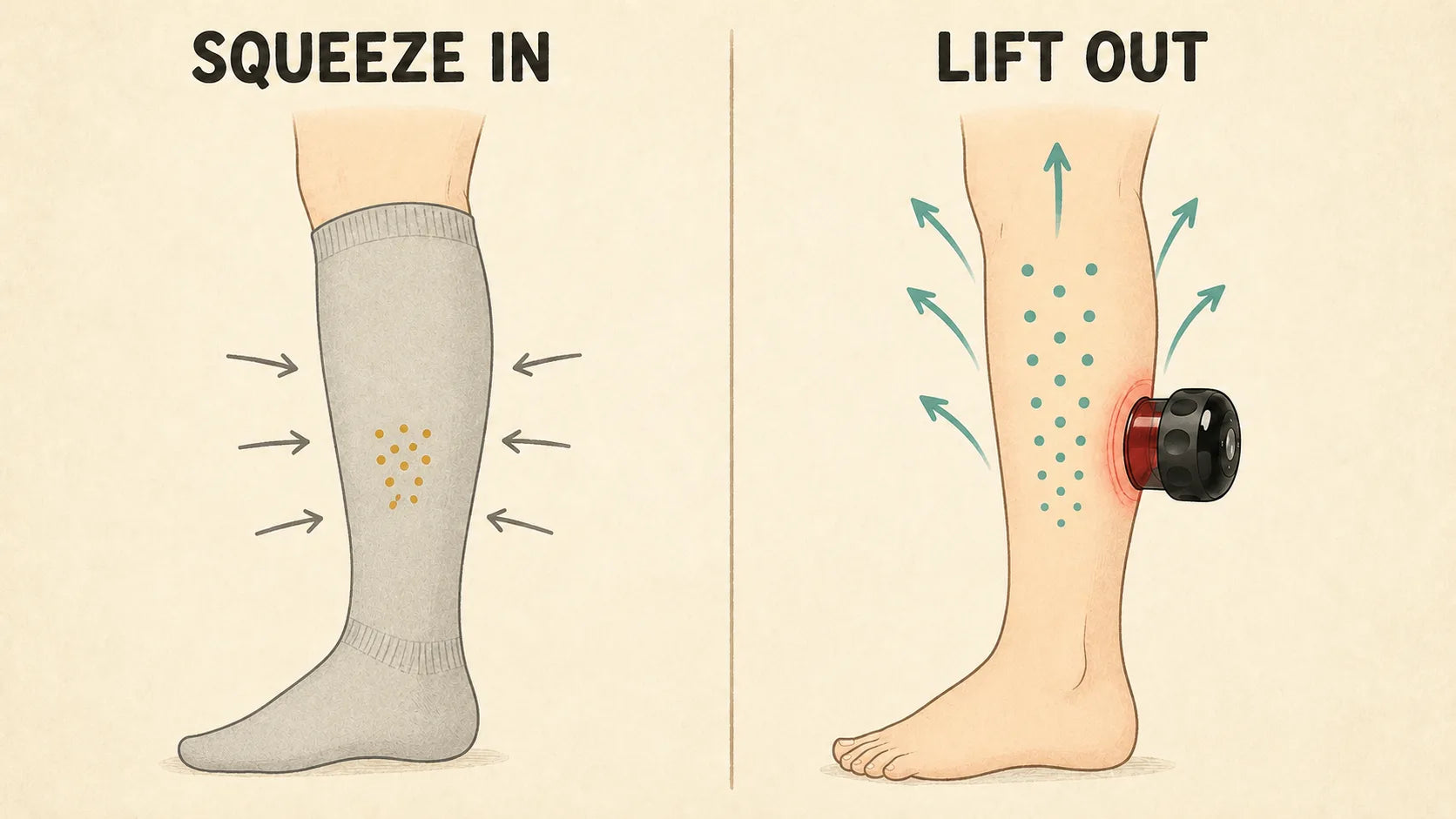
Every one of them was aimed the same direction. In. Pressing a problem in was never going to pull it out.
The Lift-and-Drain Reset
That's the idea behind what I started using instead: a small warm-suction device called the Vela X™ Smart Cupping Massager, used on the calf in what I call a Lift-and-Drain Reset. It's not a massage gun, and it isn't a sock. It's built to do the opposite of a squeeze — instead of pressing in, it lifts out.
Start with the squeeze illusion, because that's the one that fooled me longest. A sock presses a lid down over trapped tension and calls it relief. The cup does the reverse: gentle suction actually lifts the calf tissue up and away from the compressed position it held all shift, so whatever was pinned under that lid finally has somewhere to go. It doesn't hold the ache quiet. It lets it go.
Warm Lift. Flameless heat, up to 107°F, softens the muscle first. That's the part aimed straight at the locked, loaded calf — the one that stayed braced and switched on for twelve straight hours and forgot how to relax. The heat is what finally tells it it's allowed to.
Rhythmic Lift-and-Drain. This is where the pooling actually gets undone. Instead of cinching the leg shut the way a tight sock does — the same cinch that presses that deep groove into your skin and lets your foot go numb, tingly, and cold by hour ten — the suction opens the leg and draws the pooled fluid up and out, back toward circulation instead of trapped at the ankle. Twelve settings, so you can start low. That heavy, prickly, half-asleep feeling that used to greet you at sock-off time gives way to something light and loose instead.
Heat + Light Layer. A soft 660nm red glow rides along for the full session — a visible cue the reset is actually happening, not just being covered up.
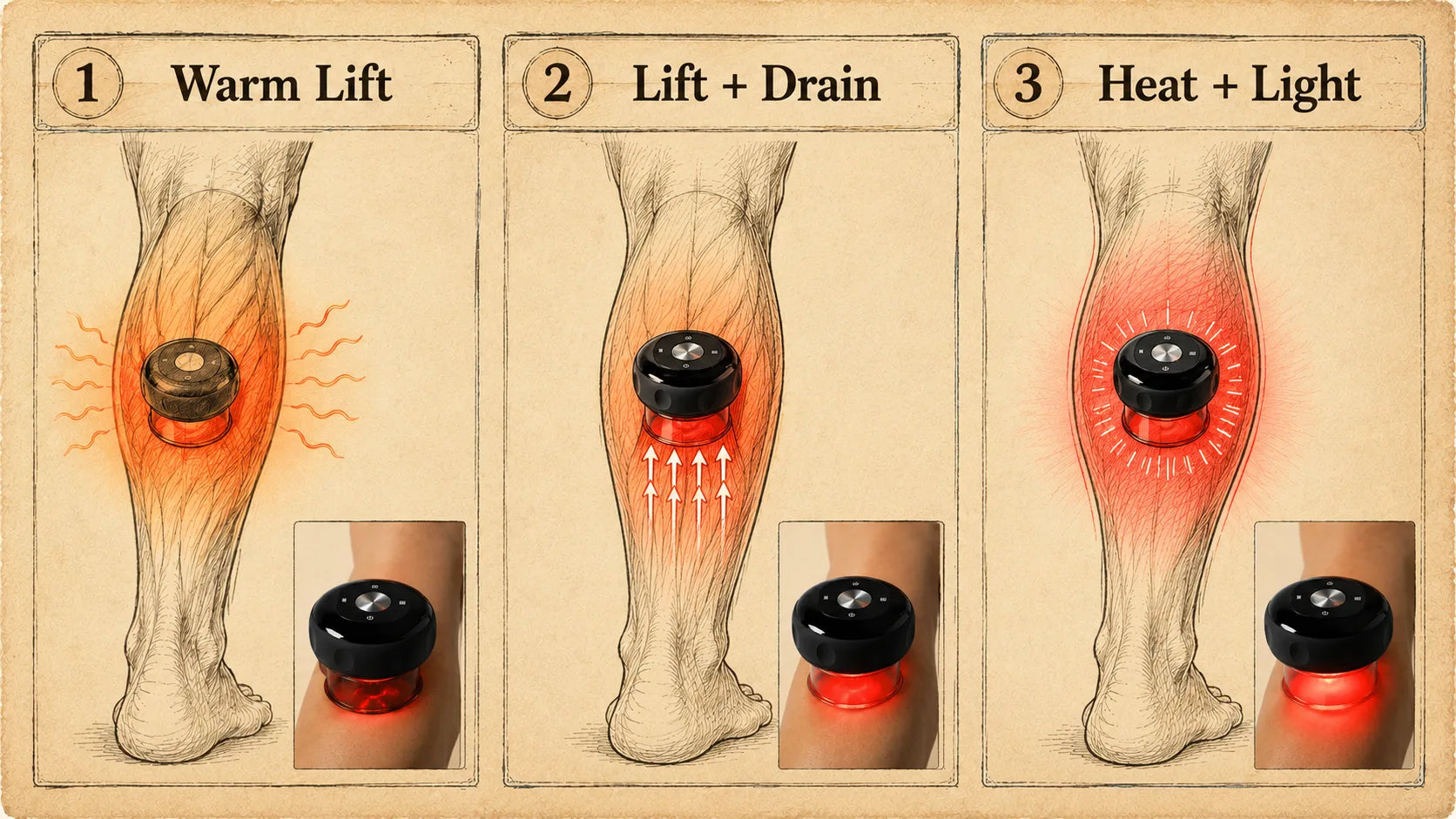
Ten minutes, once a night, on the couch. No lid pressed down, no cinch dug in — just a calf that gets drained of what pooled and released of what locked, at the same time. That's the one job no sock, and no massage gun, ever did together.
The Night on the Break-Room Floor That Changed How I Looked at That Ring
I'm Renee. Twelve years a floor nurse — started in med-surg, did a stretch in the ER, went back to med-surg because the pace suited me better. For most of those twelve years I wore compression socks every single shift and genuinely believed they were doing the job. Told new grads to buy a pair their first week, same as someone told me.
About ten years in, I worked a brutal double — the kind where you don't remember eating, just remember your feet still in your shoes. Somewhere around hour fourteen I ended up sitting on the break-room floor, back against the vending machine, because my legs wouldn't hold me up for one more flight of stairs. I peeled the sock off and looked at my calf a second longer than usual. Rock-hard. A deep red ring pressed into the muscle — the same ring I'd seen on my own leg, and on every nurse, aide, cafeteria worker, and housekeeping staffer I'd worked beside, a thousand times without really seeing it. That was the first night I actually asked what it was telling me instead of just wrapping another sock around it.

Once I started asking, I couldn't stop noticing it. Same red ring on the CNA who covered my hall. Same rock-hard calf on the cook downstairs in the cafeteria after her shift. Dozens of us — different job titles, same tissue doing the same thing after standing on the same hard floors — all reaching for the same sock, an answer that only ever squeezed the ache quiet, never drained it.
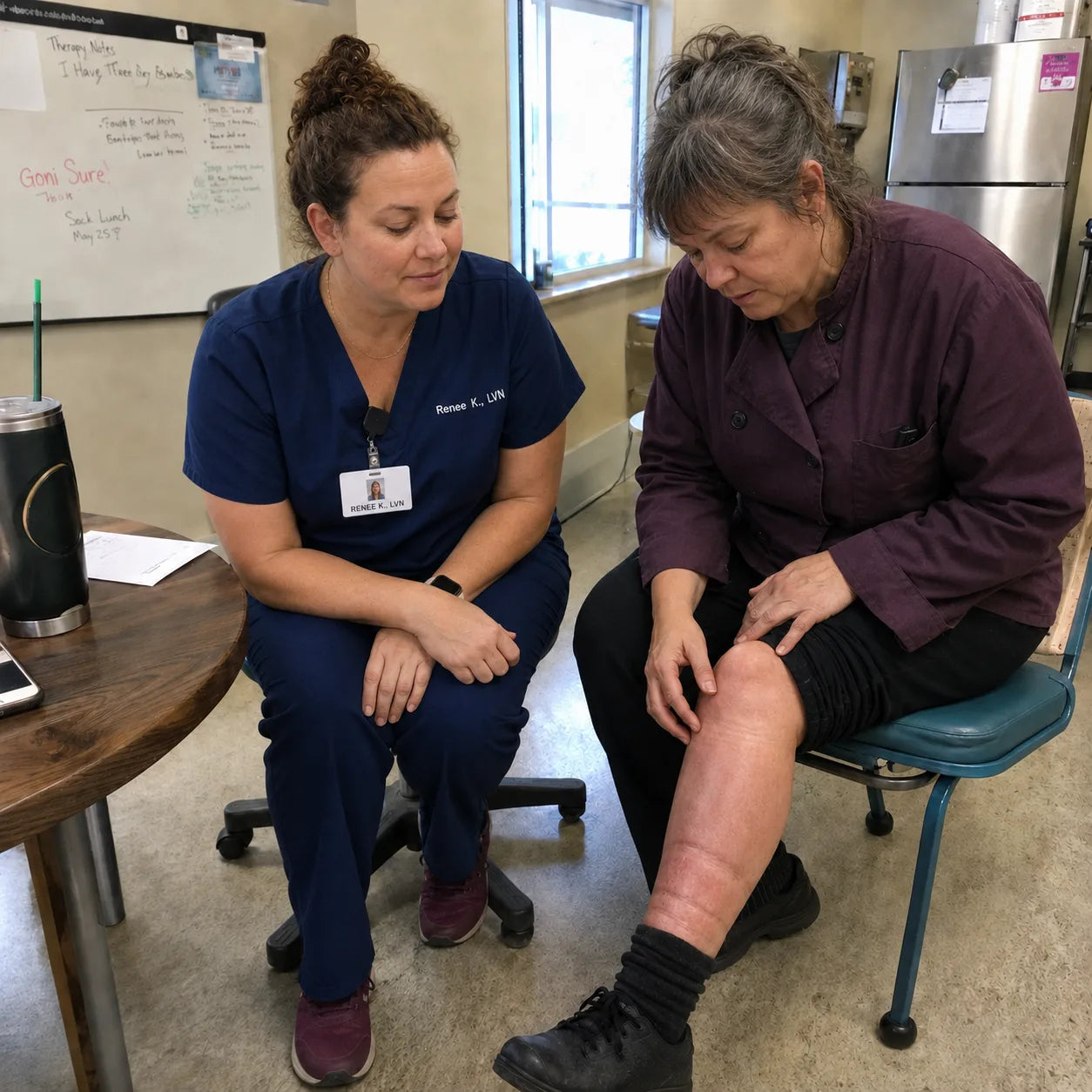
If you're reading this on your break with your shoes half off, still in your scrubs or your kitchen clogs, you're the exact person I kept seeing on that floor. I'm not telling anyone to throw their socks out — I still keep a pair in my bag. I stopped believing the sock was the whole answer once I understood what that ring actually meant.
| Compression Socks | Vela X Smart Cupping |
|---|---|
| ✕Just squeezes the ache quiet | ✓Lifts the muscle to release it |
| ✕Hot, itchy — stuck in them all shift | ✓Suction + heat, 10 minutes a night |
| ✕Buy pair after pair — still tight again | ✓One device, no re-buying |
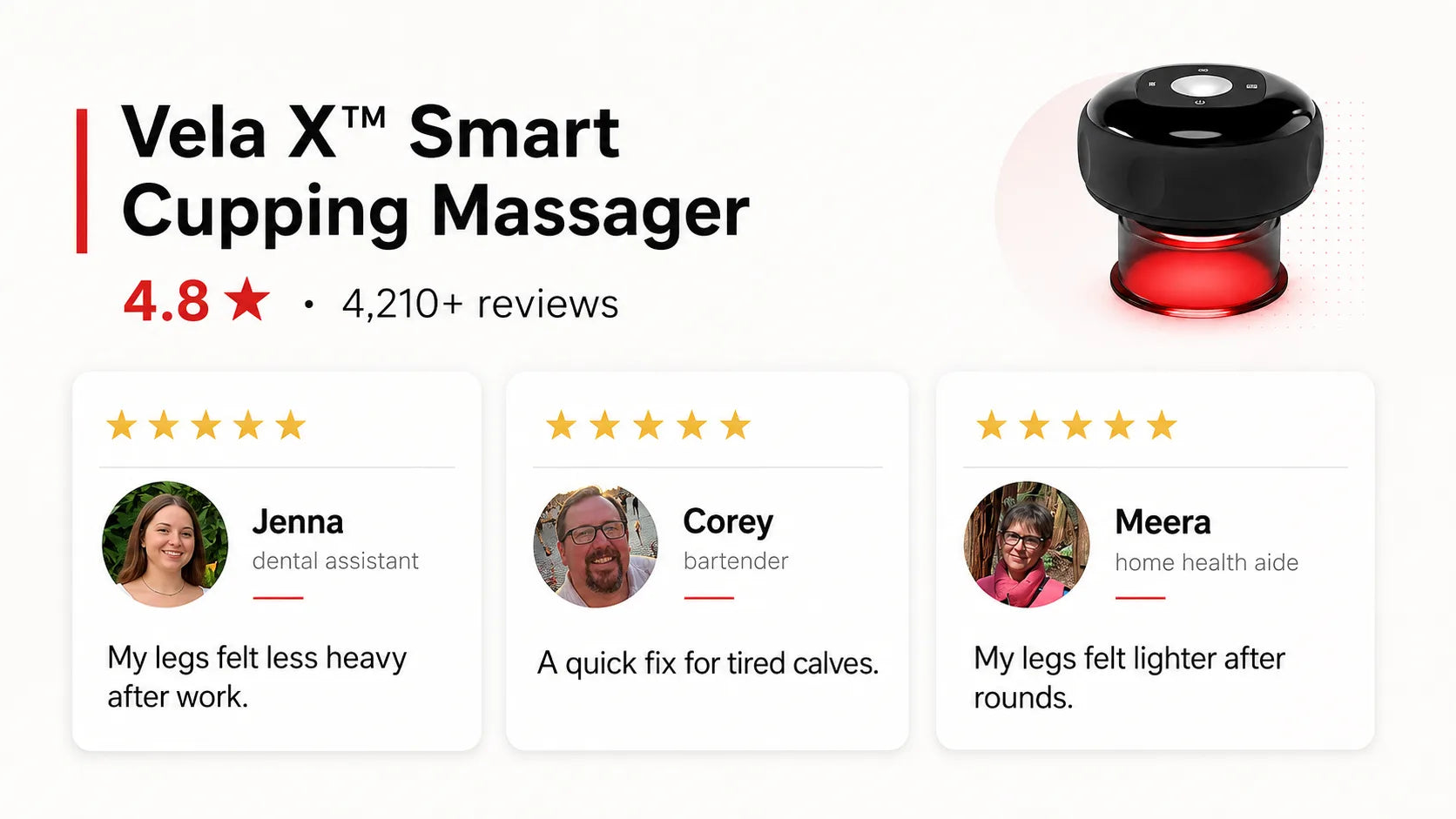
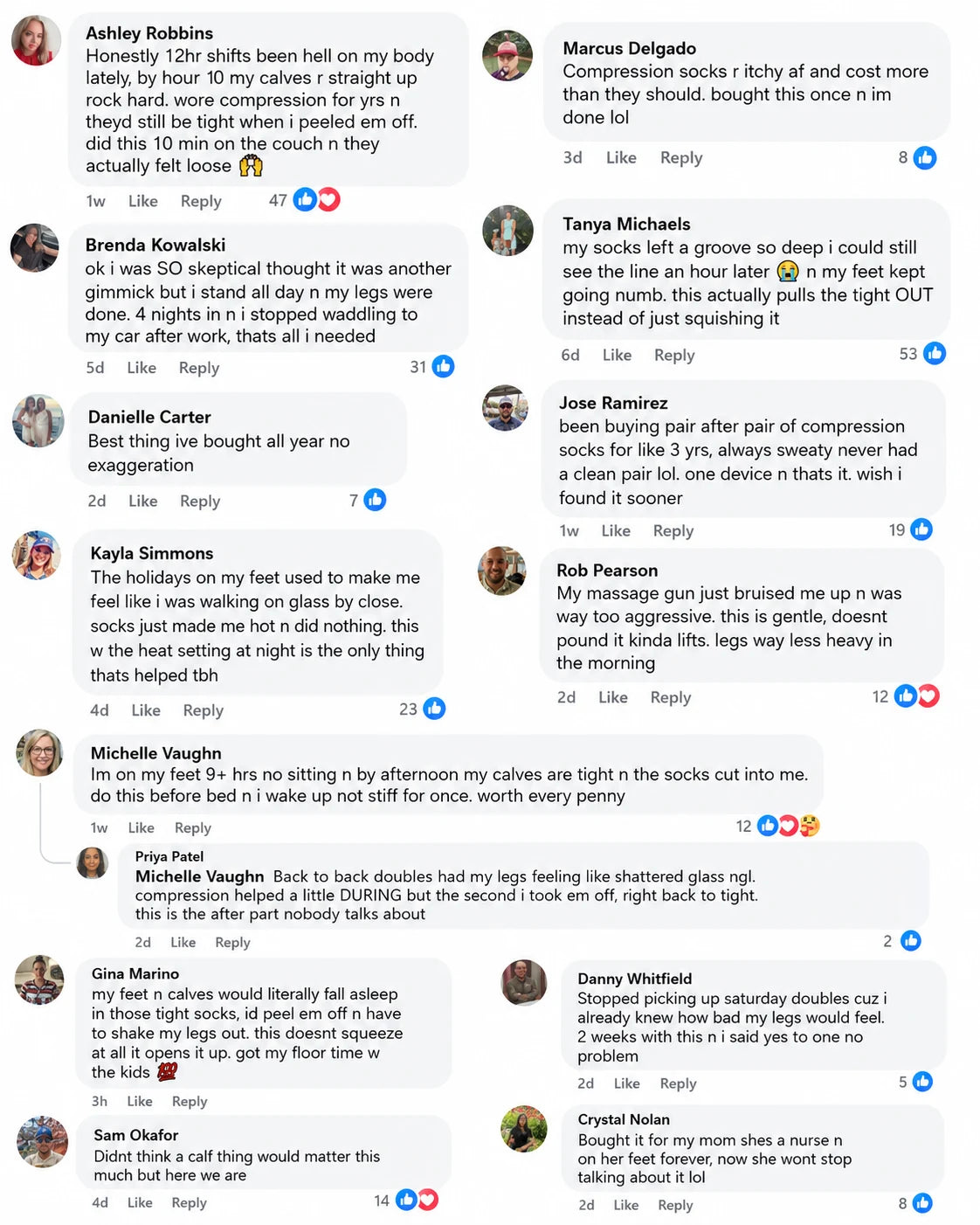
4.8 Stars. 4,210+ Reviews. Same Shift, Different Job Title.
Vela X sits at 4.8 stars across 4,210+ reviews — nurses, servers, cooks, and retail leads, most of them former compression-sock loyalists voicing the exact complaints you've probably muttered under your breath by hour ten.
I'm one of them — I recommend this to every coworker who still peels off a sock at the end of a shift and finds the same ring I used to.
From Dreading the Sock-Off to Not Thinking About It
| Before | After | |
|---|---|---|
| Peeling the sock off | Braces for the rock-hard ache and the red ring | Already feels lighter underneath |
| Evening | Too tight to get on the floor with her kid | Gets down for bath time like she used to |
| Picking up shifts | Turns down the extra double | Says yes without flinching |
This was never really about the sock. It was about which shifts you feel like you can say yes to.
Everything Included, Before the Price
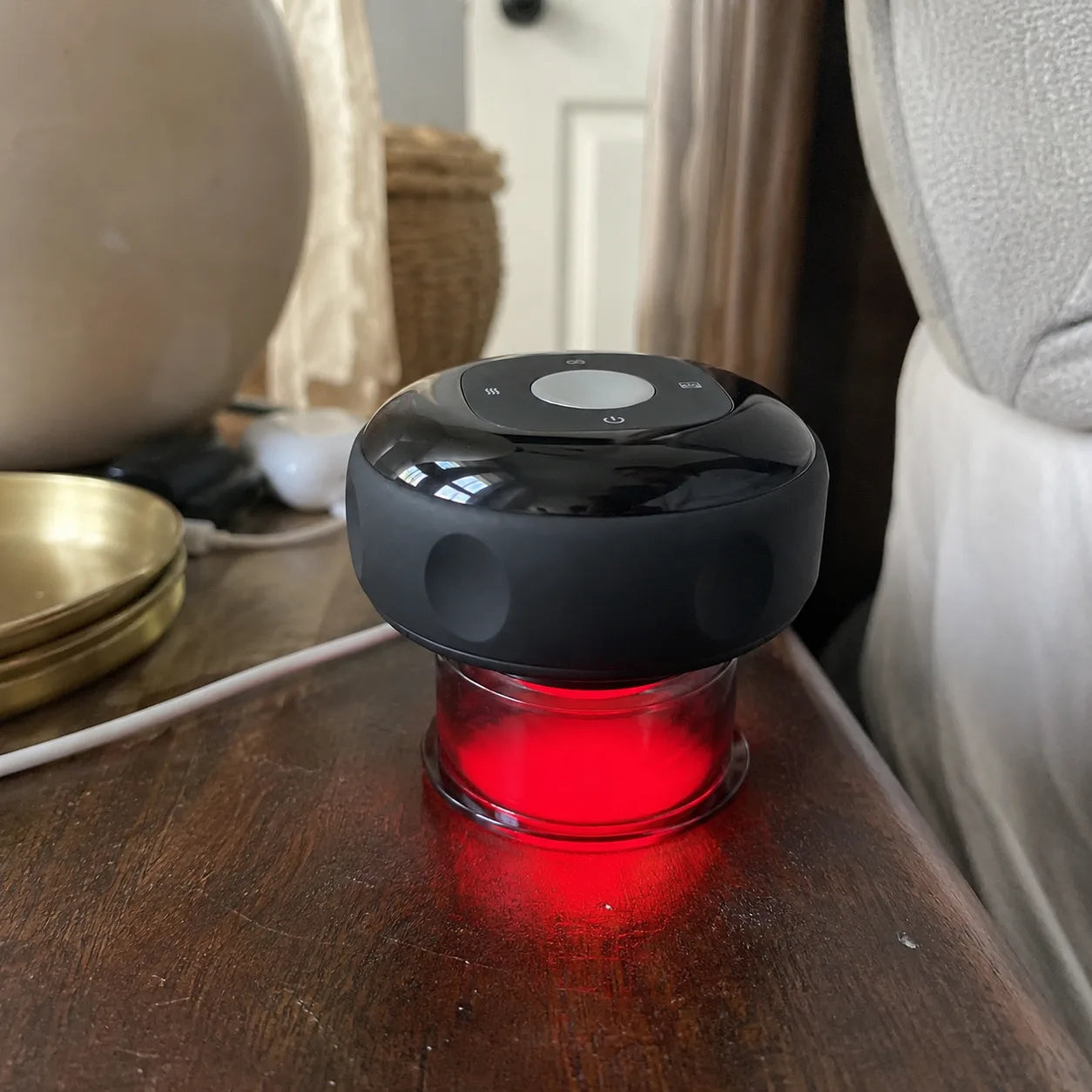
The Vela X device — dynamic suction, flameless heat to 107°F, 660nm red light, cordless. Twelve settings. Single-press instant release plus timed auto-release, so a session never runs long even when you're half-asleep on the couch. Free shipping today.
- Vela X warm-suction device (suction + heat to 107°F + 660nm red light)
- 12 settings, single-press + timed auto-release, cordless
- Free shipping today
- 30-day money-back guarantee
Use it as your after-shift ritual for 30 days. If it doesn't earn a permanent spot in your routine, send it back for a full refund. No fees, no forms.

A quick safety note, the same one I'd give a coworker: start on the lowest suction and heat setting, and use it only on the calf muscle belly. Some temporary redness or light marking can happen and typically fades. Don't use it over varicose veins or irritated/broken skin. If you ever notice sudden, severe, or one-sided leg swelling, redness or warmth in the leg, or unexplained numbness, that's not a Lift-and-Drain Reset situation — stop and see a doctor.
What If You Say No

Three options. Keep doing what you're doing — you already know how tonight ends. Try another sock, another roller, another gadget that squeezes or pounds without pulling anything out. Or give the Lift-and-Drain Reset thirty days — if your calves don't feel different, send it back.
I'm not saying this fixes everything about a job that keeps you on your feet twelve hours at a time. It doesn't. But it's the first thing in twelve years of wearing that sock that actually pulls the tension out, instead of pressing it in one more time.
Vela X is a wellness device intended to support a soothing warm-suction reset ritual for tired, tight muscles after a long shift on your feet — not a medical treatment. It is not intended to diagnose, treat, cure, or prevent any disease. Individual results may vary. Statements regarding this product have not been evaluated by the FDA. Do not use over varicose veins or irritated/broken skin; start on the lowest setting. If you experience sudden, severe, or one-sided calf swelling, consult your physician before use and seek medical care. If you are managing a diagnosed medical condition, consult your physician before use.