Your Calves Are Doing Overtime Your Paycheck Doesn't Cover
If you struggle with calves that feel tight and swollen by mid-shift, legs that feel "full" and heavy by closeout, or that specific ache that makes the walk to your car feel longer than the shift itself — read this short article right now before you do anything else.
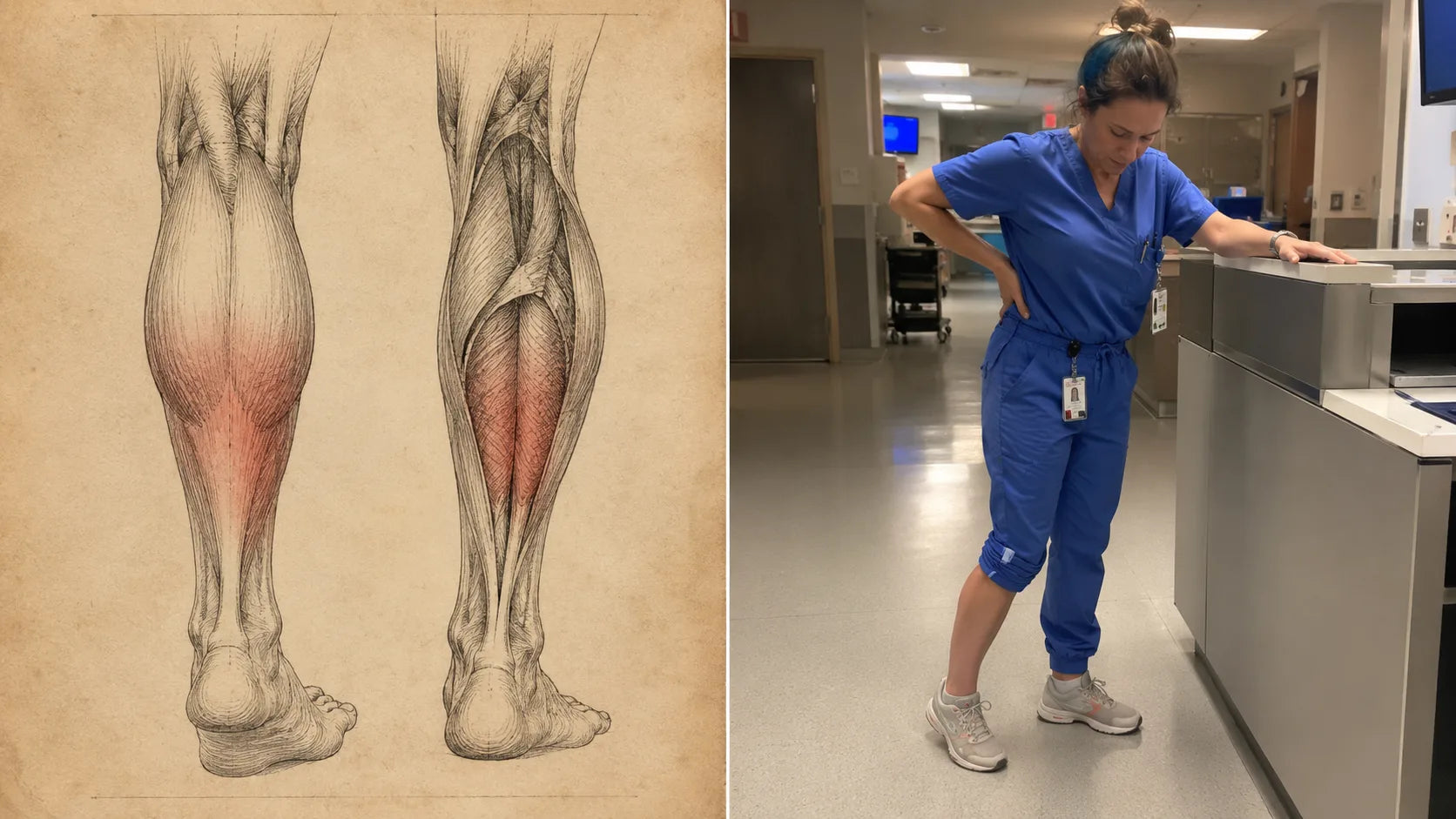
You clock in and you already know how this ends.
Not "might end." Know. Because it ends the same way every single shift.
By hour four, your calves feel thick. Not sore yet — just full, like something inside them stopped moving and started stacking up instead.
By hour eight, you're doing the thing. Standing on the outside edges of your feet at the register, rocking heel to toe at the plating station, anything to give the muscle a different kind of pressure than the floor is giving it.
By closeout, you're not walking to your car. You're limping there, quietly, hoping nobody from the shift sees you do it.
Strong For Years — Then the Shift Started Winning
This isn't new. You've been on your feet for work for years — maybe your whole career. You used to be able to shake it off with a hot shower and be fine by morning.
Somewhere in the last year or two, that stopped working. The tightness started showing up earlier in the shift. It started staying later into your night off. You started planning your errands around how your legs felt, not the other way around.
The shift is the same length it's always been. Your legs are the ones that changed the terms.
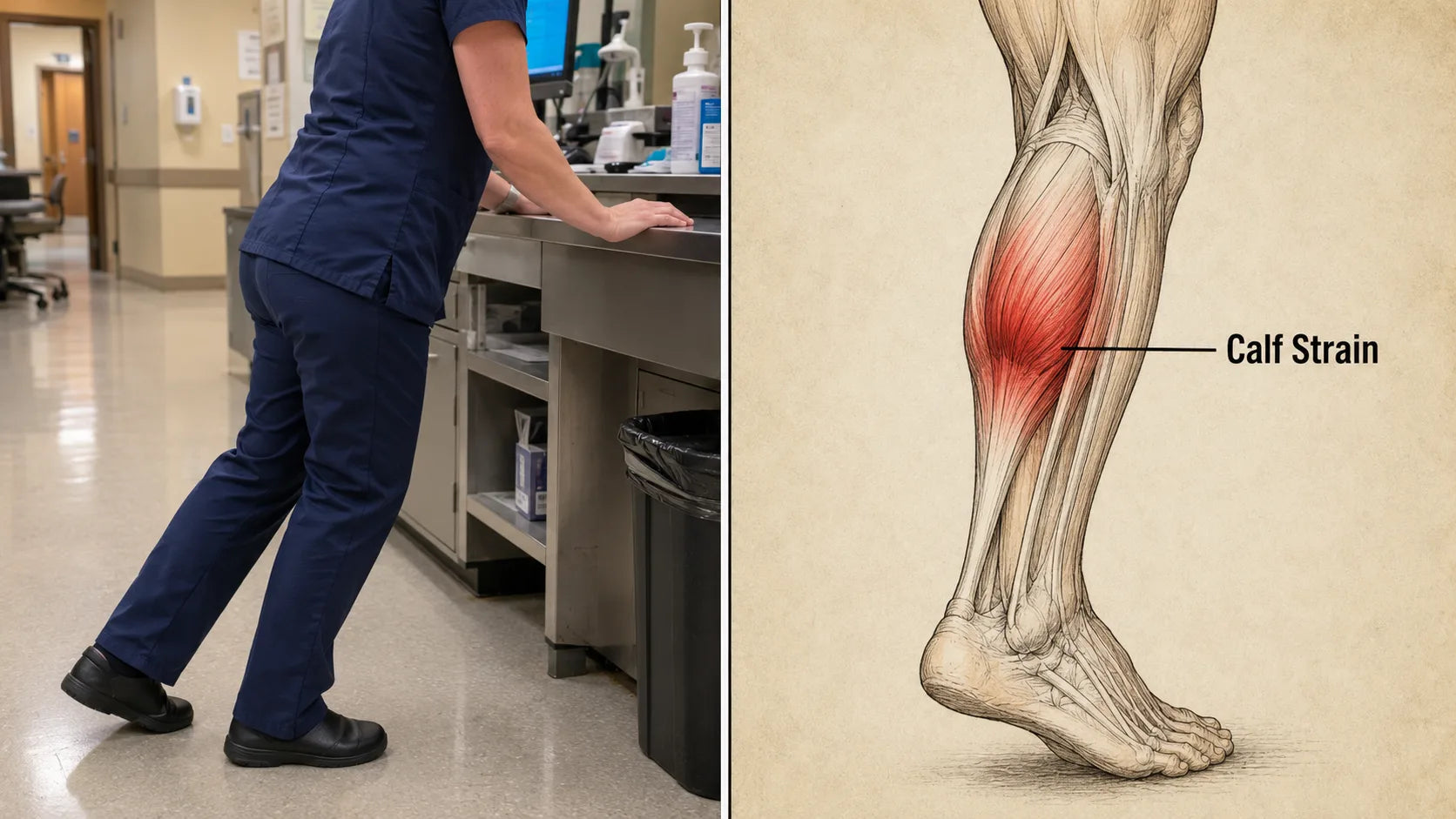
Here's what that actually costs you. Not in some abstract wellness-brochure way — in the three ways it actually shows up.
The external cost: you stop taking the extra shift, the double, the Saturday close, because you already know what your legs will feel like by the end of it. One line cook put it plainly — it took two straight months of turning down extra shifts before the ache in his legs finally faded. That's not a bad day. That's a bad season, and it's the season your paycheck lives in.
The financial cost: fewer doubles means a lighter check, right when the shift itself hasn't gotten any easier to justify.
The emotional cost is the quiet one. You stop being able to play with your kid on the floor when you get home, or stand at the stove and make dinner, because your legs already gave everything they had to a job that doesn't say thank you.
Who I Was Seeing In My Own Clinic
I'm Dana R. I spent eleven years as a physical therapist assistant, mostly treating people whose jobs put them on their feet all day — cooks, servers, CNAs, floor nurses, retail leads during the holidays.
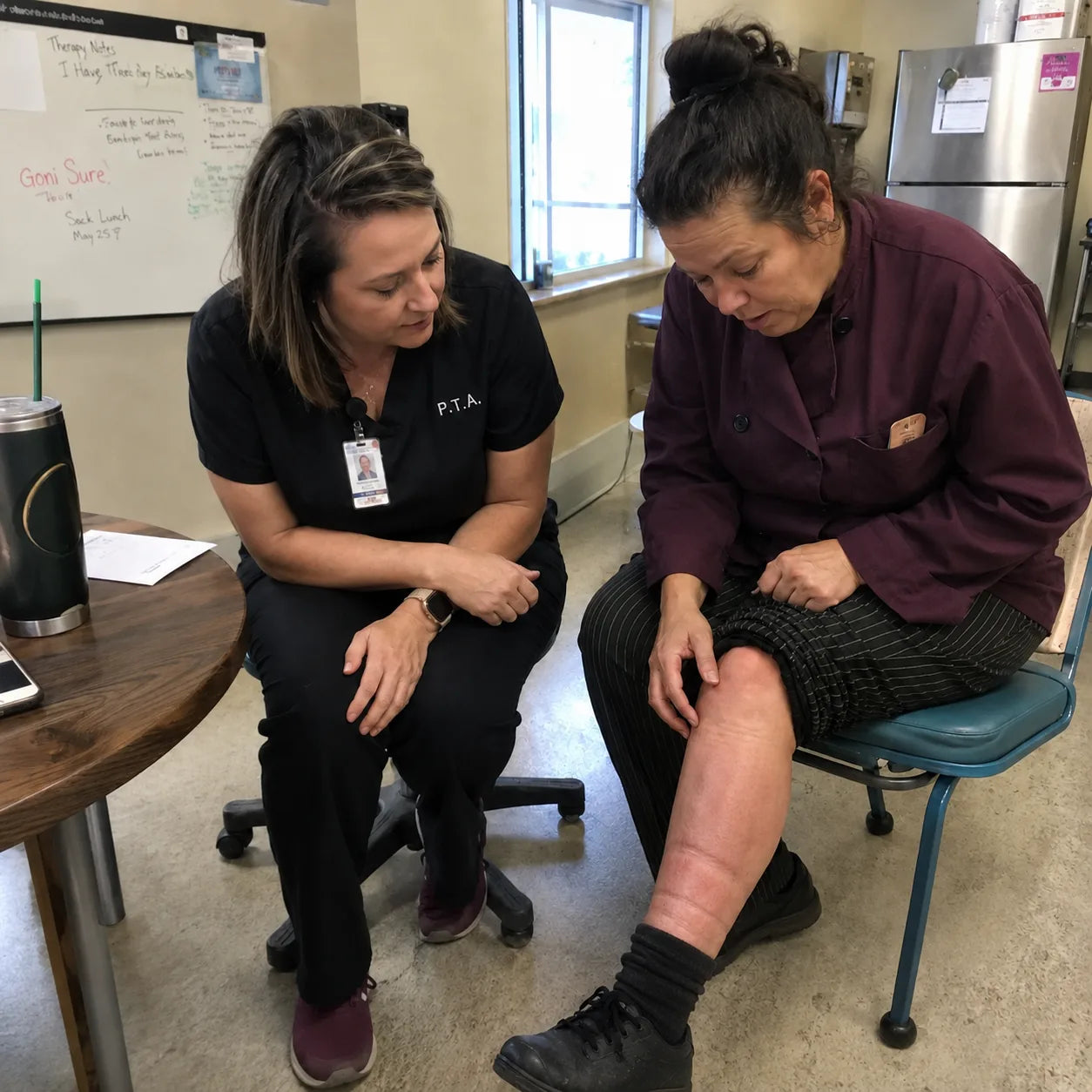
Every single one of them described the same shift-day pattern. Fine at clock-in. Thick and tight by mid-shift. Genuinely heavy by closeout. More than one told me, almost word for word, that back-to-back long shifts were "hell on my body" — and they weren't exaggerating for effect. That's just what a 12-hour shift on a hard floor does to a calf, night after night.
And every single one of them had already tried to fix it before they ever sat down in my treatment room.
What They'd Already Tried — And Why None Of It Held
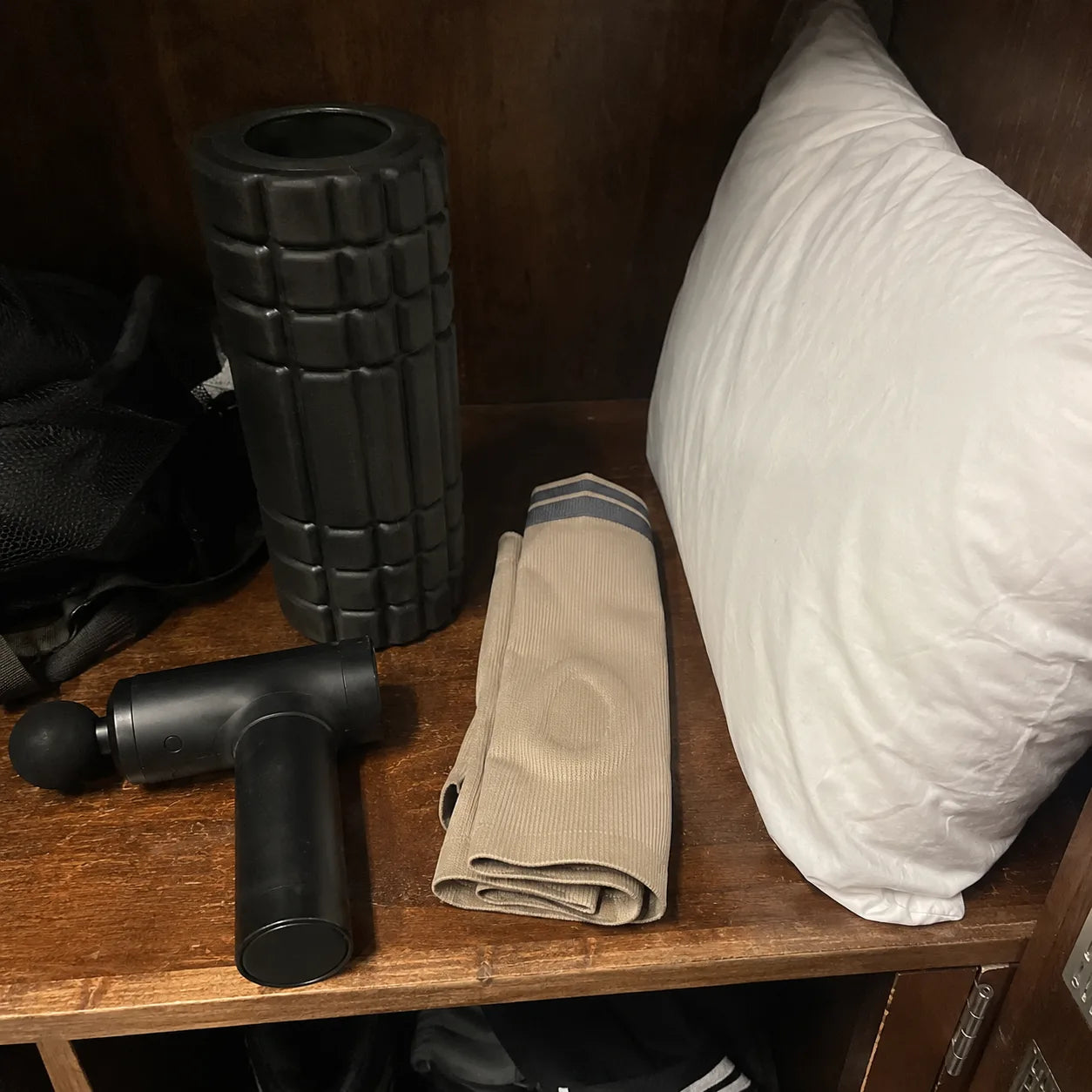
Compression socks were almost always first. Cheap, easy, you can wear them under your work pants and nobody notices. Most of my patients wore them for months, the same way one nurse told me she considered them "key" to getting through a shift without her legs falling apart. And they do help a little in the morning. But by hour six of a long shift, the tightness comes right back through the sock — because the sock never touched the actual problem. It just squeezed the outside of the leg a little tighter and hoped that was enough.
Stretching was next. Calf raises against the wall, ankle circles on a break, the classic runner's stretch against the walk-in door. It feels good for about ninety seconds. Then you're back on the floor for the next ticket, the next patient, the next table — and the stretch is gone like it never happened. One pastry chef told me almost the exact same thing dozens of restaurant and hospital workers have said in one form or another: her calves stayed so tight despite the stretching, the foam rolling, even the odd hot bath at the end of the night, that none of it seemed to make a dent. She was doing everything right. It still didn't hold.
The foam roller lives in a lot of car trunks and gym bags. Rolling it out after a shift, wincing through it, feeling looser for the drive home — and waking up just as tight as the day before, ready to do it all again on legs that never actually got a break.
The massage gun was the newest one people brought in. Pounding away at the calf for ten minutes before bed. It feels aggressive, like it should be doing something — all that force has to be accomplishing something, right? Most people told me the tightness was back by the next afternoon shift, sometimes before they'd even finished their coffee.
Elevating the legs on the couch, icing, even a hot bath — all of it gave a few hours of relief at best, the kind you feel while you're lying there and lose the second you stand back up. None of it changed how the next shift felt. One nurse summed up the whole cycle better than any of us on staff ever could: she figured it was just normal for legs like hers to hurt anywhere "from a few minutes to the rest of your life." That's not resignation. That's just what happens when every fix you've tried was aimed the wrong way.
Here's the pattern I started noticing after the eightieth patient told me some version of the same story: every single fix they'd tried was designed to squeeze, stretch, or pound a muscle that had already spent eight hours being squeezed, stretched thin, and pounded on by the floor itself. Not one of them was built to undo what the shift had actually done. Every fix was aimed in exactly the wrong direction — and it had been aimed that way from the very first time anyone tried it.
The Sock Mark That's Actually Telling You Something
You've seen this a thousand times and never once read it right.
Peel your compression sock off after a closing shift and look at your calf. There's a ring. A deep, reddish line pressed straight into the muscle, right where the sock's grip was tightest. It fades in a few minutes, and the second it does, you exhale — because that fading feeling is the closest thing to relief you get most nights.
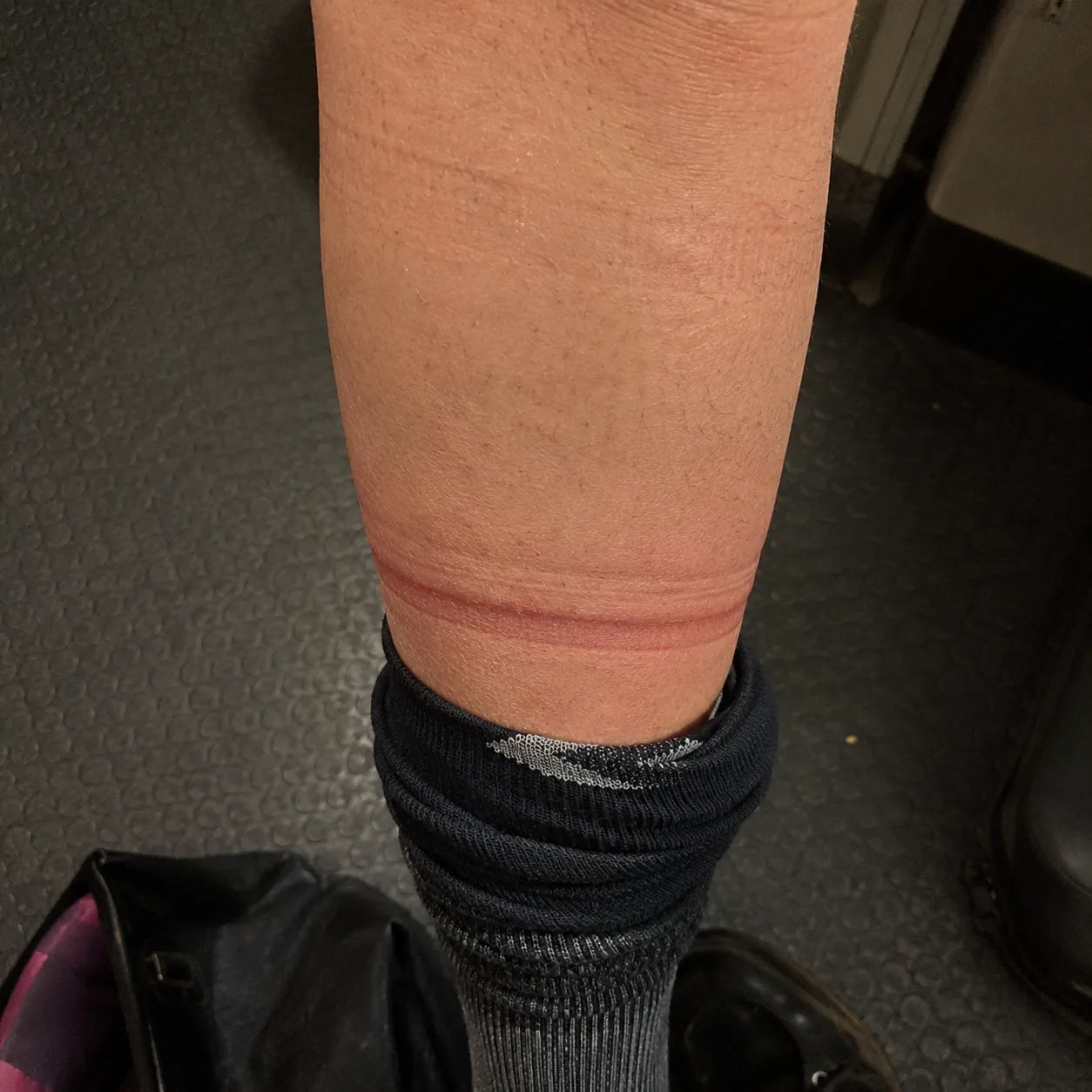
But think about what that ring actually is. It's not your calf healing. It's the mark of a muscle that's been squeezed all day long — first by the floor, then by the sock on top of the floor — finally getting a few seconds where nothing is pressing on it at all. The "relief" you feel isn't the muscle getting better. It's just the squeezing stopping for a minute.
That mark is proof of something most of us never think to ask about our own legs: what does a muscle that's been compressed for eight straight hours actually need? More compression on top of it? Or does it need the opposite — something that pulls it back open again?
The Most Overlooked Cause of End-of-Shift Calf Fatigue
Think about what a sponge does when you press down on it and hold it there for eight hours. It doesn't spring back the second you lift your hand. It stays flattened. It needs something to actively pull it back open before it works like a sponge again.
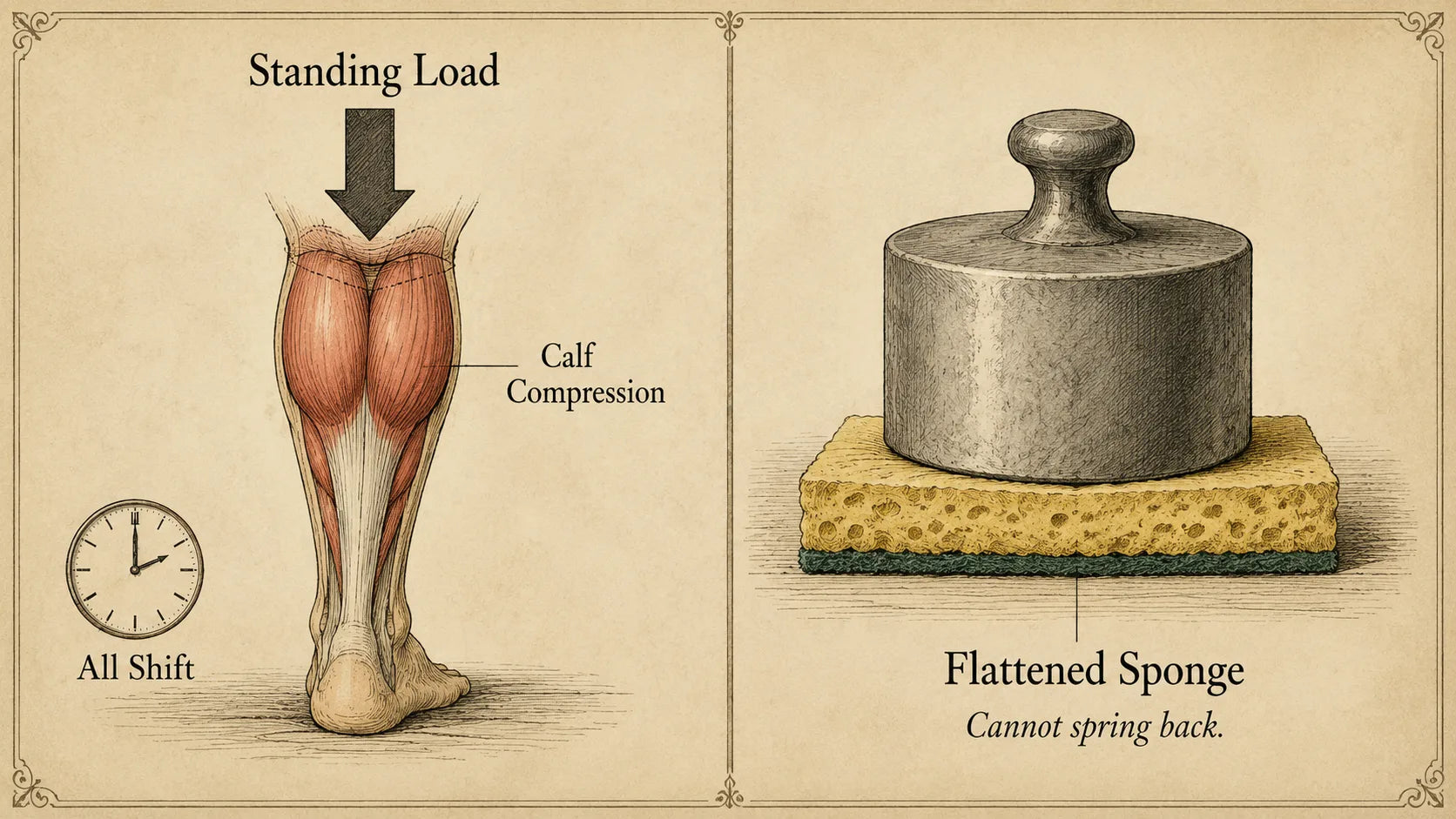
Standing all shift does something similar to your calf. It's not a torn muscle. It's not an injury. It's a muscle that has been held in a compressed, loaded position for hours on end, with almost no chance to fully release and re-expand between steps.
Now look back at every fix on that locker shelf with that in mind. Compression socks squeeze the outside of a muscle that's already compressed on the inside — that sock ring on your calf is the literal shape of it. Stretching pulls the muscle long for a few seconds, but the second you're back on your feet, the same standing load presses it right back down flat. The foam roller and the massage gun both press and pound the tissue even more — which can feel intense, even satisfying in the moment, but it's asking an already-flattened sponge to absorb more pressure, not less.
That's why none of it held past the next shift. Every fix, without exception, was working on the wrong side of the problem — squeezing, stretching, or pounding a muscle that had spent all day being squeezed, stretched thin, and pounded on already. The calf didn't need any more pressure from any direction. It needed to be lifted back open.
How Standing-Pump Reset Targets the Root, Not the Symptom
That's the idea behind what I started recommending instead, once I understood what was actually happening: a small warm-suction device called Vela X, used on the calf in what I now call, with my patients, a Standing-Pump Reset.
It's not a massage gun. It doesn't pound the tissue. It does close to the opposite.
Three things happen when the small cup is placed on the calf belly:
Warm Lift. Flameless heat, up to 107°F, softens the muscle before anything else happens — the same reason a hot shower feels good, but held steady and localized instead of washing over you for thirty seconds.
Rhythmic Release. Gentle, dynamic suction gently lifts the calf tissue upward, away from the compressed position it held all shift, then releases — in a slow, repeating rhythm. Twelve settings let you start low and only go as deep as feels genuinely good.
Heat + Light Layer. A soft 660nm red glow rides along with the heat and suction for the full session — part of the ritual, a visible cue that the reset is happening.
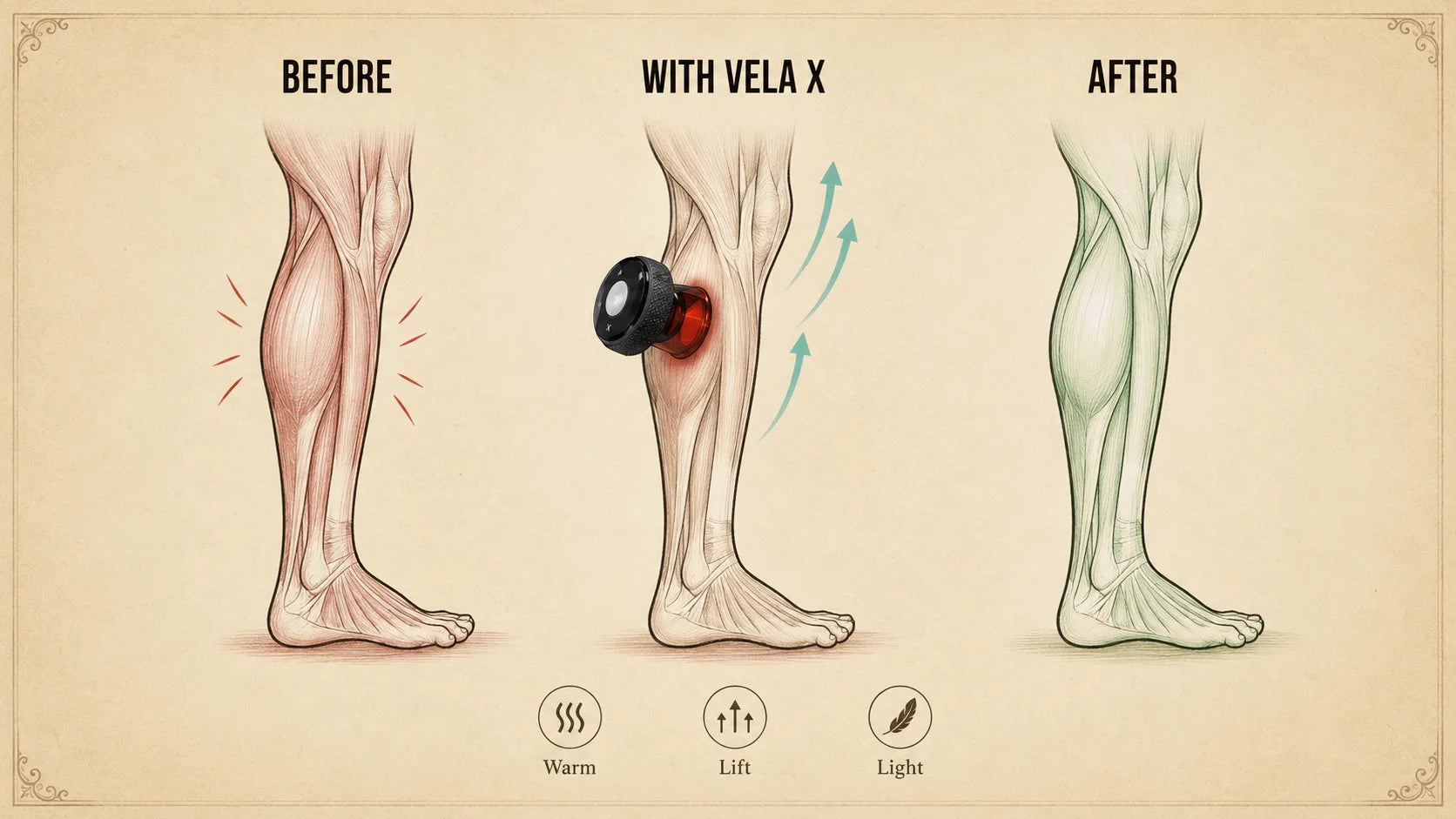
None of this claims to fix circulation or treat a medical condition — it isn't designed to, and I wouldn't tell you it does. What it's designed to do is give the calf muscle the one thing eight hours of standing never gives it, and the one thing every sock, stretch, roller, and massage gun on that locker shelf never gave it either: an active lift out of the compressed position, instead of one more thing pressing down on it.
The single-press instant release and the timed auto-release mean you can't leave it running longer than intended, even mid-shift-brain-fog-exhausted. Cordless, so it works in a break room, a car, or on the couch the second you get home.
What a Physical Therapist's Aide Sees That the Standard Advice Doesn't
I stopped handing out the same compression-sock pamphlet after about my third year. Not because compression socks are bad — they're fine for what they do. But I got tired of watching people spend money on things that squeezed, stretched, or pounded the muscle for an hour and did nothing for the next ten shifts.
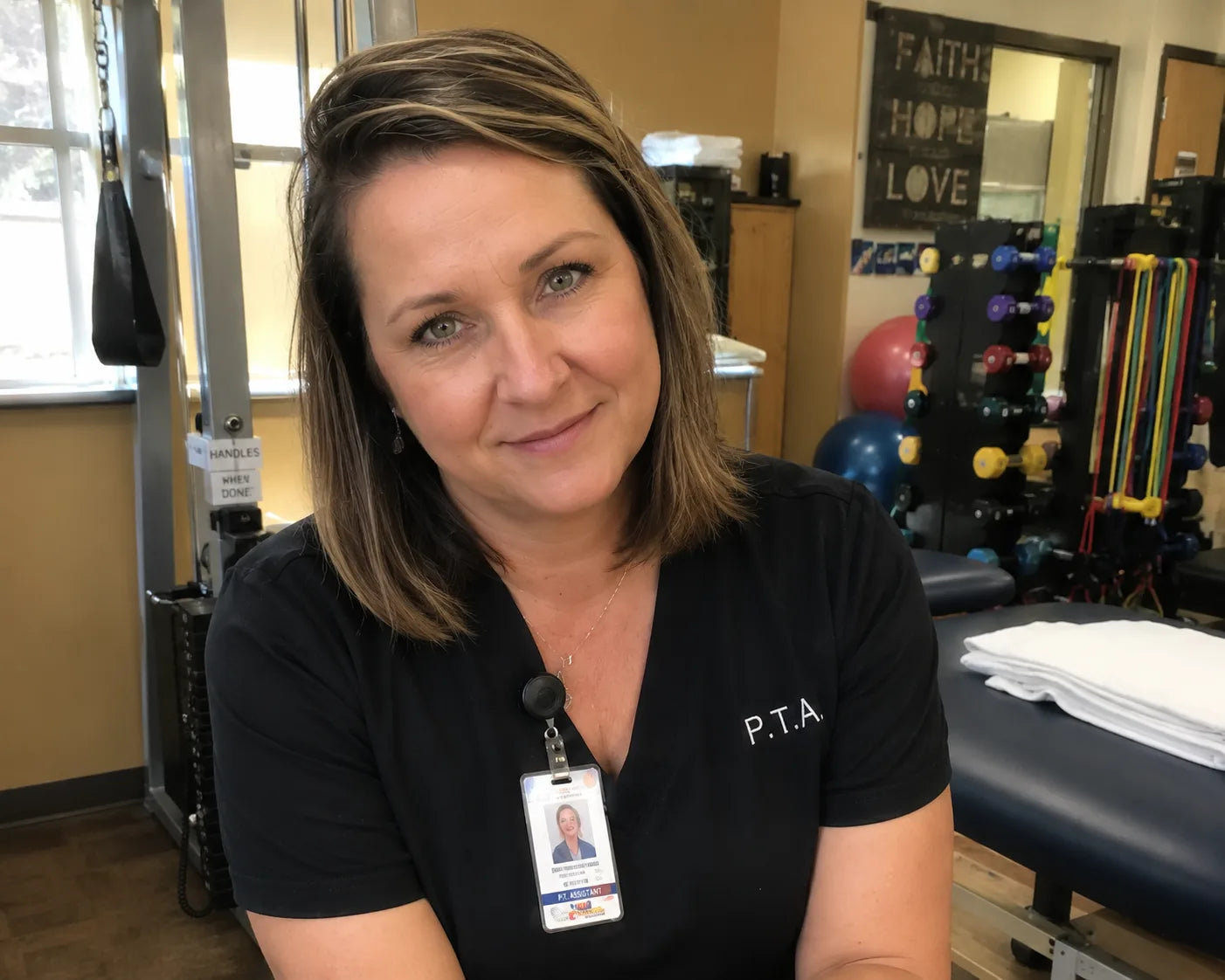
What changed my mind wasn't a study. It was watching the same pattern repeat across hundreds of stand-all-day workers, and realizing the thing that actually helped them wasn't a stronger stretch or a harder massage gun setting — it was giving the muscle an active lift instead of more pressure, from any direction.
That's the whole idea behind Standing-Pump Reset. Not a treatment. A ritual, five to ten minutes, aimed at the one thing your shift never gives your calves on its own — and the one thing that was missing from literally every fix on that shelf.
4,210+ Reviews. 4.8 Stars. Same Story, Different Job.
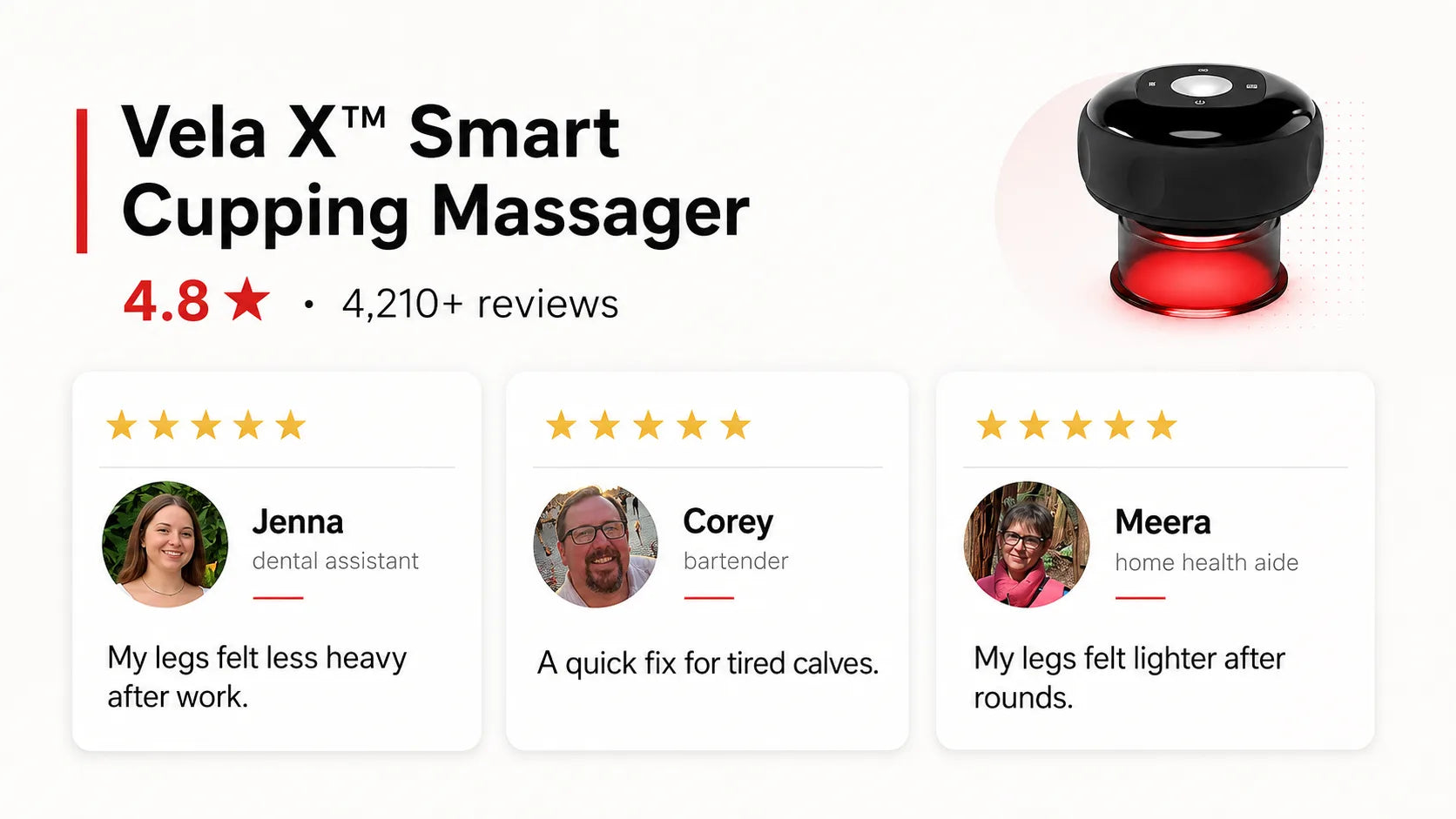
Vela X currently sits at 4.8 stars across more than 4,210 reviews. The stand-all-day crowd — servers, cooks, CNAs, retail leads — shows up again and again in those reviews, describing some version of the same end-of-shift heaviness this article opened with.
Individual results vary from person to person, and nobody should expect the exact same experience. But the pattern across reviewers who use it as an end-of-shift ritual, rather than an occasional treat, is consistent: a lighter, less "stacked-up" feeling in the calf by the time they're getting ready for bed.
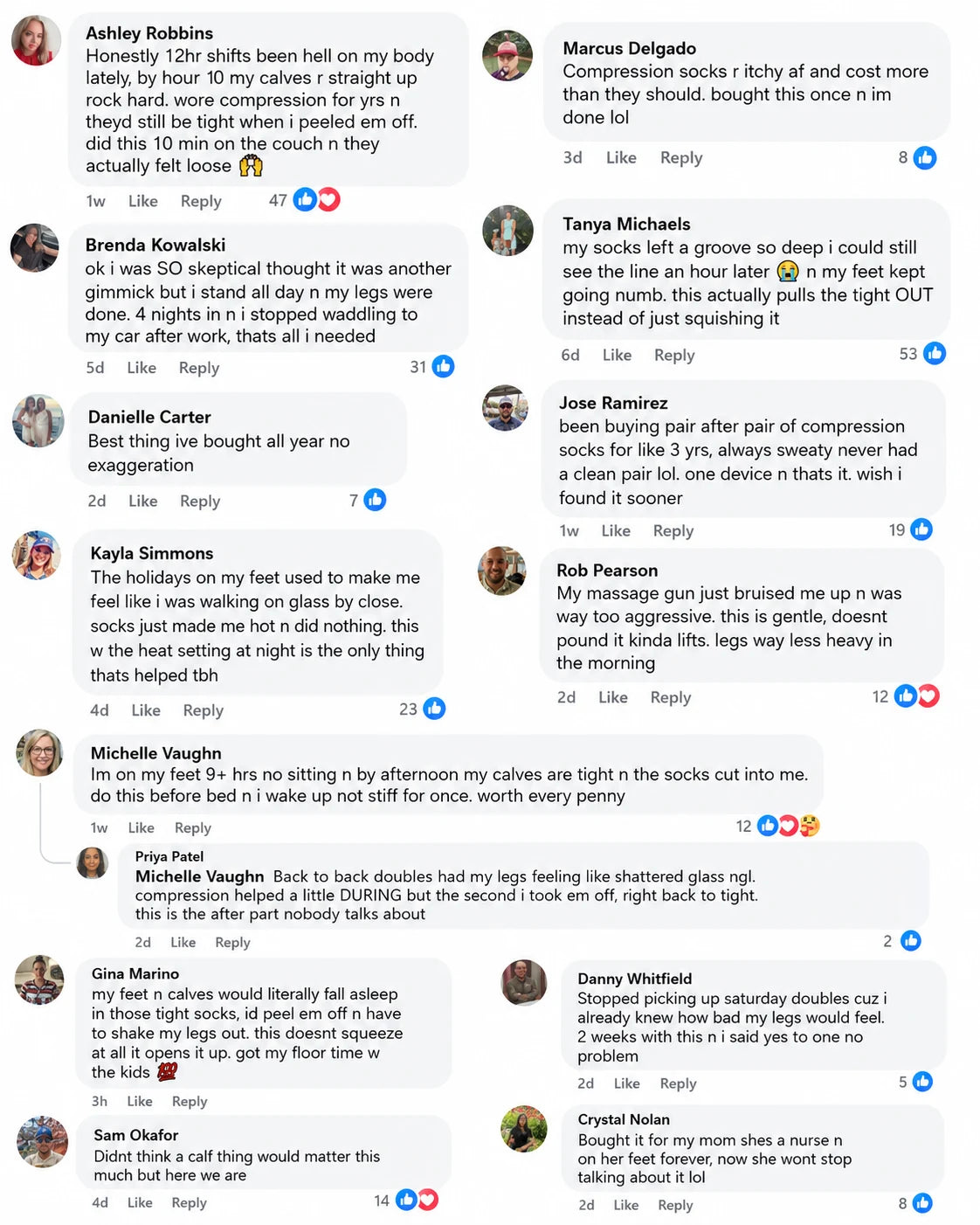
From Dreading Every Shift to Just… Getting Through It

| Before | After Adding the Reset | |
|---|---|---|
| Clocking in | Already dreading how legs will feel by close | Clocks in without the mental countdown |
| Mid-shift | Rocking heel-to-toe at the register just to cope | Makes it through the rush without the fidgeting |
| Driving home | Grips the wheel because legs feel "full" and heavy | Drives home without thinking about her calves once |
| Evening | Collapses on the couch, too tight to play with the kids | Gets down on the floor for bath time like she used to |
| Picking up shifts | Turns down the extra double, already exhausted in advance | Says yes to the Saturday close without flinching |
That last row is the one that matters most. This was never really about the calf. It was about which shifts you feel like you can say yes to.
Everything Included, Before the Price
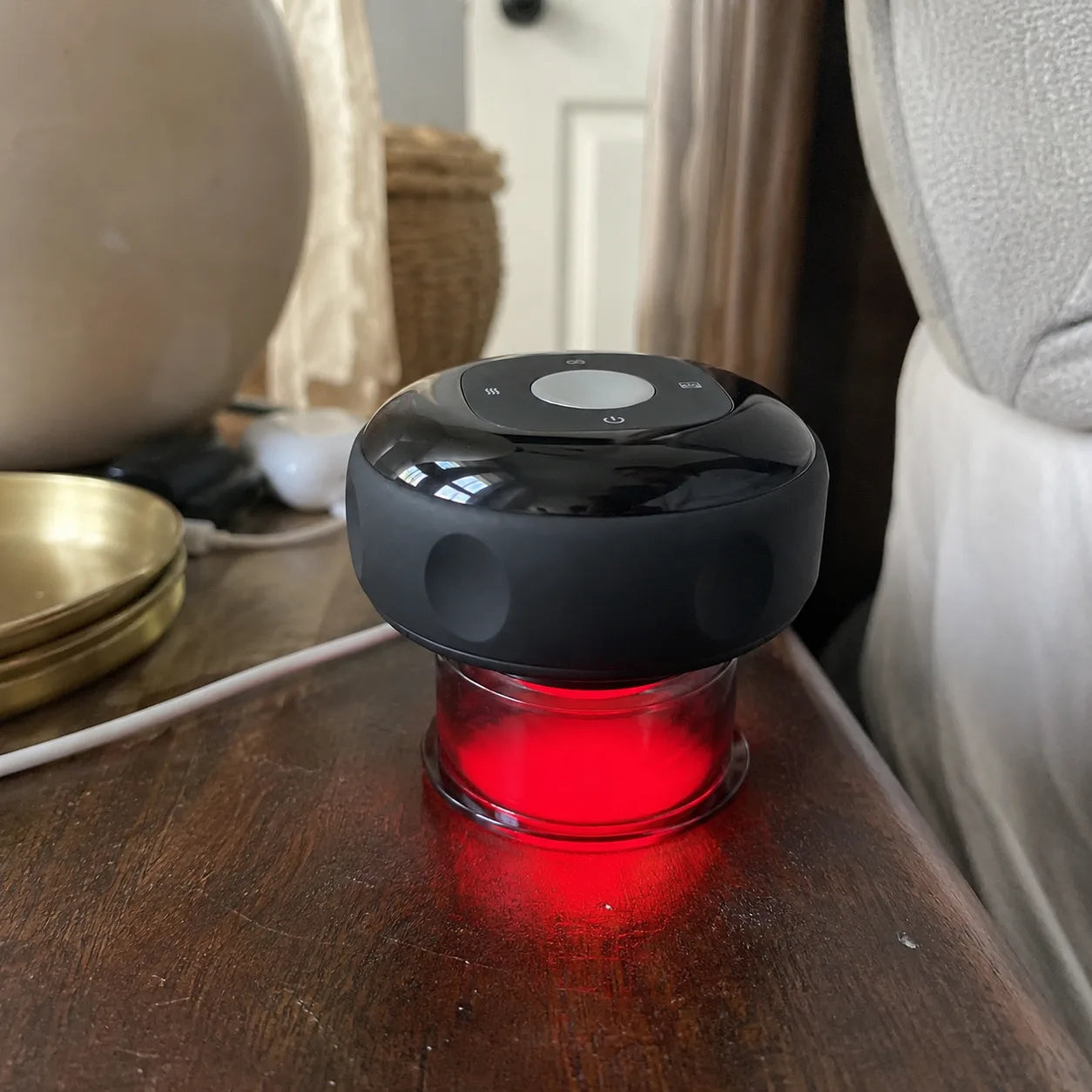
Before we get to the number, here's the full picture of what you're actually getting:
The Vela X device itself — dynamic suction, flameless heat up to 107°F, 660nm red light, all in one cordless unit small enough to keep in a locker or gym bag.
Twelve customizable settings, so you can start low on week one and adjust as the ritual becomes familiar.
Single-press instant release plus a timed auto-release, so a five-to-ten-minute Standing-Pump Reset session never runs longer than it should, even after a closing shift when you're running on fumes.
Free shipping, today, on top of all of that.
- Vela X warm-suction device (suction + heat to 107°F + 660nm red light)
- 12 customizable settings — start low, build up
- Single-press instant + timed auto-release
- Cordless & rechargeable — locker, car, or couch
- Free shipping today
30-day money-back guarantee — use it as your end-of-shift ritual for 30 days; if it doesn't earn a place in your routine, send it back for a full refund. No fees, no forms.
40% Off — Limited Time
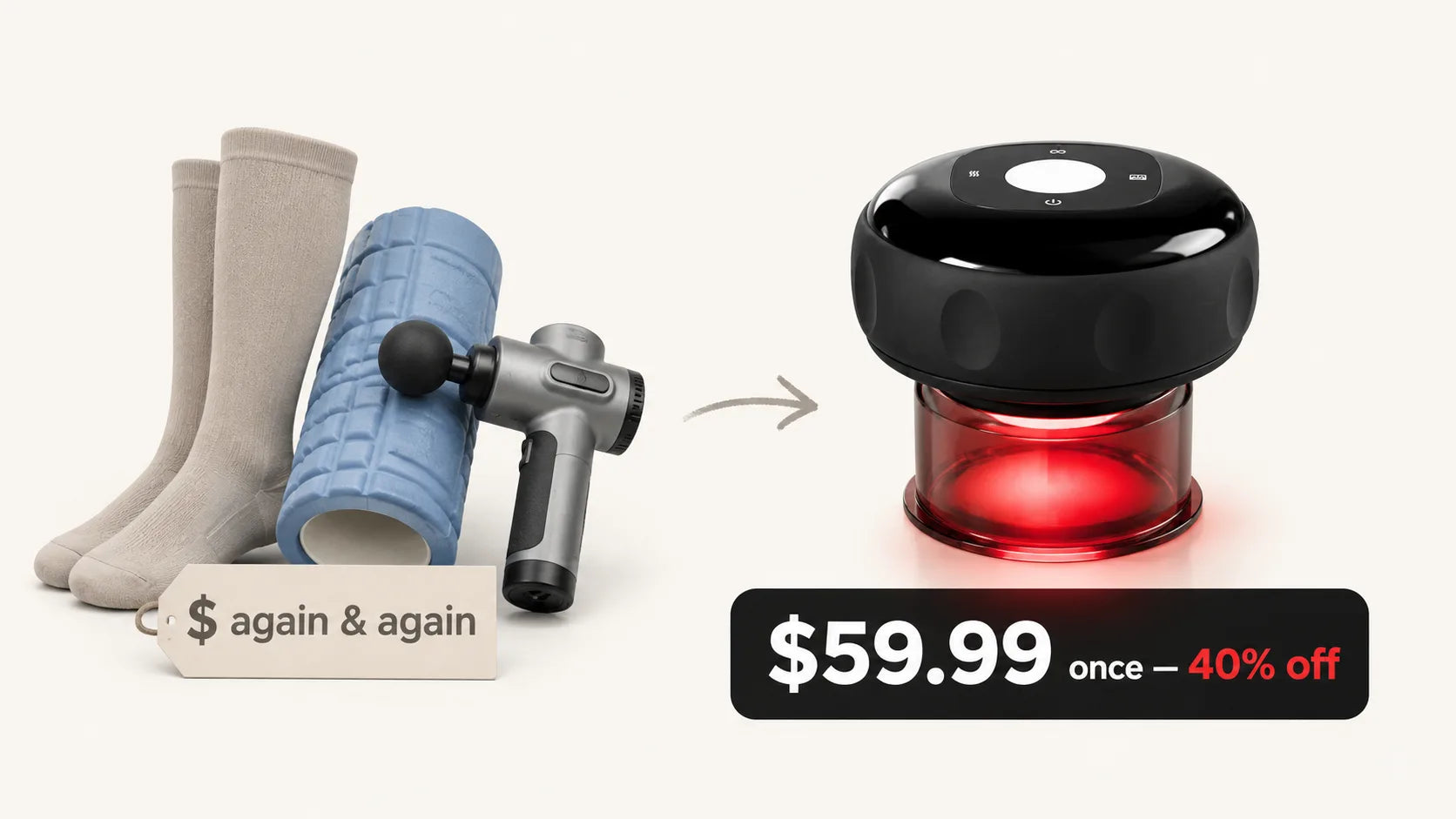
Regular price is $99.00. Right now it's $59.99 — 40% off, with free shipping included.
That's less than a single week of the compression socks and foam rollers most stand-all-day workers already cycle through every few months, for a ritual built around the actual problem instead of the muscle's outer layer.
Try It Risk-Free for 30 Days

If you use it as your end-of-shift ritual for 30 days and it doesn't earn a place in your routine, send it back. Full refund, no fees, no forms, no explaining yourself to anyone.
A quick safety note, the same one I give every patient: start on the lowest suction and heat setting for your first few sessions, especially if you're new to warm suction, and use it only on the soft calf muscle belly. Some temporary redness or light marking at the cup site can happen and typically fades on its own. Don't use it directly over varicose veins, irritated or broken skin. And if you ever notice sudden, severe, or one-sided calf swelling, that's not a Standing-Pump Reset situation — see a doctor.
What If You Say No

You've got three options here, honestly.
Option one: keep doing what you're doing. The socks, the stretching, the foam roller, the massage gun before bed. You already know how that story ends — you're living it again tonight, and you'll see the same ring on your calf when you peel that sock off.
Option two: try something else off the shelf. Another sock, another roller, another gadget that squeezes, stretches, or pounds the muscle for an hour without ever lifting it back open.
Option three: give the Standing-Pump Reset thirty days. If it doesn't change how your legs feel by closeout, it costs you nothing to find out — send it back.
I'm not going to tell you this fixes everything about a job that keeps you on your feet all day. It doesn't. But it's the first thing in eleven years of watching this pattern that actually addresses what the shift is doing to the muscle, instead of pressing on it from one more direction and sending you back out there.
Vela X is a wellness device intended to support a soothing warm-suction reset ritual for tired, tight muscles after a long shift on your feet — not a medical treatment. It is not intended to diagnose, treat, cure, or prevent any disease. Individual results may vary. Statements regarding this product have not been evaluated by the FDA. Do not use over varicose veins or irritated/broken skin; start on the lowest setting. If you experience sudden, severe, or one-sided calf swelling, consult your physician before use and seek medical care. If you are managing a diagnosed medical condition, consult your physician before use.